
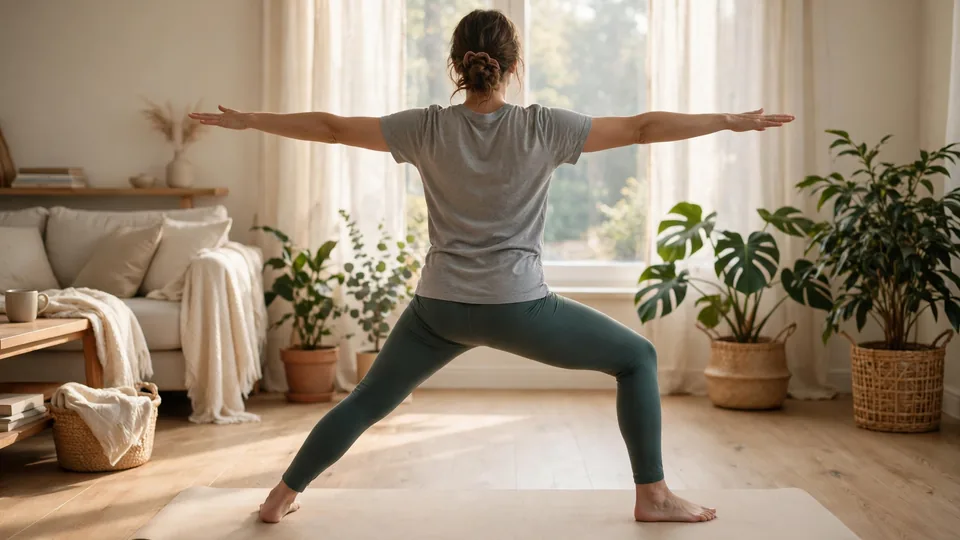
These 12 basic yoga poses cover the shapes most beginner classes are built from, from standing alignment to final rest. You need no flexibility to start, only a mat, a wall nearby, and a few minutes of patience. This guide gives plain cues for each pose, a simple modification, and a short sequence that links them into one practice.
Key Highlights
- Twelve foundational poses teach standing alignment, spinal movement, leg strength, balance, and rest.
- Hold most poses for 3 to 5 slow breaths and rest in Child’s Pose whenever you need a pause.
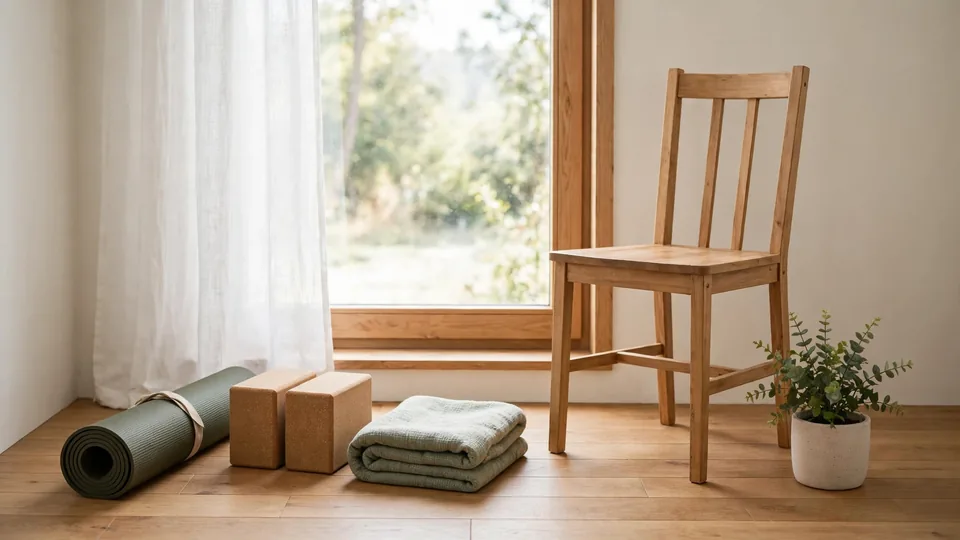
- A wall, a chair, and a folded blanket make every pose in this list easier to learn safely.
- Two or three short sessions a week build strength and flexibility faster than one long weekly session.
- Stop and seek advice if a pose causes sharp pain, numbness, or dizziness at any point.
How to Use This List
Work through the poses in order the first few times, since the list runs from standing poses to floor poses and ends with rest. Keep your breathing slow and steady through your nose. A pose is right for today if you can breathe calmly in it and come out of it without strain.
Set up near a wall with a folded blanket and a chair within reach. A mat with decent grip matters for Downward-Facing Dog and Plank, so our guide to choosing a yoga mat helps if your hands slide on your current surface. Thick books can stand in for yoga blocks at home.
Warm up gently before you begin, especially in the morning. Roll your shoulders, circle your wrists and ankles, and take five slow breaths standing tall. Cold muscles stretch less willingly, so two minutes of easy movement makes the first poses feel safer.
Poses are called asanas in Sanskrit. Our explainer on what asanas are and why they matter gives useful background before your first session.
The 12 Poses to Learn First
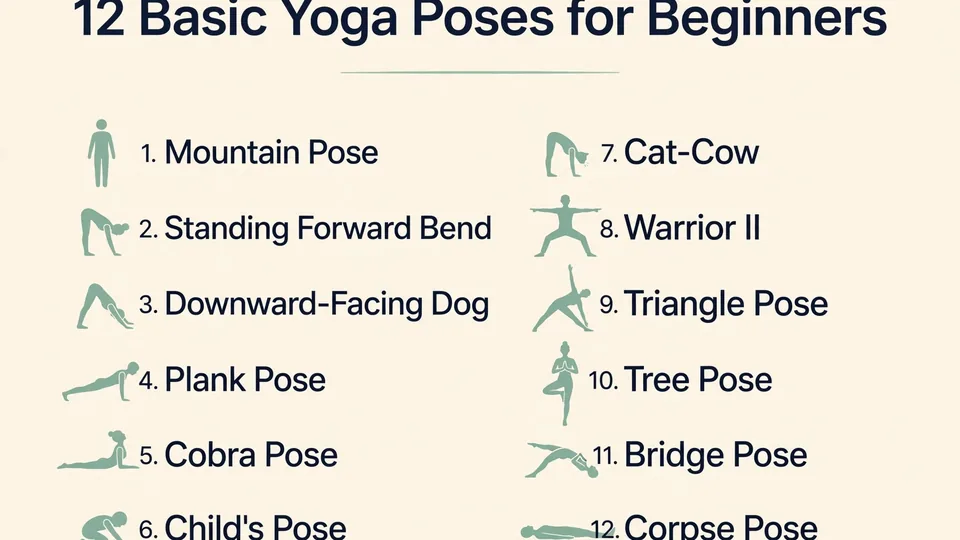
1. Mountain Pose (Tadasana)
Stand with feet hip-width apart, toes forward, and weight spread evenly across both feet. Let your arms rest by your sides, lift your chest gently, and breathe for 5 breaths. Modification: stand with your back against a wall to feel straight alignment. This pose teaches the standing alignment every other standing pose returns to.
2. Standing Forward Bend (Uttanasana)
From Mountain Pose, inhale and lift your arms, then exhale and fold forward from your hips. Bend your knees, rest your hands on your shins or a chair, and let your head hang for 3 to 5 breaths. Modification: keep a generous knee bend. This pose stretches the back of your legs and releases your neck and shoulders.
3. Downward-Facing Dog (Adho Mukha Svanasana)
Start on hands and knees, tuck your toes, and lift your hips up and back into an inverted V shape. Press through your hands, bend your knees, and lengthen your spine for 3 to 5 breaths. Modification: place your hands on a chair seat. This pose strengthens arms and shoulders while stretching calves, hamstrings, and back.
4. Plank Pose (Phalakasana)
From Downward-Facing Dog, shift forward until your shoulders sit over your wrists in one straight line. Press the floor away and hold for 3 to 5 breaths. Modification: lower your knees and keep a straight line from knees to head. Plank builds core and shoulder strength for almost every later pose.
5. Cobra Pose (Bhujangasana)
Lie face down with hands under your shoulders. Inhale and lift your chest a few inches, elbows bent, shoulders away from your ears. Hold for 3 to 5 breaths, then lower slowly. Modification: lift only slightly, forearms on the floor. Cobra opens the chest and strengthens the back.
6. Child’s Pose (Balasana)
Kneel, sit back toward your heels, and fold forward so your forehead rests on the floor or your stacked hands. Breathe for 5 to 8 breaths. Modification: place a cushion between calves and thighs. This is your rest pose. Return to it any time you need a pause.
7. Cat-Cow (Marjaryasana-Bitilasana)
Come to hands and knees, wrists under shoulders and knees under hips. Inhale and drop your belly while lifting your chest, then exhale and round your back. Move between the shapes for 6 to 10 rounds. Modification: place a blanket under your knees. Cat-Cow warms up the spine.
8. Warrior II (Virabhadrasana II)
Stand with feet wide apart, turn your right foot out, and bend your right knee. Stretch your arms out at shoulder height and gaze over your right hand for 3 to 5 breaths, then switch sides. Modification: shorten your stance. Warrior II builds leg strength and hip openness.
9. Triangle Pose (Utthita Trikonasana)
From a wide stance, straighten your right leg and reach your right hand toward your shin or a chair. Extend your left arm up and hold for 3 to 5 breaths per side. Modification: rest your lower hand on a chair seat. Triangle stretches the legs and side body.
10. Tree Pose (Vrksasana)
Shift your weight onto your left foot. Place your right foot against your left ankle, calf, or inner thigh, never the knee. Bring palms together at your chest and hold for 3 to 5 breaths per side. Modification: keep one hand on a wall. Tree Pose builds balance and ankle strength.
11. Bridge Pose (Setu Bandha Sarvangasana)
Lie on your back, knees bent, feet flat and hip-width apart. Press through your feet and lift your hips into a gentle slope for 3 to 5 breaths, then lower slowly. Modification: rest your hips on a cushion. Bridge strengthens glutes and back.
12. Corpse Pose (Savasana)
Lie on your back, legs extended, arms by your sides with palms up. Close your eyes and breathe naturally for 2 to 5 minutes. Modification: place a cushion under your knees. Savasana lets your body absorb the practice, so never skip it.
A Simple 20-Minute Beginner Sequence
Once the individual poses feel familiar, link them into one short practice. Start with Cat-Cow for 6 rounds and Child’s Pose for 5 breaths to warm up your spine. Move to Downward-Facing Dog, then stand up into Mountain Pose and Standing Forward Bend.
Next, practice Warrior II and Triangle on the right side, return to Mountain Pose, and repeat both on the left. Add Tree Pose on each side near a wall. Finish on the floor with Cobra, Bridge, and Savasana for at least 2 minutes. The full round takes about 20 minutes at a slow pace.
Hold times matter more than depth at this stage, and our guide on how long to hold a yoga pose explains how to progress holds week by week. Two or three sessions a week with this sequence build a solid base within a month.
Keep a simple record of your sessions for the first month. Note which poses felt steady, which needed props, and how you slept that night. Small notes make progress visible on days when the practice itself feels slow.
When this sequence starts to feel easy, add slow rounds of the sun salutation flow. Our step-by-step sun salutations guide links several poses from this list into one moving sequence.
Common Mistakes and Easy Fixes
- Forcing flexibility. Depth comes with practice. Fix: bend your knees and use props so your spine stays long.
- Holding your breath. Fix: if you cannot breathe slowly, ease out of the pose until you can.
- Skipping rest. Fix: use Child’s Pose freely and always finish with Savasana.
- Comparing your shape to photos. Fix: judge a pose by steady breathing and no sharp pain.
- Practicing only once a week. Fix: shorter, more frequent sessions build skill and strength faster.
Wrists take load in Downward-Facing Dog, Plank, and Cat-Cow, so new practitioners often notice them first. Our tips to prevent wrist pain in yoga cover warm-ups and hand positions that reduce strain.
The US National Center for Complementary and Integrative Health notes that yoga may help people manage stress and improve balance and flexibility, and its overview of yoga effectiveness and safety advises beginners to learn from a qualified instructor and to adapt poses to their own needs. Short home sessions also count toward weekly movement, and the World Health Organization recommends 150 to 300 minutes of moderate aerobic activity a week for adults.
Who Should Be Careful
Check with a doctor before starting if you are pregnant, recovering from surgery or an injury, or managing high blood pressure, a heart condition, glaucoma, or a joint problem. Skip poses that cause sharp pain, numbness, or dizziness, and rest if you feel unwell. A qualified teacher can adapt this list for your body, which matters more than matching any photo or video.
Building the habit is the hard part for most beginners, not the poses themselves. Our daily yoga practice guide for beginners turns this list into a realistic weekly routine you can keep.
Frequently Asked Questions
What are the best yoga poses for a complete beginner?
Mountain Pose, Cat-Cow, Child’s Pose, Downward-Facing Dog, Warrior II, and Savasana form the best starting set for a complete beginner. These six teach standing alignment, spinal movement, leg strength, and rest without demanding flexibility. Add the remaining poses from this list one at a time over your first few weeks, and keep a wall and a chair nearby while you learn.
How long should a beginner hold each pose?
Hold most poses for 3 to 5 slow breaths, which works out to roughly 15 to 30 seconds per pose. Resting poses such as Child’s Pose and Savasana can last longer, from 1 to 5 minutes. Increase hold times gradually over weeks, and ease out of any pose where your breathing turns strained or shaky.
How often should beginners practice yoga?
Two or three sessions a week is a good starting point for most beginners. A 20-minute session with the sequence in this guide builds strength, flexibility, and balance steadily. Short daily practice also works well if sessions stay gentle. Rest fully when you are ill or injured, and add time or poses only when the current routine feels comfortable.
Do I need to be flexible to start yoga?
No, flexibility is a result of practice, not a requirement for starting. Every pose in this guide has a modification that uses a wall, chair, or cushion to reduce the stretch. Bent knees and props keep your spine long while your range of motion improves slowly. Most beginners notice real flexibility gains within four to eight weeks of regular practice.
What equipment do beginners need at home?
A non-slip yoga mat is the only essential item for home practice. A folded blanket, a firm cushion, and a sturdy chair cover most prop needs in the first month. Thick books can replace yoga blocks. Comfortable clothing that lets you bend and stretch freely completes the setup, so you can start today without buying anything else.
When will I see results from beginner yoga?
Most beginners notice better sleep, less stiffness, and calmer breathing within two to four weeks of regular practice. Strength and balance gains usually show up within four to eight weeks. Flexibility improves more slowly and varies by person. Consistent short sessions produce steadier progress than occasional long ones, so two or three sessions a week is the target to aim for.
Conclusion
Start with six poses from this list in a 15-minute session this week, and add the rest as they feel comfortable. Put your mat out tonight where you will see it in the morning, and let your first session be short, slow, and finished with proper rest.