
Introduction
Fear is a natural part of the human experience. Whether it appears in daily life or during yoga practice, fear often arises when we face uncertainty, discomfort, vulnerability, or change. In yoga, fear can manifest in many ways. Some people fear difficult poses, while others struggle with fear of failure, injury, judgment, or even emotional release during meditation and self-reflection.
Yoga is often viewed as a calming and healing practice, but it can also become a mirror that reveals hidden insecurities and anxieties. Challenging postures, balance poses, inversions, breathwork, and meditation may bring suppressed emotions to the surface. This is why overcoming fear in yoga is not only about mastering physical poses—it is also about building mental resilience, emotional awareness, and inner courage.
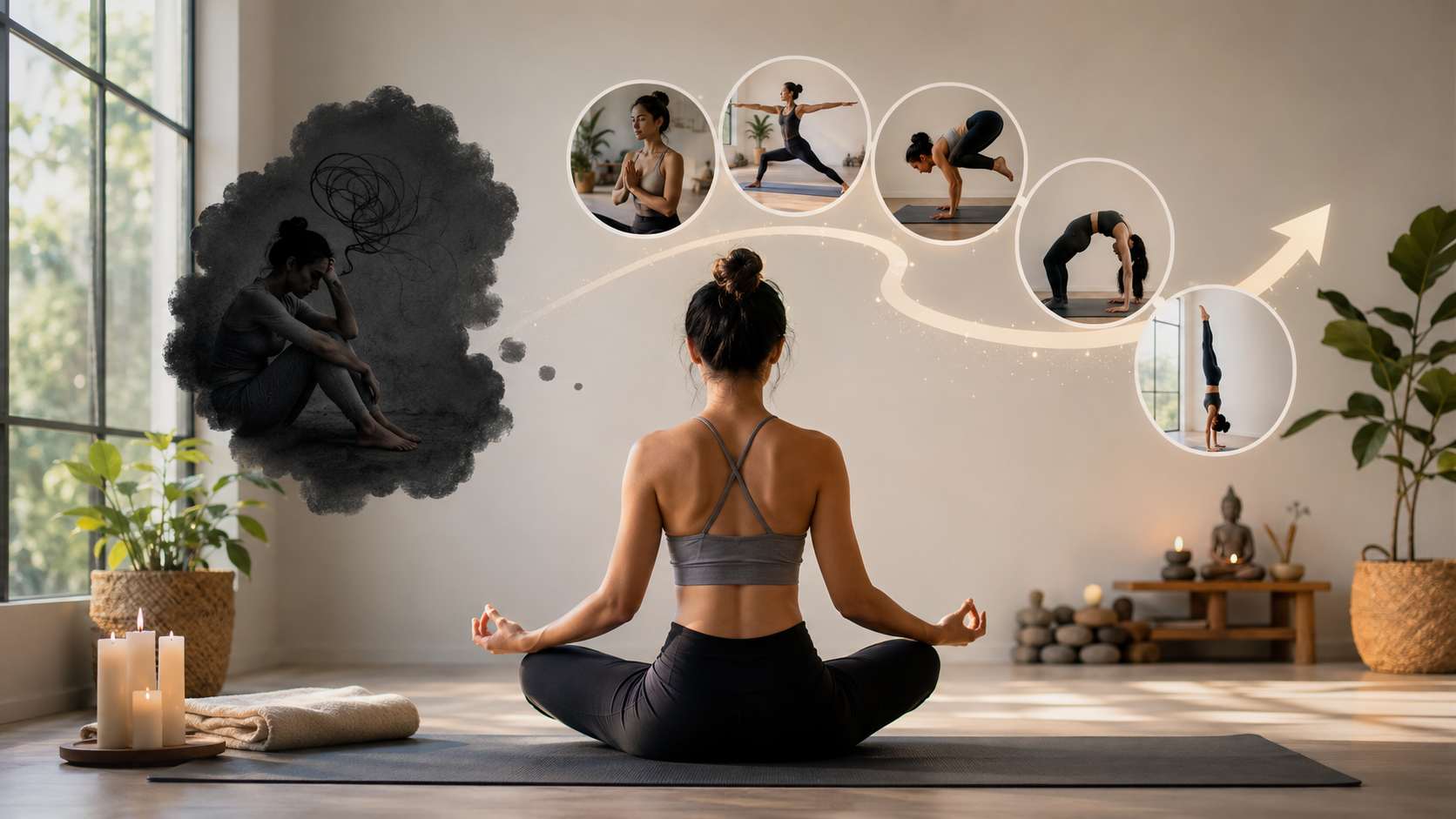
Many practitioners experience fear while attempting poses like Crow Pose, Headstand, Wheel Pose, or deep backbends. Others may feel intimidated entering a yoga studio for the first time or comparing themselves to experienced practitioners. Fear can create tension in the body, restrict movement, interrupt breathing, and prevent growth both on and off the yoga mat.
However, yoga also offers powerful tools to work through fear consciously and compassionately. Through breath awareness, mindfulness, gradual progress, self-study, and consistent practice, fear can become an opportunity for transformation instead of limitation.
This detailed guide explores five essential steps to overcome fear in yoga. These techniques can help practitioners develop confidence, patience, emotional strength, and a deeper connection with themselves.
Understanding Fear in Yoga
Why Fear Appears During Yoga Practice
Fear in yoga can appear for many reasons, and understanding its root causes is the first step toward overcoming it. Yoga encourages practitioners to move beyond comfort zones, which naturally activates physical and emotional responses.
Common reasons fear arises in yoga include:
- Fear of falling or injury
- Fear of embarrassment in class
- Fear of failure or not progressing
- Fear of difficult poses and inversions
- Fear of emotional vulnerability
- Fear of losing control during breathwork or meditation
For beginners, fear often comes from unfamiliar movements and lack of confidence. Advanced practitioners may experience fear when attempting deeper postures or transitioning into advanced inversions.
In many cases, fear is linked to the nervous system’s protective response. The body perceives challenge or instability as danger, even when the environment is safe.
The Connection Between Fear and the Body
Fear does not exist only in the mind; it also affects the body physically. When fear arises, the nervous system activates the fight-or-flight response.
This can cause:
- Tight muscles
- Shallow breathing
- Increased heart rate
- Sweaty palms
- Lack of balance or coordination
- Mental distraction
In yoga practice, these reactions may prevent proper alignment and movement. For example, fear during inversions often causes stiffness and tension, making balance more difficult.
Yoga helps practitioners recognize these physical patterns and gradually release them through mindful breathing and movement.
Step 1: Identify and Acknowledge Your Fear
Recognizing the Source of Fear
The first and most important step in overcoming fear is identifying exactly what you are afraid of. Many people try to ignore fear or push through it forcefully, but avoiding fear often strengthens it.
Yoga encourages awareness rather than suppression. Instead of resisting fear, practitioners should observe it carefully and honestly.
Ask yourself:
- What specifically am I afraid of?
- Is this fear physical, emotional, or mental?
- When does this fear appear during practice?
- What thoughts arise when fear appears?
For example, someone afraid of Headstand may realize they are not actually afraid of the pose itself but afraid of falling or losing control.
Journaling and Self-Reflection
Writing about fear can help uncover deeper emotional patterns. Journaling allows practitioners to observe recurring thoughts and reactions.
Helpful journaling prompts include:
- Which yoga poses make me uncomfortable?
- What emotions arise during difficult practices?
- What past experiences may contribute to this fear?
- How does fear affect my breathing and focus?
This process builds self-awareness and helps practitioners understand the relationship between fear and personal growth.
Accepting Fear Without Judgment
Fear is not weakness. It is a protective mechanism designed to keep people safe. The goal is not to eliminate fear completely but to develop a healthier relationship with it.
Acceptance helps reduce internal resistance and creates space for mindful progress.
Important reminders include:
- Fear is normal in yoga practice
- Progress takes time
- Every practitioner experiences challenges
- Self-compassion is essential
Step 2: Evaluate Whether the Fear Is Helpful or Limiting
Understanding Healthy Fear vs Limiting Fear
Not all fear is harmful. Some fear protects the body from injury and encourages caution. However, irrational fear can prevent growth and confidence.
Healthy fear:
- Prevents unsafe movements
- Encourages preparation and awareness
- Protects the body from genuine danger
Limiting fear:
- Stops progress unnecessarily
- Creates self-doubt
- Prevents trying new experiences
- Causes avoidance behaviors
Learning to distinguish between these two forms of fear is important in yoga practice.
Asking Important Questions
Evaluating fear requires honest self-inquiry.
Questions to consider:
- Is this fear based on actual danger?
- Do I have the physical ability to attempt this safely?
- Am I avoiding growth because of discomfort?
- What small step can help me move forward safely?
For example, fear of injury in advanced poses may be healthy if the body is unprepared. However, fear caused purely by self-doubt may require gradual exposure and confidence-building.
Understanding Emotional Fear
Some yoga practices trigger emotional release rather than physical fear. Deep stretching, meditation, and breathwork can uncover stored emotions and unresolved stress.
Emotional fear may include:
- Fear of vulnerability
- Fear of letting go
- Fear of confronting inner emotions
- Fear of silence and stillness
Recognizing emotional fear helps practitioners approach yoga more compassionately and mindfully.
Step 3: Create a Safe and Gradual Plan
Why Gradual Progress Matters
One of the biggest mistakes in yoga is trying to force progress too quickly. Fear often increases when practitioners attempt advanced poses without preparation.
A gradual approach builds:
- Physical strength
- Muscle memory
- Confidence
- Mental focus
- Emotional resilience
Breaking challenges into smaller steps makes fear more manageable.
Using Preparatory Poses
Preparatory poses help the body adapt safely before attempting advanced movements.
Examples include:
- Practicing Dolphin Pose before Headstand
- Mastering Crow Pose before arm balances
- Using Bridge Pose before Wheel Pose
- Practicing wall support before inversions
Each preparatory step develops strength, flexibility, and familiarity.
Using Props and Support
Props are valuable tools for overcoming fear safely.
Helpful props include:
- Yoga blocks
- Straps
- Bolsters
- Blankets
- Wall support
Using props reduces fear by increasing stability and support during challenging poses.
Working with Teachers or Spotters
Guidance from experienced instructors can significantly improve confidence and safety.
Benefits of yoga teachers include:
- Correct alignment guidance
- Emotional encouragement
- Safe modifications
- Injury prevention
- Personalized progress strategies
Many practitioners overcome inversion fears more easily when supported by teachers or spotters.
Step 4: Use Breathwork and Meditation to Calm the Mind
The Importance of Breath in Yoga
Breathing plays a central role in managing fear. Fear often causes shallow or rapid breathing, which increases tension and anxiety.
Conscious breathing activates the parasympathetic nervous system, helping the body relax and feel safe.
Benefits of mindful breathing include:
- Reduced anxiety
- Improved concentration
- Better balance and coordination
- Lower heart rate
- Increased body awareness
Effective Breathing Techniques for Fear
Dirga Pranayama (Three-Part Breath)
This technique encourages deep breathing into the belly, ribs, and chest.
Benefits:
- Calms the nervous system
- Reduces physical tension
- Improves emotional stability
Nadi Shodhana (Alternate Nostril Breathing)
This pranayama balances the nervous system and improves mental clarity.
Benefits:
- Reduces anxiety
- Enhances focus
- Promotes emotional balance
Ujjayi Breathing
Ujjayi breath creates a steady rhythm during yoga practice.
Benefits:
- Maintains concentration
- Prevents panic during challenging poses
- Creates inner stability
Meditation for Fear Reduction
Meditation helps practitioners observe fear without becoming overwhelmed by it.
Simple meditation practices include:
- Breath awareness meditation
- Body scan meditation
- Guided visualization
- Mantra meditation
Regular meditation builds emotional resilience and inner calm.
Step 5: Take Action and Build Confidence Through Practice
Why Action Is Necessary
Fear cannot be overcome through thinking alone. Progress happens through experience and action.
Avoiding fear strengthens it, while safe and gradual action weakens it over time.
Even small steps matter:
- Attempting a pose with support
- Holding a balance for one extra second
- Entering a yoga class despite nervousness
- Practicing breathwork consistently
Every action builds confidence.
Embracing Imperfection
Many yoga-related fears come from perfectionism and comparison.
Important truths to remember:
- Yoga is not about perfect poses
- Progress looks different for everyone
- Falling and struggling are part of learning
- Consistency matters more than perfection
Practitioners who accept imperfection often progress faster because they reduce mental pressure.
Celebrating Small Wins
Acknowledging progress builds motivation and self-trust.
Examples of small victories:
- Feeling calmer during practice
- Improving breathing awareness
- Attempting a challenging pose
- Reducing fear gradually
- Developing patience
Confidence grows through repeated positive experiences.
Applying Yoga Lessons Beyond the Mat
The skills developed through overcoming fear in yoga often transfer into daily life.
Yoga can help people:
- Manage anxiety
- Face uncertainty with confidence
- Build emotional resilience
- Improve self-awareness
- Handle stress more effectively
Fear becomes less overwhelming when approached with mindfulness and patience.
Common Yoga Poses That Trigger Fear
Some poses commonly create fear because they involve balance, flexibility, or inversion.
These include:
- Crow Pose (Bakasana)
- Headstand (Sirsasana)
- Handstand (Adho Mukha Vrksasana)
- Wheel Pose (Urdhva Dhanurasana)
- Camel Pose (Ustrasana)
- Shoulder Stand (Sarvangasana)
Fear in these poses is normal and often decreases with preparation and practice.
Tips for Managing Fear During Yoga Practice
Helpful strategies include:
- Focus on breathing rather than outcome
- Practice consistently
- Avoid comparing yourself to others
- Use props and modifications
- Warm up properly before advanced poses
- Stay patient with progress
- Rest when needed
- Work with qualified instructors
These habits create a safer and more supportive yoga experience.
The Psychological Benefits of Overcoming Fear in Yoga
When practitioners work through fear mindfully, they often experience emotional and psychological growth.
Benefits may include:
- Increased confidence
- Better emotional regulation
- Reduced anxiety
- Greater self-awareness
- Improved concentration
- Enhanced resilience
Yoga teaches that courage is not the absence of fear but the willingness to move through fear consciously.
Conclusion
Fear is a natural and unavoidable part of yoga practice and personal growth. Whether it appears as fear of falling, failure, vulnerability, or judgment, fear offers an opportunity for deeper self-awareness and transformation.
By identifying fears, evaluating their purpose, creating gradual plans, practicing breathwork, and taking consistent action, yoga practitioners can build both physical confidence and emotional resilience.
Yoga is not about eliminating fear completely. Instead, it teaches practitioners how to respond to fear with awareness, patience, courage, and compassion. Through steady practice, fear gradually loses its power, allowing individuals to move through life with greater balance, calmness, and inner strength.