
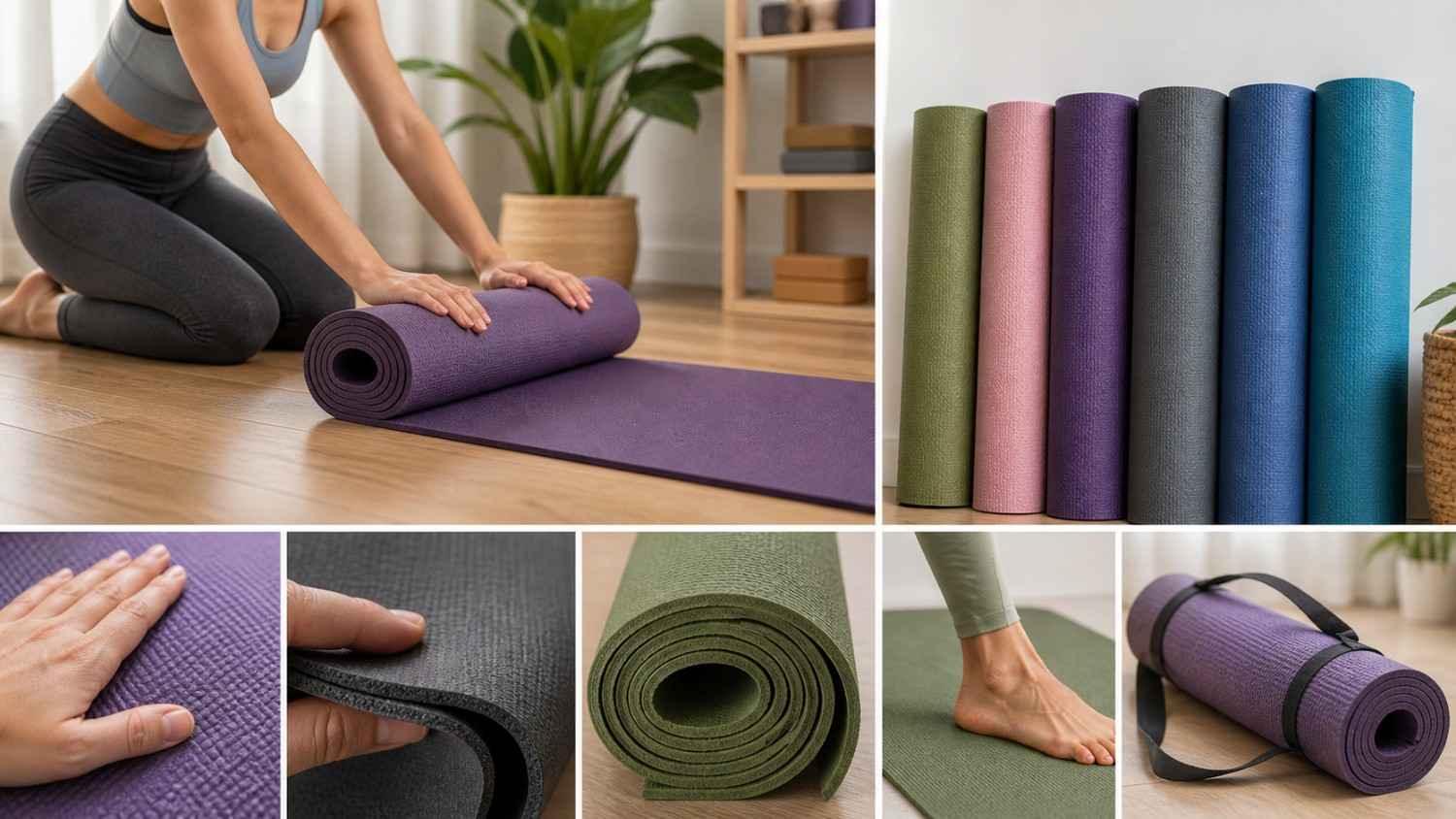
Choosing the best yoga mat in India is not about buying the most expensive one — it is about matching thickness, material, grip and size to how you actually practice. A mat that is too thin will punish your knees in Surya Namaskar; one that is too slippery will shake your confidence in Vinyasa. This guide walks you through exactly how to choose a yoga mat, then compares five of the best yoga mats you can buy on Amazon India in 2026, with real prices checked in October 2026.
Affiliate disclosure: This post contains affiliate links. If you buy through them, we may earn a commission at no extra cost to you. Read our full disclosure and Amazon disclaimer.
Key Highlights
- The best all-round pick for most people in 2026 is a 6mm TPE mat with a carry bag — cushioning, grip and portability in one package.
- Boldfit’s 6mm TPE mat (₹1,599) earns our Best Overall badge with an 8.4/10 rating from over 3,900 Indian buyers.
- Beginners on a budget get enormous value from the STRAUSS 6mm mat at ₹479, the most-reviewed starter mat in this list.
- Hot-yoga and heavy-sweat practitioners should prioritise double-sided anti-slip texture, not just thickness.
- If sustainability matters to you, natural rubber and TPE mats beat PVC on eco-friendliness — and they grip better too.
The 5 Best Yoga Mats in India — Compared
| Product | Best For | Material & Thickness | Price | Check Price |
|---|---|---|---|---|
| Boldfit 6mm TPE Mat with Cover Bag | Overall | TPE, 6mm | ₹1,599 | Check Price |
| STRAUSS 6mm Mat with Carry Bag (Blue) | Beginners | PVC, 6mm | ₹479 | Check Price |
| Boldfit EVA 6mm Mat with Strap (Grey) | Budget | EVA, 6mm | ₹299 | Check Price |
| Wiselife MicroFiber & Natural Rubber 5mm (Bohemian Rug) | Premium | Microfiber + natural rubber, 5mm | ₹3,475 | Check Price |
| Boldfit 6mm TPE Mat with Cover Bag (Red) | Grip / Hot Yoga | TPE, 6mm | ₹999 | Check Price |
Prices checked on Amazon.in in October 2026; they change often.
Detailed Reviews: The 5 Best Yoga Mats
BEST OVERALL
Boldfit 6mm TPE Yoga Mat with Cover Bag
- Thickness: 6mm — the sweet spot for daily practice
- Material: TPE (non-toxic, durable)
- Grip: Double-sided anti-slip texture, textured top surface
- Extras: Carry bag included; sweat-resistant and washable
- Rating: 8.4/10 from over 3,900 reviews on Amazon India
- Price: ₹1,599
Best Overall: This is the mat we recommend to most people. The 6mm TPE build cushions knees, elbows and spine on hard Indian floors without turning wobbly in standing poses. Double-sided anti-slip surfaces hold through Vinyasa flows, the included carry bag makes studio commutes painless, and the sweat-resistant TPE wipes clean with soap and water. With close to 4,000 positive ratings, it is the most proven all-rounder you can buy in this price band. Check Price on Amazon
BEST FOR BEGINNERS
STRAUSS 6mm Yoga Mat with Carry Bag (Blue)
- Thickness: 6mm — forgiving for new knees and wrists
- Material: PVC with anti-tear net
- Grip: Sticky textured non-slip surface
- Extras: Carry bag included; moisture-resistant, easy to clean
- Rating: 7.8/10 from nearly 10,000 reviews on Amazon India
- Price: ₹479
Best for Beginners: If you are just starting out and do not want to spend much before you know yoga is your thing, the STRAUSS mat is almost impossible to beat. It is thick, sticky, ships with a carry bag, and costs less than two takeaway coffees. It will not last a lifetime like a premium mat, but as a first mat it teaches you what matters — grip and thickness — before you upgrade. Check Price on Amazon
BEST BUDGET
Boldfit EVA 6mm Yoga Mat with Strap (Grey)
- Thickness: 6mm, 180 × 60 cm
- Material: EVA (lightweight)
- Grip: Anti-slip, sweat-resistant
- Extras: Carry strap included
- Rating: 7.8/10 from over 800 reviews on Amazon India
- Price: ₹299
Best Budget: At ₹299 this is the cheapest credible mat on the list — a full 6mm thick with a strap thrown in. EVA is lighter than PVC, which helps if you walk to class. Grip is decent for slow and gentle styles; push it hard in sweaty Ashtanga and you will feel its limits. For restorative yoga, stretching, or a spare mat for a guest, it is excellent value. Check Price on Amazon
BEST PREMIUM
Wiselife MicroFiber & Natural Rubber 5mm Yoga Mat (Bohemian Rug)
- Thickness: 5mm, extra-large 187 × 67 cm
- Material: Microfiber top over natural rubber base
- Grip: Suede-like microfiber that grips better as you sweat
- Extras: Carry strap included; made in India
- Rating: 8.2/10 on Amazon India
- Price: ₹3,475
Best Premium: Wiselife’s microfiber-and-rubber mat borrows the idea behind high-end studio mats: a suede-like top that gets grippier when damp, bonded to a natural rubber base that never slides. The extra-large 187cm length suits taller practitioners, and the Bohemian Rug print looks genuinely good. It is a serious upgrade for daily practitioners who want rubber-level stability without a ₹10,000+ imported mat. Check Price on Amazon
BEST GRIP / HOT YOGA
Boldfit 6mm TPE Yoga Mat with Cover Bag (Red)
- Thickness: 6mm
- Material: TPE, free from toxic materials
- Grip: Double-sided anti-slip; wavy bottom stops floor-slide, textured top stops hand-slip
- Extras: Carry bag included; sweat-resistant, washable
- Rating: 8.4/10 from over 3,900 reviews on Amazon India
- Price: ₹999
Best Grip / Hot Yoga: This is the sweat-proof sibling of our Best Overall pick. The same 6mm TPE body, but with the double-sided anti-slip construction that matters most when palms get damp: the wavy underside locks the mat to the floor while the textured top keeps hands and feet planted. At ₹999 — well under the ₹1,599 Best Overall — it is the smartest buy for Vinyasa, Ashtanga and hot-yoga practitioners on a budget. Check Price on Amazon
How to Choose a Yoga Mat: The Buying Guide
Thickness and Cushioning
Thickness is the first decision. 1–3mm travel mats suit experienced practitioners who prize ground connection for balancing poses like Tree or Eagle. 4–5mm standard mats balance cushioning and stability and are the safest default for most people. 6mm and thicker mats protect knees, wrists and spine — ideal for beginners, restorative styles, and anyone with joint sensitivity. All five mats above are 5–6mm, because that is where most buyers land; if you practice vigorous flows daily, lean toward 5mm with strong grip, like our grip pick, rather than piling on thickness.
Material
Material decides grip, durability, weight and eco-impact. PVC is the cheapest and most durable synthetic, but the least eco-friendly — the STRAUSS beginner mat is a fair example. TPE is the modern middle ground: lighter than PVC, recyclable, non-toxic, and genuinely grippy — which is why both Boldfit picks lead this list. Natural rubber offers the best raw grip and is biodegradable, but heavier and often pricier; the Wiselife premium mat pairs a rubber base with a microfiber top. Cork gets grippier when wet and is antimicrobial, making it a niche favourite for hot yoga. For everyday home practice in India, TPE is the sweet spot of price, performance and weight.
Size and Portability
The standard mat is 68 × 24 inches (about 173 × 61 cm). If you are over 5’9″, consider a longer mat — the Wiselife’s 187cm length keeps heels on the mat in Downward Dog. Wider mats (67cm vs 60cm) help in wide-stance poses; the difference feels small until you try it. For portability, remember that grip and durability add weight: premium rubber mats can be twice as heavy as a 6mm EVA budget mat. Carry bags (included with Boldfit and STRAUSS picks above) or straps (Boldfit EVA, Wiselife) make daily transport practical. If you split practice between home and studio, a bag is worth more than a millimetre of thickness.
Grip and Sweat
Grip is what keeps you safe in fast or sweaty practices. Textured top surfaces beat smooth ones; double-sided texture keeps the mat from skating on tile floors — a real issue on Indian marble and granite. Microfiber-topped mats (like the Wiselife) and cork mats actually improve grip as moisture rises, which is why they dominate hot-yoga studios. Budget EVA mats can get slick under heavy sweat — pair them with a yoga towel if that is your style. As a rule: the more dynamic your practice, the more you should weight grip over cushioning when choosing.
Choose by Your Practice Style
Vinyasa and Ashtanga demand grip and moderate (5–6mm) cushioning — our tips for getting better at yoga assume a mat you can trust in transitions. Hatha and Iyengar work well on standard 4–6mm mats with alignment confidence. Restorative and Yin favour thicker, softer mats; the ₹299 Boldfit EVA is surprisingly good here. Hot yoga needs moisture-hungry surfaces — microfiber or cork. If balance is your weak point, read our yoga balance tips and pick a 5mm mat with a textured top rather than a pillowy 8mm one.
Durability and Care
A good mat keeps its grip and shape for years. TPE and rubber mats outlast cheap PVC. Care is simple: wipe with a damp cloth and mild soap after sweaty sessions, dry flat in shade (never in direct sun, which degrades TPE and rubber), and roll with the top side out to prevent curling edges. For recovery days when joints are sore, see our guide to easing neck tension — a well-cushioned mat makes those sessions dramatically kinder.
A Note on Eco-Friendly Mats
If plastic-free practice matters to you, the hierarchy is: natural rubber and cork at the top, TPE in the middle (recyclable, non-toxic), PVC at the bottom. The Wiselife microfiber-and-natural-rubber mat is the greenest pick on this list — rubber is biodegradable and the product is made in India, cutting shipping miles. Note that eco materials need slightly different care: keep rubber mats out of sunlight and give cork a light water mist before practice for maximum grip.
Our Final Verdict
For most Indian yogis in 2026, the Boldfit 6mm TPE mat with cover bag (₹1,599) is the best yoga mat to buy — it balances cushioning, grip, durability and price better than anything else on Amazon India. Starting out? The STRAUSS 6mm (₹479) gets you practising for the price of a pizza. And if yoga is already a daily ritual, the Wiselife natural-rubber mat (₹3,475) rewards you with studio-grade grip for years. Runners and cross-trainers stretching on rest days should also look at our yoga for runners and mobility routine guides to get more from their mat time.
Frequently Asked Questions
Which yoga mat is best for beginners in India?
The STRAUSS 6mm mat with carry bag (₹479) is our top beginner pick: thick enough to protect new knees and wrists, sticky enough to build confidence, and cheap enough that upgrading later does not sting. It has nearly 10,000 positive reviews on Amazon India.
Is 6mm or 4mm better for a yoga mat?
6mm is better for most people — it cushions joints on hard floors while staying stable enough for standing poses. Choose 4–5mm only if you already practice regularly and want maximum ground connection for balance work, or if you travel with your mat.
Which yoga mat is best for sweaty palms and hot yoga?
Pick mats whose grip improves with moisture: microfiber-topped mats (like the Wiselife) or cork mats are best. Among budget options, the Boldfit 6mm TPE with double-sided anti-slip texture (₹999) holds up well in sweaty Vinyasa sessions.
How do I clean my yoga mat?
Wipe TPE, PVC and EVA mats with a damp cloth and mild soap, then dry flat in the shade. Never machine-wash or leave them in direct sunlight. Rubber mats prefer a water-and-vinegar wipe; cork mats just need a damp cloth.
Are expensive yoga mats worth it?
For daily practitioners, yes — a ₹3,000+ natural-rubber mat lasts years longer than a ₹500 PVC mat and grips better throughout its life. For casual or twice-a-week practice, a ₹999–₹1,599 TPE mat gives you 90% of the performance for a third of the price.
When should I replace my yoga mat?
Replace it when the surface stays smooth after cleaning, when it slides on the floor despite a textured base, or when thin spots and tears appear — typically 1–2 years for budget PVC/EVA mats and 5+ years for quality TPE or rubber mats.