
Introduction
Incontinence is a common yet often under-discussed condition that affects millions of people worldwide. It can occur at any age but is more prevalent among women after childbirth, older adults, and individuals with certain medical conditions. Despite its frequency, many people feel embarrassed or hesitant to seek solutions.
The good news is that in many cases, incontinence can be managed and even improved through natural, non-invasive methods. One of the most effective approaches is yoga. By focusing on strengthening the pelvic floor, improving body awareness, and enhancing overall muscle control, yoga offers a holistic solution for managing incontinence.
This guide explores how yoga can help with incontinence, the best poses to practice, and how to incorporate them into your routine safely and effectively. Whether you are dealing with mild symptoms or looking for preventive care, this comprehensive guide will provide valuable insights to support your journey.
Understanding Incontinence
Incontinence refers to the involuntary loss of bladder or bowel control. It can range from occasional leaks to more frequent and severe episodes.
There are several types of incontinence. Stress incontinence occurs when pressure on the bladder, such as during coughing, sneezing, or exercising, leads to leakage. Urge incontinence involves a sudden, intense urge to urinate followed by involuntary loss. Mixed incontinence is a combination of both.
Causes of incontinence vary and may include weakened pelvic floor muscles, hormonal changes, pregnancy, childbirth, aging, obesity, or certain medical conditions.
Understanding the underlying cause is important, as it helps determine the most effective treatment approach. Yoga can play a significant role in addressing many of these factors, particularly muscle weakness and poor control.
How Yoga Helps with Incontinence
Yoga addresses incontinence by targeting both physical and mental aspects of the condition.
- One of the primary benefits of yoga is strengthening the pelvic floor muscles. These muscles support the bladder, uterus, and rectum. When they are weak, control is reduced.
- Yoga poses and techniques help activate and strengthen these muscles over time.
- Yoga also improves core strength. A strong core works in coordination with the pelvic floor, providing better stability and control.
- Breathing techniques in yoga enhance awareness of the pelvic region. Controlled breathing helps engage the right muscles and improves coordination.
Additionally, yoga reduces stress and anxiety, which can worsen symptoms of incontinence. By promoting relaxation, yoga helps regulate the nervous system and improve bladder control.
The Role of Pelvic Floor Muscles
The pelvic floor is a group of muscles located at the base of the pelvis. These muscles play a crucial role in controlling bladder and bowel functions.
- When the pelvic floor is strong, it provides proper support and control. However, factors such as childbirth, aging, and lack of exercise can weaken these muscles.
- Yoga helps by gently engaging and strengthening the pelvic floor without excessive strain.
- Unlike high-impact exercises, yoga focuses on controlled movements and awareness, making it suitable for individuals with incontinence.
Learning to identify and activate these muscles correctly is an important step in improving symptoms.
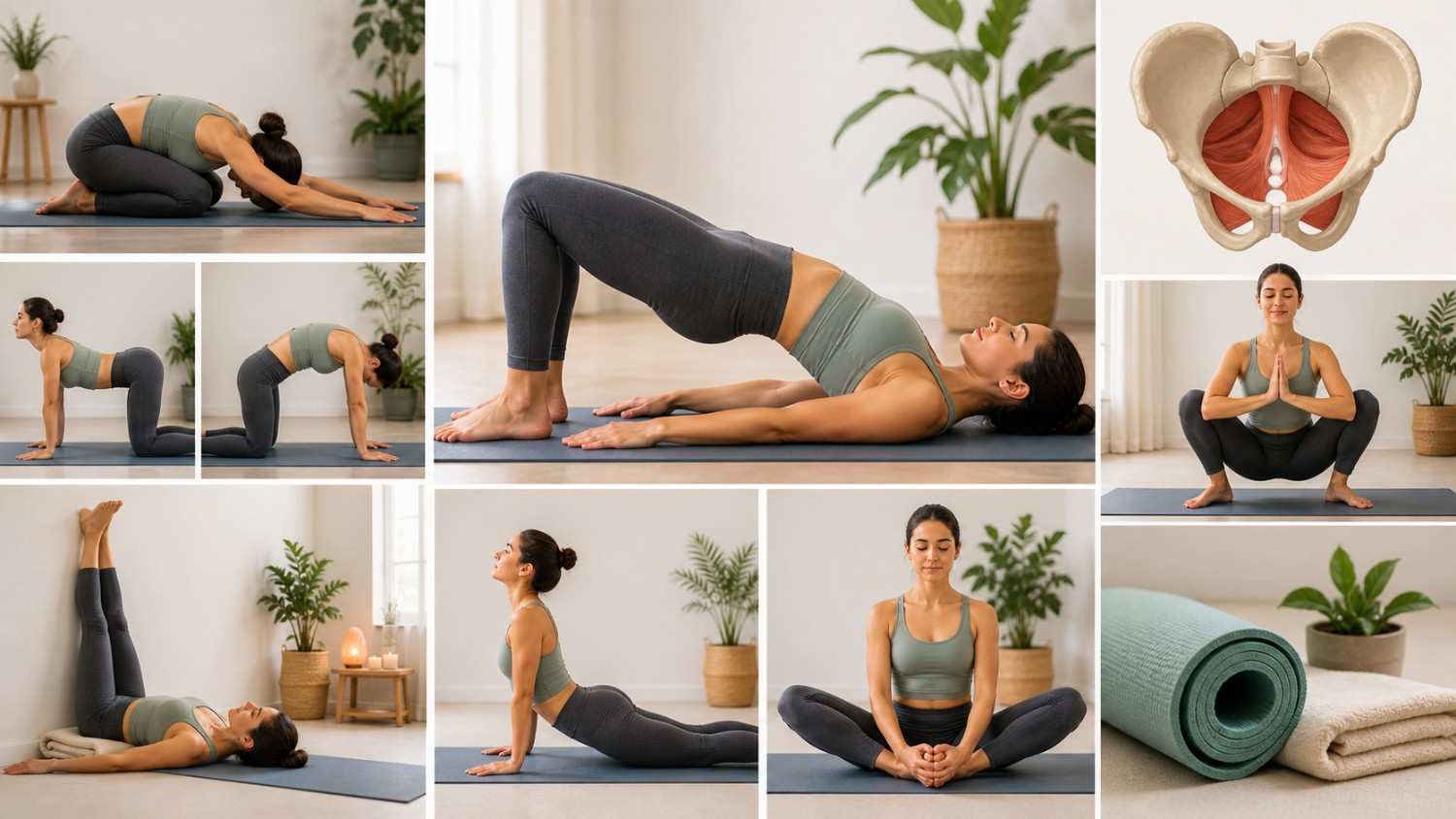
Best Yoga Poses for Incontinence
1. Bridge Pose
- Bridge pose involves lying on your back and lifting your hips upward.
- This pose strengthens the pelvic floor, glutes, and lower back. It also improves circulation in the pelvic region.
- Holding the pose while engaging the pelvic muscles helps build strength over time.
2. Child’s Pose
- Child’s pose is a gentle resting position that promotes relaxation.
- It helps release tension in the pelvic area and encourages mindful breathing.
- This pose is especially useful for reducing stress-related symptoms.
3. Cat-Cow Pose
- Cat-cow involves alternating between arching and rounding the back.
- This movement improves spinal flexibility and enhances coordination between the core and pelvic floor.
- It also encourages awareness of muscle engagement.
4. Squat Pose (Malasana)
- Squat pose involves lowering the body into a deep squat position.
- This pose strengthens the pelvic floor and improves flexibility in the hips.
- It also supports healthy bowel function.
5. Legs-Up-the-Wall Pose
- This restorative pose involves lying on your back with your legs extended upward against a wall.
- It improves circulation and reduces pressure on the pelvic floor.
- It also promotes relaxation and recovery.
6. Cobra Pose
- Cobra pose strengthens the lower back and improves posture.
- Good posture supports proper alignment and reduces strain on the pelvic region.
7. Mountain Pose with Pelvic Engagement
- Mountain pose is a standing posture that focuses on alignment.
- By gently engaging the pelvic floor while standing, you can improve muscle awareness and control.
8. Reclined Bound Angle Pose
- This pose involves lying down with the soles of the feet together.
- It gently stretches the inner thighs and promotes relaxation in the pelvic area.
Breathing Techniques for Better Control
Breathing plays a vital role in managing incontinence.
- Deep diaphragmatic breathing helps coordinate the movement of the diaphragm and pelvic floor. When you inhale, the pelvic floor relaxes, and when you exhale, it gently engages.
- Practicing controlled breathing improves muscle awareness and enhances control.
- Combining breathing techniques with yoga poses increases their effectiveness.
Creating a Yoga Routine for Incontinence
Consistency is key when using yoga to manage incontinence.
- Start with short sessions, around 15 to 20 minutes, and gradually increase duration as you become more comfortable.
- Begin with gentle warm-up exercises to prepare the body.
- Incorporate a mix of strengthening and relaxing poses. Focus on proper technique rather than intensity.
- Include breathing exercises throughout the session.
- End with relaxation poses to calm the mind and body.
Practicing regularly, at least three to four times a week, can lead to noticeable improvements over time.
Lifestyle Tips to Support Yoga Practice
Yoga is most effective when combined with healthy lifestyle habits.
- Maintain a balanced diet to support overall health.
- Stay hydrated, but avoid excessive intake of bladder irritants such as caffeine.
- Maintain a healthy weight to reduce pressure on the pelvic floor.
- Practice good bathroom habits, such as not delaying urination for long periods.
These habits complement yoga and enhance its benefits.
Safety Tips and Precautions
While yoga is generally safe, certain precautions should be taken.
- Avoid poses that cause discomfort or strain.
- If you have a medical condition or severe symptoms, consult a healthcare professional before starting.
- Focus on gentle movements and avoid high-impact exercises.
- Use supportive props if needed to maintain proper alignment.
Listening to your body is essential for safe practice.
Common Mistakes to Avoid
One common mistake is overexertion. Pushing too hard can strain the pelvic floor rather than strengthen it.
- Incorrect muscle engagement is another issue. It is important to focus on the right muscles rather than tightening unrelated areas.
- Inconsistent practice can limit progress. Regular practice is necessary for noticeable results.
- Ignoring breathing techniques reduces the effectiveness of yoga.
Avoiding these mistakes helps maximize the benefits of your practice.
When to Seek Medical Advice
While yoga can be highly beneficial, it is not a replacement for medical treatment in all cases.
- If symptoms are severe, persistent, or worsening, consult a healthcare professional.
- Medical guidance is also important if incontinence is caused by underlying conditions.
Combining medical treatment with yoga can provide the best results.
Conclusion
Yoga offers a gentle yet effective approach to managing incontinence. By strengthening the pelvic floor, improving muscle coordination, and reducing stress, yoga addresses both the physical and emotional aspects of the condition.
With regular practice and proper technique, many individuals experience improved control and confidence. The key is consistency, patience, and a mindful approach.
Incorporating yoga into your daily routine can lead to long-term benefits, helping you regain control and improve your quality of life.