
Introduction
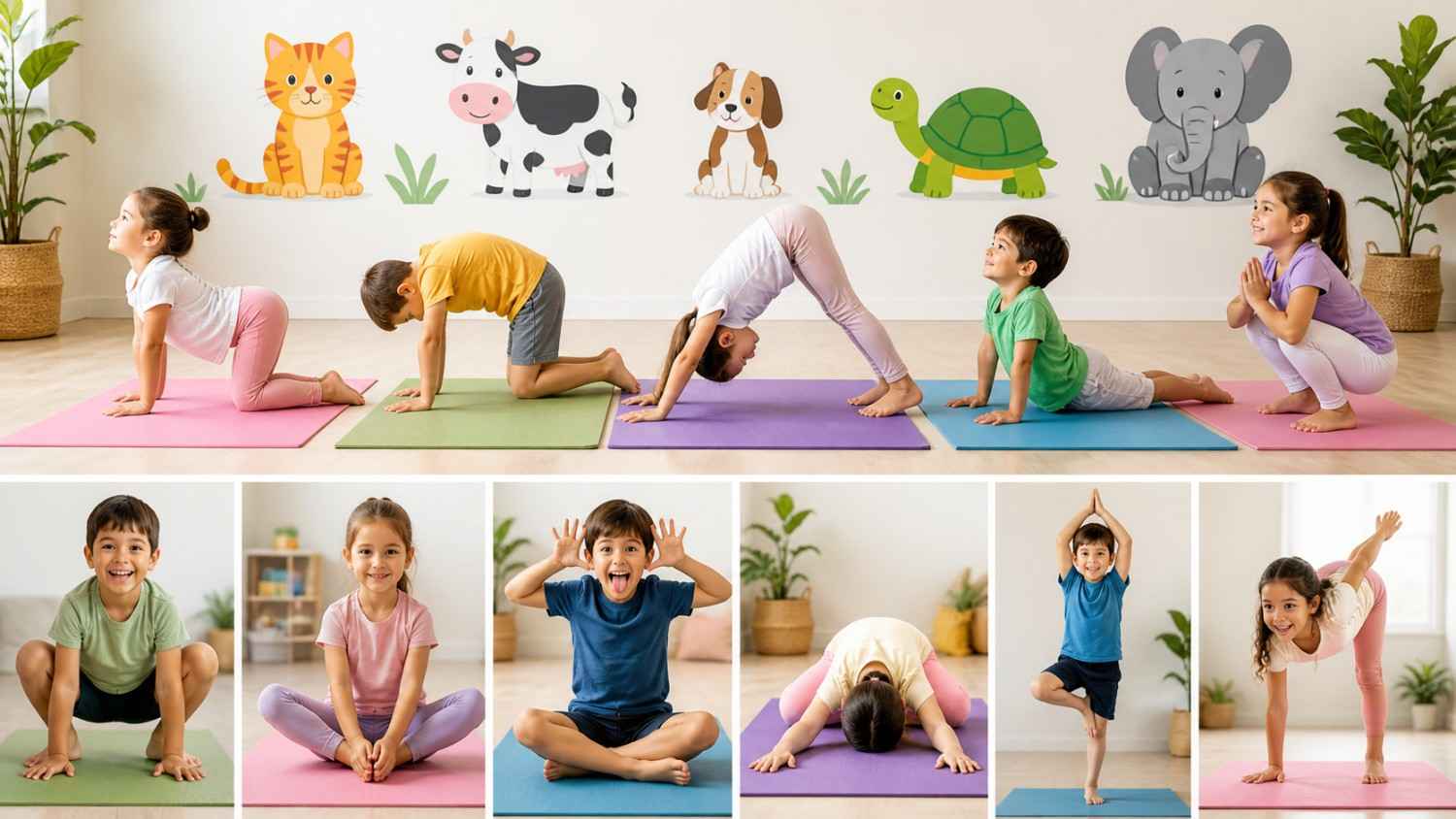
Yoga for kids has gained immense popularity in recent years as parents and educators recognize its physical, mental, and emotional benefits. Unlike adult yoga, which often focuses on discipline and structure, kids’ yoga thrives on creativity, imagination, and playfulness. One of the most effective ways to engage children in yoga is through animal-inspired poses.
Animal name yoga poses for kids combine movement with storytelling, making the practice both fun and educational. Children naturally connect with animals, and mimicking their shapes and movements helps them stay interested while developing strength, flexibility, and coordination.
This guide explores a wide range of animal yoga poses designed specifically for kids. Whether you are a parent, teacher, or beginner instructor, you will learn how to introduce yoga in a way that feels exciting and natural for children. From basic poses to creative sequences, this comprehensive guide will help you create a positive and enjoyable yoga experience for kids.
Why Animal Yoga Poses Are Perfect for Kids
Children learn best through play and imagination. Animal yoga poses tap into this natural tendency by turning exercise into an engaging activity rather than a structured routine.
One of the main advantages of animal-themed yoga is that it keeps children interested. Instead of focusing on technical names or alignment, kids can imagine themselves as strong lions, flexible cats, or calm turtles. This makes it easier for them to participate actively.
Animal poses also encourage creativity. Children can add sounds, movements, and stories to each pose, making the experience more interactive. This not only enhances their engagement but also supports cognitive development.
Additionally, these poses promote physical development. They help improve balance, coordination, flexibility, and strength in a fun and non-intimidating way.
Emotional benefits are equally important. Yoga helps children relax, manage stress, and build confidence. Animal poses, in particular, create a safe and playful environment where kids feel free to express themselves.
Benefits of Yoga for Kids
Introducing yoga at an early age can have long-lasting benefits for children’s overall well-being.
- Physically, yoga helps improve posture, flexibility, and muscle strength. It also enhances coordination and body awareness, which are essential for growing children.
- Mentally, yoga supports focus and concentration. Practicing simple poses and breathing techniques helps children develop mindfulness and stay present.
- Emotionally, yoga encourages self-regulation and reduces anxiety. It provides children with tools to manage their emotions and build resilience.
- Socially, group yoga sessions promote teamwork and communication. Kids learn to follow instructions, take turns, and respect others.
By incorporating animal yoga poses, these benefits are delivered in a way that feels natural and enjoyable.
How to Teach Yoga to Kids Effectively
Teaching yoga to kids requires a different approach compared to adults. The key is to keep sessions interactive, short, and engaging.
- Start by creating a playful environment. Use stories, music, or themes to capture children’s attention.
- For example, you can create a “jungle adventure” where each pose represents a different animal.
- Keep instructions simple and easy to follow. Demonstrate each pose clearly and encourage kids to imitate you.
- Allow flexibility and creativity. Kids may not perform poses perfectly, and that is completely fine. Focus on participation rather than perfection.
- Incorporate games and activities to maintain interest. For example, you can ask children to guess the animal based on the pose.
End each session with relaxation. Simple breathing exercises or a short rest helps children calm down and absorb the benefits of the practice.
Popular Animal Yoga Poses for Kids
1. Cat Pose
- Cat pose is one of the simplest and most effective yoga poses for kids. It involves arching the back like a stretching cat.
- This pose helps improve spinal flexibility and posture. It also encourages children to become aware of their body movements.
- To make it fun, ask kids to make “meow” sounds while performing the pose.
2. Cow Pose
- Cow pose is often paired with cat pose. It involves lowering the belly and lifting the head and chest.
- This pose helps open the chest and improve breathing. It also enhances coordination when combined with cat pose.
- Children can pretend to be cows and make playful sounds, adding to the enjoyment.
3. Downward Dog Pose
- This is one of the most popular yoga poses for kids. It involves forming an inverted “V” shape with the body.
- Downward dog strengthens the arms and legs while stretching the back. It also improves overall body awareness.
- Kids can imagine being playful puppies, wagging their tails or barking.
4. Cobra Pose (Snake Pose)
- Cobra pose involves lying on the stomach and lifting the upper body using the arms.
- This pose strengthens the back and improves flexibility. It also helps open the chest.
- Encourage kids to hiss like a snake to make the pose more engaging.
5. Frog Pose
- Frog pose involves squatting low and placing hands on the ground.
- This pose helps improve hip flexibility and leg strength. It also enhances balance.
- Kids can jump like frogs, turning the pose into a fun activity.
6. Butterfly Pose
- Butterfly pose involves sitting with the soles of the feet together and moving the knees up and down.
- This pose improves flexibility in the hips and thighs. It also promotes relaxation.
- Children can pretend to be butterflies flying in a garden.
7. Lion Pose
- Lion pose is a fun and expressive pose where kids stick out their tongues and roar.
- This pose helps release tension and improves facial muscle relaxation.
- It is particularly effective for boosting confidence and reducing stress.
8. Turtle Pose
- Turtle pose involves bending forward and tucking the head inside, like a turtle hiding in its shell.
- This pose promotes calmness and relaxation. It also stretches the back and legs.
- Kids enjoy pretending to hide and come out of their “shells.”
9. Elephant Pose
- Elephant pose involves bending forward and swinging the arms like a trunk.
- This pose improves flexibility and coordination.
- Children can imitate elephant sounds and movements for added fun.
10. Flamingo Pose
- Flamingo pose involves balancing on one leg.
- This pose helps improve balance and concentration. It also strengthens the legs.
- Kids can pretend to be flamingos standing near a lake.
Creating a Fun Animal Yoga Routine
A structured routine helps maintain flow while keeping children engaged.
- Start with a warm-up, such as simple stretches or breathing exercises. This prepares the body for movement.
- Introduce a theme, such as a jungle or farm. Each pose can represent a different animal in the story.
- Combine poses into sequences. For example, cat and cow poses can be performed together, followed by downward dog.
- Add transitions and movements between poses to keep the session dynamic.
End with a relaxation phase, such as lying down and imagining a peaceful environment.
Safety Tips for Kids’ Yoga
Safety is essential when practicing yoga with children.
- Ensure that the practice area is clean and free of obstacles.
- Encourage children to listen to their bodies and avoid pushing beyond their comfort level.
- Provide clear instructions and demonstrate each pose properly.
- Use soft mats or surfaces to prevent injuries.
Supervise children at all times, especially during balancing poses.
Common Mistakes to Avoid
Avoid making sessions too long or complicated. Kids have shorter attention spans and benefit from shorter, engaging sessions.
- Do not focus too much on perfection. The goal is participation and enjoyment, not technical accuracy.
- Avoid using complex terminology that may confuse children.
- Do not ignore safety guidelines, as improper practice can lead to injuries.
Tips to Keep Kids Engaged in Yoga
- Use storytelling to make sessions more interactive. For example, create a story where children travel through a jungle and meet different animals.
- Incorporate music and sounds to enhance the experience.
- Encourage participation by asking questions and involving kids in decision-making.
- Reward effort and creativity rather than performance.
Keep sessions varied to maintain interest over time.
Conclusion
Animal name yoga poses for kids provide a fun and effective way to introduce children to yoga. By combining movement with imagination, these poses make exercise enjoyable while promoting physical, mental, and emotional well-being.
Whether practiced at home or in a classroom, kids’ yoga helps build healthy habits that can last a lifetime. By focusing on creativity, safety, and engagement, you can create a positive yoga experience that children look forward to.
With the right approach, yoga becomes more than just an activity—it becomes a joyful journey of growth and self-discovery for kids.