
Introduction
Balance is one of the most important yet challenging aspects of yoga practice. Whether you are a beginner struggling to hold Tree Pose for a few seconds or an advanced practitioner refining arm balances and standing postures, balance requires far more than physical strength alone. It is a combination of body awareness, concentration, breath control, muscular engagement, and mental steadiness.
Many people assume balance in yoga depends only on flexibility or athletic ability. In reality, balance begins with understanding how the body, breath, and mind work together. Even experienced yogis can wobble or lose stability when they are distracted, tired, stressed, or tense. Yoga teaches that balance is not about remaining perfectly still; it is about learning how to remain centered despite movement and instability.
Improving balance in yoga offers benefits that extend far beyond the mat. Better balance enhances posture, coordination, confidence, joint stability, and body awareness. It also reduces the risk of falls and injuries while improving mental focus and emotional calmness. Balancing poses strengthen the legs and core while increasing mindfulness and concentration.
This detailed guide explores everything you need to know about improving balance in yoga. From foundational principles and breathing techniques to posture alignment and mental focus, this article provides practical tips that can help beginners and experienced practitioners alike.
Why Balance Matters in Yoga
Balance is a core element of yoga because it trains both the body and mind simultaneously. When practicing balancing poses, the body learns stability while the mind develops concentration and awareness.
Physically, balancing poses strengthen muscles that support posture and movement. These include:
- Core muscles
- Ankles and calves
- Glutes and hips
- Back muscles
- Leg stabilizers
Mentally, balancing poses require focus and presence. If the mind wanders, the body often loses stability. This connection between attention and movement makes balance training a powerful mindfulness practice.
Research and yoga experts also note that balance training improves proprioception, which is the body’s ability to sense its position in space. Strong proprioception supports coordination, agility, and safer movement in everyday life.
Understanding the Real Meaning of Balance in Yoga
Many people think balance means eliminating all movement, but this is not true. The body naturally makes tiny adjustments to maintain stability.
True balance in yoga is about:
- Responding calmly to instability
- Maintaining awareness during movement
- Finding steadiness without rigidity
- Creating harmony between effort and ease
Yoga philosophy teaches that balance exists both externally and internally. A person may physically hold a pose while mentally feeling restless, distracted, or anxious. Likewise, someone may wobble physically while remaining calm and focused internally.
This duality makes balancing poses especially powerful for emotional and mental development.
Common Reasons People Struggle with Balance
Understanding the causes of poor balance helps improve practice more effectively.
Weak Core Muscles
- The core stabilizes the body during movement and standing poses.
- Weak abdominal and lower back muscles make balancing difficult.
Lack of Focus
- Mental distractions directly affect physical stability. Looking around the room or worrying about falling often causes wobbling.
- Developing concentration is essential for improving yoga balance.
Poor Alignment
- Misaligned hips, knees, shoulders, or feet create instability.
- Even small alignment errors can affect balance significantly.
Holding the Breath
- Many practitioners unconsciously hold their breath during challenging poses.
- This creates tension and reduces stability.
Tight Muscles
- Limited flexibility in the hips, ankles, or hamstrings can affect posture and weight distribution.
- Balance improves through repetition and consistency. Irregular practice slows progress.
The Importance of Breath in Balance
Breath is one of the most overlooked aspects of balancing poses.
Breath acts as the bridge between the mind and body. When breathing becomes steady and relaxed, the nervous system calms down, allowing the body to stabilize more effectively.
Why Breath Matters
Steady breathing:
- Reduces tension
- Improves concentration
- Supports muscle engagement
- Prevents panic or stiffness
Shallow or held breath often creates tightness, making balance more difficult.
Breathing Techniques for Better Balance
- Deep Diaphragmatic Breathing: Breathing deeply into the lower belly helps stabilize the core and calm the mind.
- Slow Controlled Breaths: Maintaining slow and even breathing prevents tension buildup.
- Ujjayi Breath: This yogic breathing technique creates rhythm and focus, helping maintain steadiness during poses.
The Power of Drishti (Focused Gaze)
One of the most effective yoga balance techniques is drishti, or focused gaze.
Wherever the eyes go, attention follows. A restless gaze creates a restless mind, while a steady gaze helps stabilize the body.
How to Use Drishti
- Choose a single unmoving point
- Keep eyes soft but focused
- Avoid looking around during the pose
- Place the focal point at eye level if possible
A strong drishti acts like an anchor for the nervous system.
Advanced Balance Challenge
- Closing the eyes increases difficulty significantly because visual input helps maintain equilibrium.
- Practicing with eyes closed strengthens internal awareness and proprioception.
Building a Strong Foundation
Balance begins from the ground up. Yoga teachers often emphasize grounding through the feet because stable feet create stable posture.
How to Ground Properly
- Spread the Toes: Creating space between the toes improves contact with the floor.
- Distribute Weight Evenly: Avoid leaning too heavily into the heel or toes.
- Engage the Arches: Lift the arches slightly while pressing through the foot.
- Root Into the Ground: Imagine pressing energy downward to create upward stability.
The Role of Core Strength
Core engagement is essential for balance.
The core includes:
- Abdominal muscles
- Lower back
- Pelvic floor
- Obliques
These muscles stabilize the spine and support posture.
Yoga teachers frequently recommend poses like plank, boat pose, and side plank for improving balance-related strength.
Best Yoga Poses for Improving Balance
1. Mountain Pose (Tadasana)
Mountain Pose may appear simple, but it teaches foundational alignment and grounding.
Benefits include:
- Improving posture
- Strengthening feet and legs
- Developing body awareness
Tadasana is called the foundation for all standing poses.
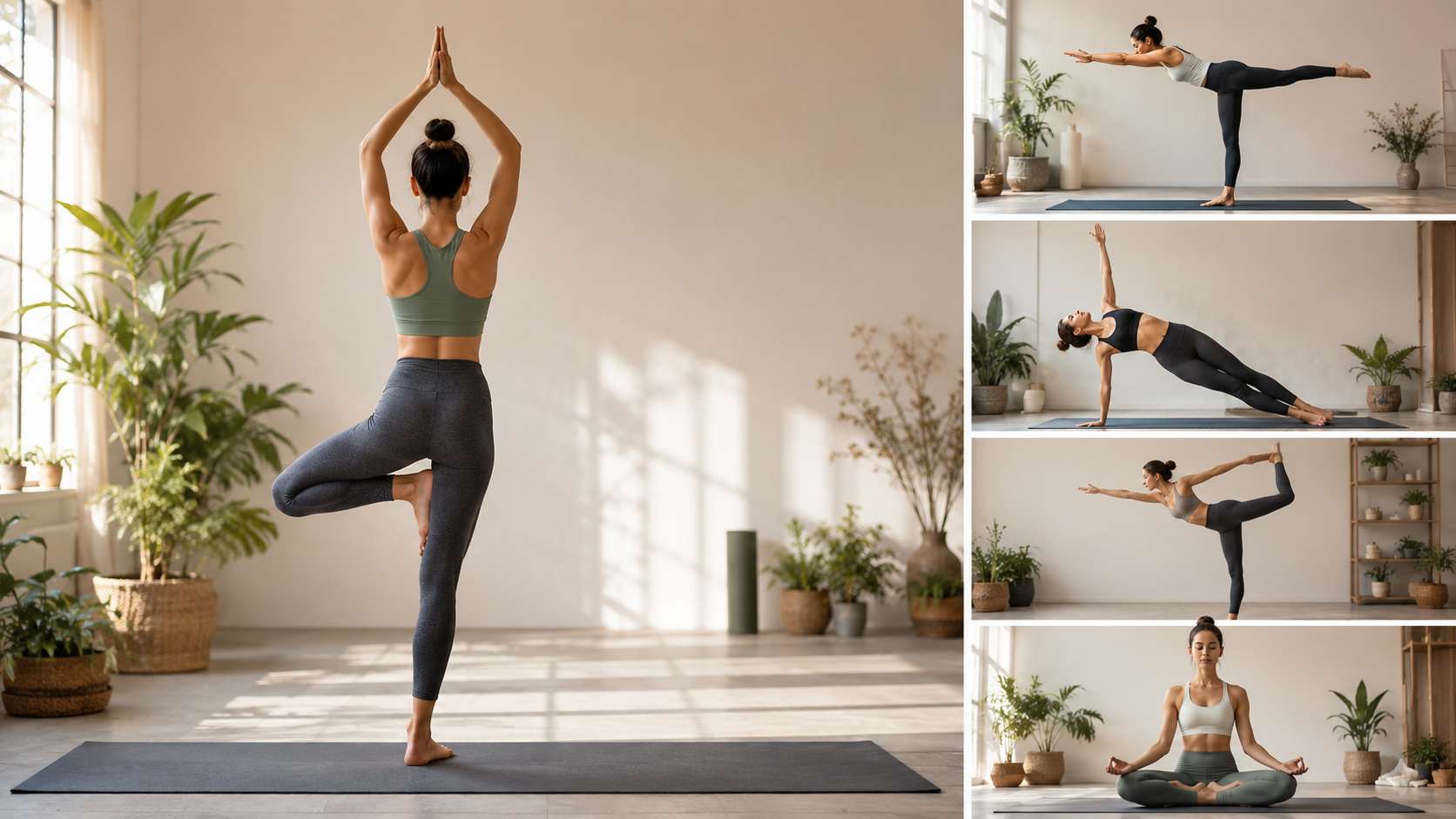
2. Tree Pose (Vrikshasana)
Tree Pose is one of the most well-known balancing poses.
Benefits
- Strengthens ankles and legs
- Improves concentration
- Develops hip stability
Tips
- Press the standing foot firmly down
- Avoid placing the lifted foot directly on the knee
- Use a wall for support if needed
3. Warrior III
Warrior III challenges balance, coordination, and strength simultaneously.
Benefits
- Builds core strength
- Strengthens glutes and hamstrings
- Improves focus
This pose requires maintaining a straight line from head to lifted heel.
4. Half Moon Pose
Half Moon Pose combines balance with spinal rotation and openness.
Benefits
- Strengthens legs and core
- Improves coordination
- Enhances body awareness
5. Side Plank
- Side Plank strengthens the core and shoulder stabilizers.
- Yoga experts recommend plank variations for developing balance-related stability.
Mental Strategies for Better Balance
Balance is strongly connected to mindset.
- Stay Calm: Fear of falling creates tension and instability.
- Accept Wobbling: Wobbling is a natural part of learning balance. Yoga communities frequently emphasize self-compassion and patience during balance practice.
- Avoid Perfectionism: Trying too hard often creates stiffness. Relaxed concentration improves performance more effectively than force.
Using Props to Improve Balance
Props make balancing poses safer and more accessible.
Useful props include:
- Walls
- Yoga blocks
- Chairs
- Straps
Using support allows practitioners to focus on alignment and breath without fear.
The Connection Between Balance and Core Stability
Core stability and balance are deeply connected.
Without core engagement:
- Weight shifts become unstable
- Posture collapses
- Coordination decreases
Consistent core strengthening improves nearly all balancing poses.
Balance and Aging
Balance naturally declines with age because of:
- Muscle loss
- Reduced coordination
- Joint instability
Yoga balance practice helps maintain mobility, confidence, and independence. Recent yoga experts also highlight the importance of standing poses for improving stability in mature adults.
Yoga Balance Tips for Beginners
Beginners should focus on:
- Simple poses first
- Using walls for support
- Short hold times
- Breath awareness
- Patience and consistency
Starting with foundational poses builds confidence gradually.
Advanced Balance Training Techniques
Advanced practitioners can challenge balance by:
- Closing the eyes
- Using unstable surfaces carefully
- Practicing arm balances
- Holding poses longer
- Transitioning slowly between poses
These techniques improve proprioception and neuromuscular control.
Creating a Balanced Yoga Lifestyle
Yoga teaches that balance extends beyond physical poses.
A balanced lifestyle includes:
- Proper sleep
- Healthy nutrition
- Emotional stability
- Consistent movement
- Stress management
Internal imbalance often appears physically during yoga practice.
Conclusion
Improving balance in yoga is not about achieving perfection or never falling. It is about developing awareness, strength, focus, patience, and adaptability. Balance poses teach valuable lessons about concentration, resilience, and inner calm while strengthening the body and improving coordination.
Through consistent practice, proper alignment, breath awareness, and mental focus, anyone can improve their balance over time. Whether practicing Tree Pose for the first time or refining advanced postures, the journey toward balance becomes an opportunity for both physical and personal growth.
Yoga reminds us that balance is not a fixed state but an ongoing process of adjustment, awareness, and presence. With patience and dedication, balancing poses can transform not only yoga practice but also everyday movement and mental steadiness.