
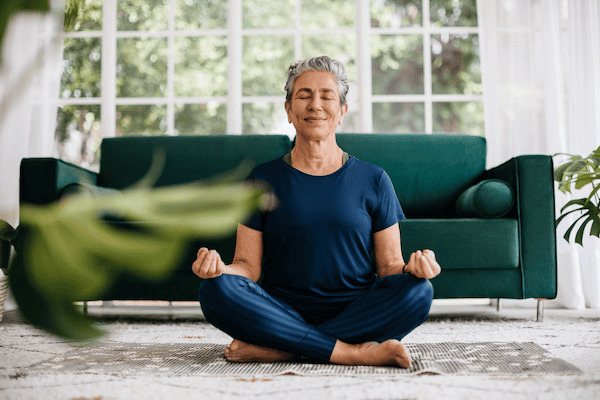
A wave of heat rises up your neck, your face flushes, and within seconds you’re fanning yourself and reaching for cold water. If that sounds familiar, you may be wondering whether yoga for hot flashes is a genuine source of relief or just another wellness trend. The honest answer: yoga won’t switch off hot flashes overnight, but a gentle, well-chosen practice can make them less frequent, less intense, and far easier to ride out.
This guide explains how yoga for hot flashes works, which styles and poses to choose (and which to skip), and a simple evening routine designed for night sweats. Everything is gentle, beginner-friendly, and meant to complement — not replace — your doctor’s advice.
Key Highlights
- Gentle yoga styles — restorative, yin, and slow hatha — plus cooling breathwork can reduce the frequency and intensity of hot flashes over time.
- Cooling breaths like Sitali and Sitkari, plus poses such as Legs Up the Wall and Reclining Bound Angle, directly calm the nervous system during a heat wave.
- Skip heated or fast-paced vinyasa classes for now; they can raise core temperature and trigger flashes.
- A short 15–20 minute evening practice can ease night sweats and noticeably improve sleep quality.
- Yoga works best alongside lifestyle tweaks — hydration, trigger awareness, breathable clothing — and a conversation with your doctor about persistent symptoms.
What Causes Hot Flashes?
A hot flash starts in the brain. The hypothalamus — your internal thermostat — becomes oversensitive when estrogen levels fluctuate during perimenopause and menopause. It misreads normal body temperature as overheating and triggers an emergency cooling response: blood vessels dilate, skin flushes and heats up, sweat pours out, and the heart may race. The classic pattern is a sudden wave of heat across the face, neck, and chest, often followed by a chill as the body overcorrects. A flash can last from 30 seconds to about 10 minutes, and many women experience several a day.
Hot Flashes vs. Night Sweats
Night sweats are hot flashes that strike during sleep — and they deserve special attention because they fragment rest. Repeated awakenings cause next-day fatigue and higher stress, which can in turn worsen daytime flashes. That’s why an evening yoga routine is so valuable: calming the nervous system before bed gives you a head start on uninterrupted sleep.
What Does the Research Say About Yoga and Hot Flashes?
Trials have found regular yoga can reduce the frequency, intensity, and distress of hot flashes — one trial in the journal Menopause found women practicing three times a week for eight weeks reported significantly fewer flashes and better well-being. Yoga also improves sleep and lowers perceived stress — two known amplifiers of hot flashes. The National Center for Complementary and Integrative Health reviews the current evidence on complementary approaches and notes that mind-and-body practices remain an active area of study. Yoga isn’t a cure, but it’s a well-supported complementary approach for the whole cluster of menopause symptoms — not just the flashes.
How Yoga for Hot Flashes Works
Yoga retrains that response rather than fighting the symptom. Slow breathing and gentle movement activate the parasympathetic nervous system (“rest and digest”), lowering heart rate and steadying your reaction to heat. Regular practice helps regulate cortisol, so the body handles hormonal shifts with less alarm. Open, inverted postures improve circulation, helping the body release heat more efficiently. And there’s a mindfulness effect: yoga teaches you to notice the earliest flicker of a flash and answer it with a slow breath instead of panic — and research suggests how distressing a flash feels is partly shaped by your reaction to it.
The Best Yoga Styles for Hot Flashes (and the Ones to Skip)
Not all yoga cools you down. Some styles can trigger a flash, so choosing the right class matters as much as showing up.
Restorative Yoga
Slow, fully supported poses held 5–20 minutes with bolsters, blankets, and blocks. The point is to do as little as possible while the nervous system unwinds — a top choice for hot flash relief, and one of the key benefits of yoga for seniors too.
Yin Yoga
Passive, floor-based stretches held 3–5 minutes, targeting connective tissue rather than muscle. Yin is cooling and meditative by design: settle in, breathe slowly, and let gravity work.
Gentle Hatha and Slow Flow
A balanced mix of mindful movement and stillness — choose classes labeled “gentle,” “slow,” or “beginner” to build strength without generating excess heat.
Pranayama and Meditation
Breathwork deserves its own category: cooling techniques are the fastest-acting tools in this guide, usable mid-flash, at your desk, or in bed. Pair them with a short seated meditation — our guide to the best time to meditate can help.
Styles to Skip for Now
Hot yoga, power yoga, and fast vinyasa raise core temperature and heart rate quickly — the very triggers that can set off a flash. While flashes are frequent, treat cooling styles as home base; yoga supports healthy aging best when the practice fits your season of life.
7 Cooling Yoga Practices for Hot Flash Relief
You don’t need all seven — pick two or three and practice them consistently.
1. Cooling Breath: Sitali or Sitkari
The technique to reach for the moment a flash begins. Curl your tongue into a tube (Sitali); if that doesn’t come naturally, gently press your teeth together and part your lips (Sitkari). Inhale slowly through the mouth, feeling cool air move across your tongue; close your mouth and exhale through your nose. Repeat for 2–3 minutes. The mouth-inhalation cools the air before it reaches your lungs while the slow rhythm tells your nervous system to stand down. Explore more techniques in our complete guide to pranayama benefits.
2. Legs Up the Wall (Viparita Karani)
Sit sideways against a wall, swing your legs up as you lower your back to the floor, and rest your arms by your sides, palms up. Close your eyes and breathe slowly for 5–10 minutes. This effortless inversion calms the nervous system and regulates circulation — many women find it takes the edge off a flash within minutes.
3. Seated Forward Fold (Paschimottanasana)
Sit with legs extended, feet flexed. Inhale to lengthen the spine; exhale and fold forward from the hips, reaching toward your shins or feet without forcing. Rest your forehead on your legs or a cushion for 5–8 slow breaths.
4. Supported Reclining Bound Angle (Supta Baddha Konasana)
Lie back on a bolster or firm pillows. Bring the soles of your feet together, let your knees fall open, and support them with blocks or cushions so there’s no strain. Rest up to 10 minutes, breathing into your belly. This open-chested posture eases anxiety and invites deep relaxation — ideal before bed.
5. Child’s Pose (Balasana)
Kneel and fold forward, resting your torso on your thighs and forehead on the floor or a cushion; widen your knees if that feels better. Breathe into your back body. Child’s Pose is a grounding reset — comforting and available anytime, including mid-flash.
6. Standing Forward Fold (Uttanasana)
Stand with feet hip-width apart, hinge at the hips, and let your head hang heavy, bending your knees generously. This mild inversion has a calming, cooling quality — good when you want movement without heat.
7. Yoga Nidra (Yogic Sleep)
A guided lying-down meditation that systematically relaxes the whole body. A 15–20 minute Yoga Nidra session before bed quiets the mental chatter that keeps you wired and can reduce both night-sweat intensity and the anxiety around them.
A Simple 20-Minute Evening Routine for Night Sweats
About 30 minutes before bed: 3 minutes of Sitali cooling breath, 8 minutes of Legs Up the Wall, 3 minutes of Child’s Pose, then 5 minutes of Yoga Nidra or breath awareness lying in bed. Keep the room cool and don’t rush. Our bedtime yoga routine for better sleep pairs beautifully with this sequence.
Setting Up a Cool, Comfortable Practice Space
Your environment is part of the practice. Choose a cool, well-ventilated room with a fan nearby, wear loose breathable fabrics in layers you can shed mid-flash, and keep water within reach — dehydration can intensify hot flashes. A supportive, non-slip mat makes the longer restorative holds far more comfortable; if you’re due for an upgrade, here’s how to choose a yoga mat for a gentle home practice. Add a bolster or firm pillows, a folded blanket, and two blocks or thick books, and any room becomes a restorative studio.
How Often Should You Practice?
Consistency beats intensity: aim for 3–5 gentle sessions per week, even if some are just 10–15 minutes of cooling breath and one restorative pose. Trials showing the clearest benefits used regular practice over about eight weeks, so give your body time. Many women notice flashes becoming shorter and less distressing within a few weeks, even before the frequency drops.
Lifestyle Habits That Make Yoga Work Better
Yoga is most powerful as part of a cooling lifestyle: drink water steadily, notice your personal triggers — spicy food, caffeine, alcohol, hot drinks, and warm rooms are common — and adjust without demanding perfection. Dress in breathable layers, keep a small fan handy, and protect your sleep with a dark, cool bedroom and a consistent bedtime.
A Note on Realistic Expectations — and When to Talk to Your Doctor
Be honest with yourself: yoga does not cure hot flashes, and it won’t eliminate them for everyone. What it reliably offers is a calmer nervous system, better sleep, lower stress, and practical tools for the moments when heat strikes. That combination is genuinely life-improving for many women — but it complements medical care, it doesn’t replace it. Talk to your doctor if flashes are severe or debilitating, wake you repeatedly most nights, interfere with work or daily life, or began suddenly outside the usual perimenopause window. Effective medical treatments exist, and there’s no prize for toughing it out alone.
Frequently Asked Questions
Can yoga really reduce hot flashes?
Research suggests it can help. Trials have found regular gentle yoga may reduce the frequency, intensity, and distress of hot flashes, and yoga consistently improves sleep and lowers stress — two factors that make flashes worse. It works best as a complement to your doctor’s guidance, not as a standalone cure.
Which type of yoga is best for hot flashes?
Cooling, calming styles work best: restorative yoga, yin yoga, gentle hatha, and pranayama breathwork. These activate the parasympathetic nervous system without raising core body temperature. Avoid heated classes and fast, vigorous vinyasa while flashes are frequent, as they can trigger symptoms.
What is the Sitali cooling breath, and how do I do it?
Sitali is a breathing technique where you curl your tongue into a tube and inhale slowly through your mouth, then exhale through your nose. If you can’t curl your tongue, use Sitkari: press your teeth together, part your lips, and inhale through the teeth. Practice for 2–3 minutes during or after a hot flash.
How quickly will yoga help with my hot flashes?
Some tools work immediately — a cooling breath can take the edge off a flash within minutes. For lasting changes in frequency and intensity, most evidence points to 6–8 weeks of consistent practice, about 3–5 times per week. Track your symptoms in a simple journal to notice gradual improvements.
Is it safe to practice yoga during menopause?
Gentle and restorative yoga is safe for most women during menopause. Listen to your body, rest when needed, stay hydrated, and avoid overheating. If you have osteoporosis, joint replacements, high blood pressure, or other conditions, ask your doctor or a qualified instructor about modifications first.
Can yoga help with night sweats and menopause-related insomnia?
Yes — this is one of yoga’s strongest benefits. An evening practice of cooling breath, Legs Up the Wall, and Yoga Nidra calms the nervous system before bed, reducing night sweats and awakenings. Better sleep then lowers next-day stress, creating a cycle that eases daytime flashes too.