
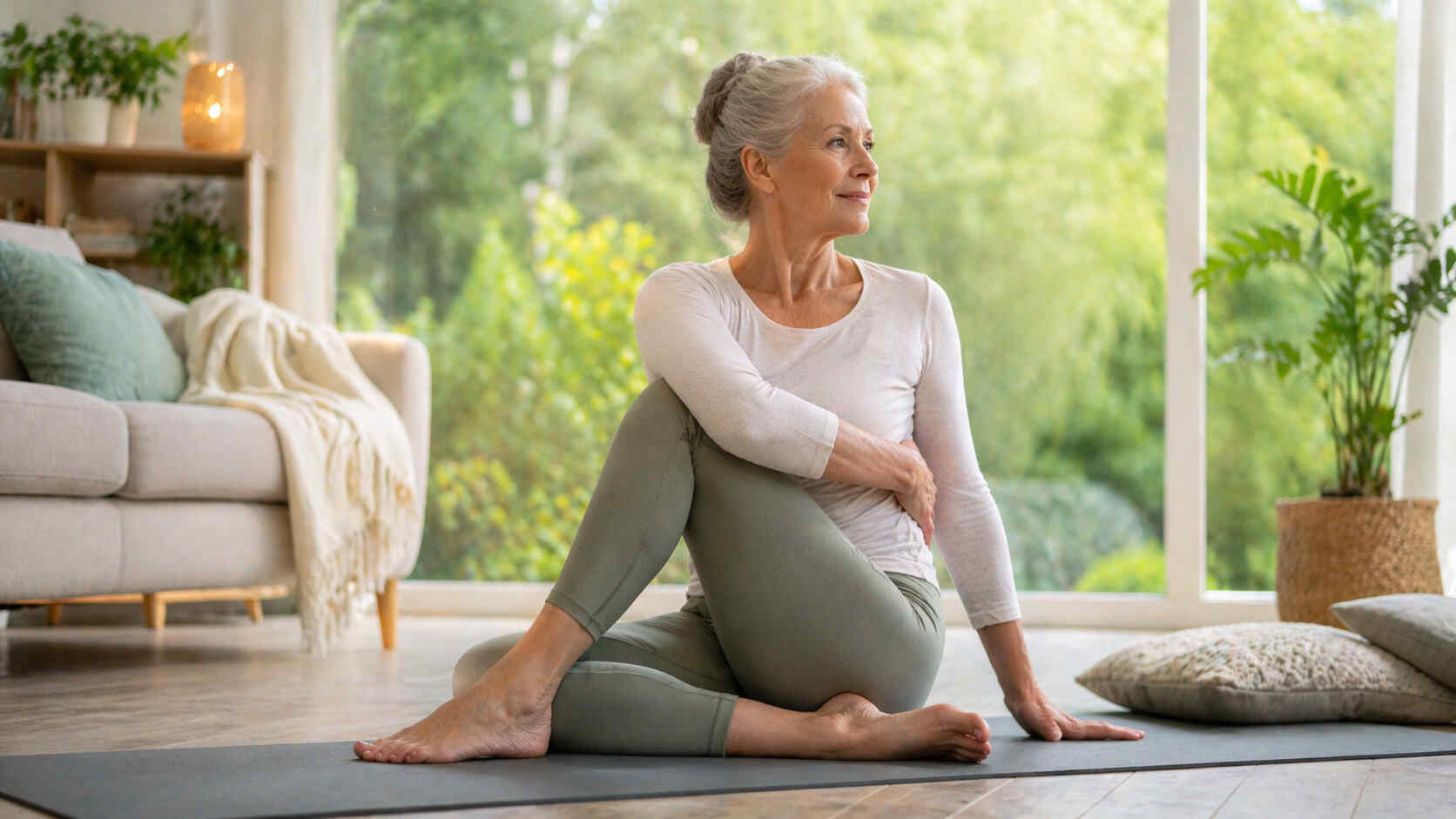
Aging changes the body, but it does not have to take away independence or joy. Yoga for healthy aging pairs gentle movement, breath, and attention in one practice that older adults can shape to their own ability. It is low impact, needs little equipment, and works just as well in a living room as in a class.
Key Highlights
- Yoga supports balance, strength, flexibility, and calm in a single low-impact practice.
- Chair yoga, Hatha, Iyengar, restorative, and Yin styles all suit older bodies when taught gently.
- Short, regular sessions beat occasional long ones for steady progress.
- Props such as blocks, straps, and a chair make most poses accessible and safe.
- People with health conditions should check with a doctor before starting a new routine.
How Yoga Supports an Aging Body
The World Health Organization frames healthy aging as keeping the ability to do what matters to you: move freely, think clearly, stay connected, and live independently. Yoga touches all four at once. A single session can stretch stiff joints, wake up weak muscles, settle the nervous system, and leave the mind quieter.
Balance and Fall Steadiness
Falls are one of the most serious risks of later life, and balance is a skill that fades without practice. Standing poses ask the feet, ankles, and core to work together, and that steady training carries over to stairs, uneven pavements, and getting up from a chair. Research reviews have linked regular yoga practice with better balance and steadier walking in adults over 65, which matters because a fall can cost months of independence. Even a few minutes of balance work each week can rebuild confidence in movement.
Strength Without Strain
Muscle loss creeps in quietly with age, and it shows up as trouble carrying groceries, climbing stairs, or rising from a low seat. Yoga builds strength with body weight alone, so joints take less punishment than they would under heavy weights. Poses such as Chair Pose and Warrior I load the legs and hips in a controlled way, and holding them for several breaths builds endurance as well as power. Older adults who want a fuller strength plan can read our senior fitness strength training guide for a structured approach that pairs well with a yoga routine.
Flexibility and Joint Comfort
Stiffness is often the first change people notice as they age, and it feeds a cycle: movement hurts, so they move less, and moving less makes them stiffer. Gentle yoga breaks that cycle by moving each joint through its range every session, which keeps muscles supple and joints lubricated. Cat-Cow loosens the spine, seated twists free the waist, and slow hamstring stretches ease the backs of the legs. The relief is usually gradual, not instant, but most people feel everyday tasks get easier within a few weeks.
Brain, Mood, and Sleep
Yoga is also a brain practice. The focus it demands gives the mind a break from worry, and the slow breathing calms the stress response. A University of Illinois trial supported by the National Institute on Aging found that older adults who practiced yoga answered cognitive tasks more accurately and showed a lower stress response than a stretching group. Many practitioners also report better sleep, since an evening session of gentle poses and slow breathing helps the body wind down. The social side counts too: a regular class gives people a reason to leave the house and meet others, which fights isolation.
Best Pose Types for Older Bodies
There is no single right style for later life. The best choice is the one that fits your joints, your balance, and your energy on a given day. Most older practitioners mix styles across the week rather than sticking to one.
Balance Poses
Tree Pose, done with fingertips on a wall or chair back, trains ankle stability and focus. Mountain Pose looks simple, but standing tall with weight even across both feet teaches posture and body awareness that protect every other movement. Practice balance poses near support and stop before fatigue makes you wobble.
Strength Poses
Warrior I and II build leg and hip strength, while Chair Pose strengthens the thighs and glutes that power standing up. Plank can be done against a wall for a gentler load on the shoulders and core. Hold each pose for three to five slow breaths, and rest between efforts rather than pushing through shaking muscles.
Flexibility Poses
Cat-Cow warms the spine, Child’s Pose rests the back and hips, and seated forward folds lengthen the hamstrings. A chair yoga routine adapts these same movements for people with limited mobility or balance concerns, so flexibility work stays open to everyone. Stretch to a feeling of mild pull, never sharp pain, and breathe normally through each hold.
Breathing and Relaxation
Pranayama, the breathing side of yoga, deserves as much time as the poses. Diaphragmatic breathing, where the belly rises on the inhale, can lower heart rate and ease tension in minutes. Alternate-nostril breathing suits calmer evenings, while a simple counted breath, four in and six out, works well before bed. End each session lying still for a few minutes; this rest lets the nervous system settle and is part of the practice, not an optional extra.
A Gentle Weekly Routine
Consistency beats intensity: three to four short sessions a week do more than one long weekend class. The sample below totals about two and a half hours a week and scales down to ten-minute sessions when life gets busy.
- Monday, 30 minutes: Hatha basics. Mountain Pose, Cat-Cow, Warrior I and II, seated twist, and five minutes of lying rest.
- Wednesday, 25 minutes: Chair yoga and balance. Seated stretches, supported Tree Pose, ankle circles, and diaphragmatic breathing.
- Friday, 30 minutes: Strength focus. Chair Pose, wall plank, Warrior II, gentle backbends, and a short seated meditation.
- Sunday, 20 minutes: Restorative practice. Supported Child’s Pose, legs resting on a chair, slow breathing, and quiet rest.
On other days, a short walk or light stretching keeps the habit alive without adding strain. If a session leaves you sore for more than a day, shorten the next one; progress in later life is measured in months, not days. Our guide to sore muscles from yoga explains how to tell normal post-practice tenderness from a strain that needs rest.
Safety and Modifications for Older Practitioners
Yoga is safe for most older adults, but a few precautions keep it that way. Ask a doctor first if you have heart disease, osteoporosis, glaucoma, a joint replacement, or any condition that affects balance or blood pressure. The National Institute on Aging advises starting with a class labeled gentle or seniors yoga, where the teacher can adjust poses to your needs and watch your form.
If you practice at home rather than in a class, set up the space with care: clear clutter from the floor, keep a chair within reach for balance poses, and avoid practicing on a slippery rug. A short warm-up of ankle circles and shoulder rolls before deeper stretches also lowers the risk of a strain.
Props are not a sign of weakness; they are the tools that make yoga work for real bodies. A block brings the floor closer in standing folds, a strap extends reach in seated stretches, and a sturdy chair gives balance support and a seat for entire routines. A stable, non-slip surface matters as much as any pose, and our guide to choosing a yoga mat covers grip and cushioning for older practitioners. Skip deep forward bends and headstands if you have osteoporosis or eye pressure problems, and avoid any pose that causes sharp pain, dizziness, or numbness.
Two habits protect you more than any single rule. First, warm up for five minutes before deeper stretches, since cold muscles strain more easily. Second, tell your teacher about injuries and limits before class starts; a good teacher will offer alternatives without fuss.
Getting Started After 60
Starting late is normal, and teachers of seniors classes expect beginners of every age. Look for a gentle, Hatha, or seniors class at a community center, studio, or online, and try two or three teachers before settling on one. A teacher who explains modifications, moves slowly, and checks in on new students is worth more than a famous name.
At home, begin with ten minutes a day: three poses, one breathing exercise, and a minute of lying rest. Add five minutes each week until you reach a comfortable length. Small goals work better than grand ones; aim for three sessions this week, not a perfect month. For practical tips on building skill steadily, see our guide on how to get better at yoga, which covers pacing, form, and common beginner mistakes.
Cost should not stop you either: community centers and libraries often run low-cost seniors classes, and many teachers offer a free trial session. A slower class you enjoy will always beat a demanding one you quit.
Practicing with a friend also helps: a regular partner makes it easier to show up and turns the session into a social occasion.
If classes feel out of reach, seated and chair-based practices are a genuine starting point rather than a lesser version. The benefits of yoga for older adults are well documented in our overview of benefits of yoga for seniors, including better mobility, steadier balance, and calmer mood. What matters is that you begin where you are, with the body you have today.
Conclusion
Pick one gentle class or one ten-minute home session this week and make it your starting point. A small, steady practice will serve your aging body better than any perfect routine you never begin.
Frequently Asked Questions
Is yoga safe for people over 70 who have never practiced before?
Yes, yoga is safe for most beginners over 70 when the practice is gentle and adapted to the individual. Choose a seniors or gentle class, tell the teacher about your health history, and use props and chair support. Start with short sessions and stop any pose that causes sharp pain, dizziness, or breathlessness.
How often should older adults practice yoga each week?
Three to four sessions of 20 to 30 minutes a week is a solid target for most older adults. Research on yoga programs for seniors often uses around 45 minutes a week across 8 to 12 weeks and still finds benefits. Short, regular practice beats rare long sessions, and rest days matter as much as practice days.
Which style of yoga is best for seniors?
Hatha, gentle yoga, and chair yoga are usually the best starting points for seniors because they move slowly and allow modifications. Iyengar yoga suits people who want precise alignment and prop support, while restorative yoga helps those who need stress relief and gentle stretching. Try two or three styles before deciding which fits your body.
Can yoga really help with balance and fall prevention?
Yes, yoga can improve balance because standing poses train the ankles, legs, and core to stabilize the body together. Reviews of studies in adults over 65 link yoga practice with steadier walking and better balance measures. Practice near a wall or chair for support, and pair yoga with walking for the best effect on everyday stability.
Do I need to be flexible to start yoga?
No, flexibility is a result of yoga, not a requirement for starting it. Every pose can be modified with blocks, straps, or a chair, and teachers of seniors classes expect stiff joints and limited range of motion. Regular gentle stretching gradually improves flexibility, and most people notice everyday movements getting easier within a few weeks.
What equipment do I need to begin yoga at home?
You need very little: a non-slip mat, a sturdy chair for balance support, and optionally a block and strap for reaching poses comfortably. Wear clothes you can move in and practice on a flat, clear surface with room to stretch your arms wide. A folded blanket adds comfort for seated poses and final rest.