
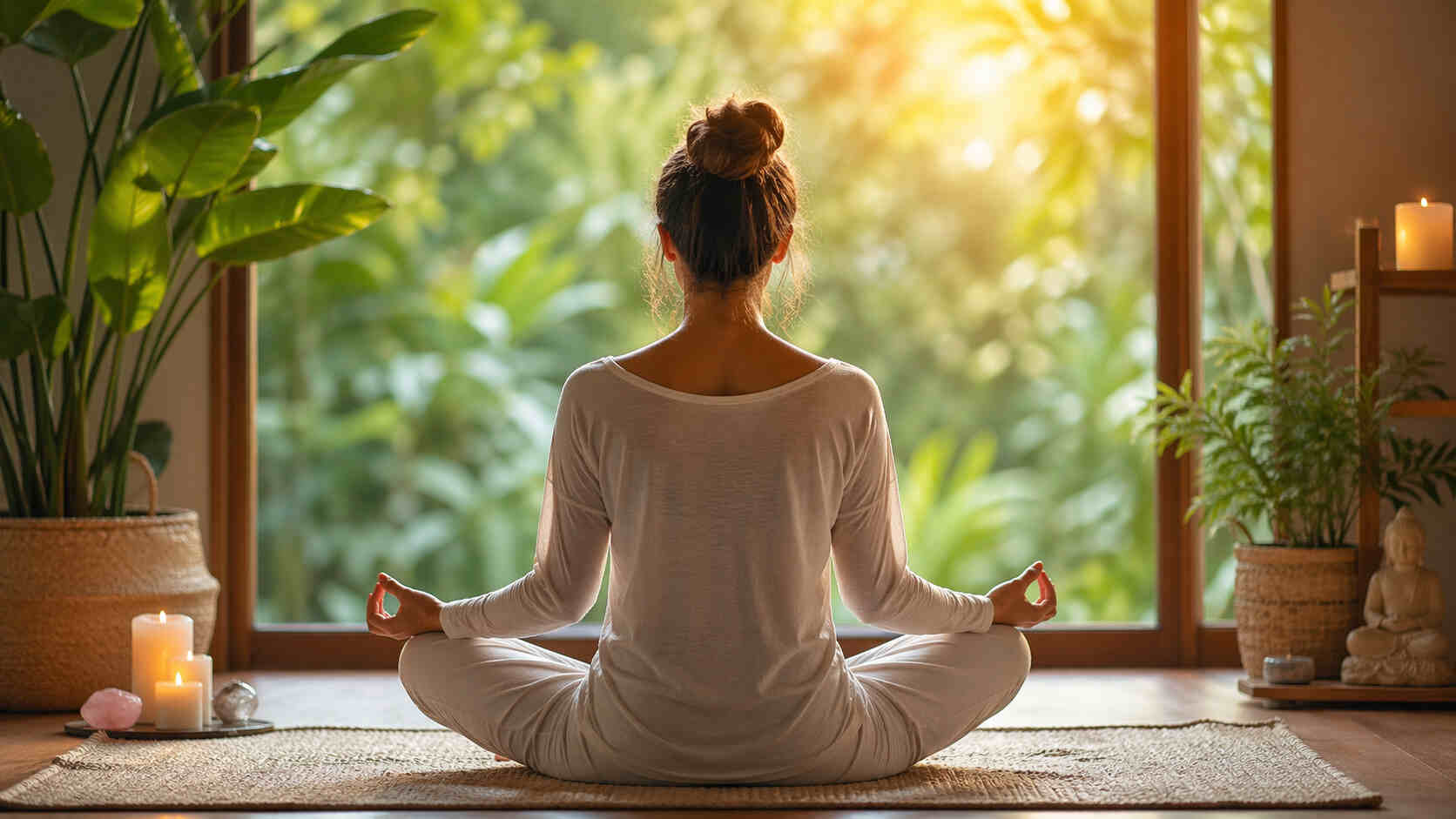
Gratitude meditation is a practice of deliberately holding thankful thoughts in attention while you meditate, feeling them instead of merely listing them. Ten quiet minutes is enough to change the tone of a day. This guide covers what the research shows, five practices you can try tonight, and how to build a habit that lasts.
Key Highlights
- Gratitude meditation trains you to feel thankfulness in the body, which is what separates it from journaling alone.
- Research links regular practice to better mood, lower stress, deeper sleep, and stronger relationships.
- Five named practices cover every schedule: a morning journal sit, loving-kindness phrases, a body-scan thank-you, a sleep routine, and a walking version.
- Start with 5 to 10 minutes daily and add time only when the habit feels automatic.
- Meditation and gratitude journaling are different tools; used together they reinforce each other.
The Science Behind the Practice
Thankfulness gets dismissed as soft advice. The research behind it is harder to dismiss. Controlled experiments over the last two decades show a consistent pattern: people who deliberately practice gratitude feel better, sleep better, and relate better to others. Gratitude also anchors attention in the present, since you cannot appreciate what you are not noticing.
Less Stress and Anxiety
Gratitude and worry compete for the same mental space. Directing attention to what is going right interrupts the loop of anticipatory thinking. In the Emmons and McCullough experiments, gratitude-list participants reported fewer stress-related physical symptoms than hassles-list participants.
Better Mood and Mental Health
Harvard Health calls gratitude “strongly and consistently associated with greater happiness,” helping people feel more positive emotions and handle adversity. In the landmark Emmons and McCullough (2003) study, participants who listed five gratitudes weekly felt better about their lives than control groups; the full paper is hosted by the Greater Good Science Center.
Deeper Sleep
A 2009 study in the Journal of Psychosomatic Research found that grateful people fall asleep faster and sleep longer, even after accounting for personality. The mechanism was pre-sleep thinking: grateful people worry less in bed (full paper via the Greater Good Science Center). A gratitude sit before bed is one of the most evidence-backed versions of this practice.
Stronger Relationships
Gratitude turns attention outward. Sara Algoe’s research found that expressing thanks makes both giver and receiver rate the relationship more highly and motivates future kindness, which is why gratitude meditation pairs naturally with loving-kindness phrases.
How to Set Up Your Practice
Pick a spot where you will not be interrupted for ten minutes and a consistent daily slot. Sit upright with relaxed shoulders, on a chair or cross-legged on a cushion. Lying down works for the sleep version but invites drowsiness in daytime sits.
If ten minutes of stillness sounds impossible, learn the posture and breath basics in this yoga meditation basics guide first. Set a timer; five minutes is a real session.
Comfort is practical: a firm cushion under the hips takes pressure off the knees, and if you sit on the floor regularly, a mat with enough padding earns its place; this guide to choosing a yoga mat explains what to look for in thickness and material.
Five Gratitude Meditation Practices to Try
Try each once, then keep the two that feel most natural.
1. Morning Gratitude Journal Meditation
The pen does the thinking; the sit does the feeling. Write three specific things you are grateful for, one sentence each: “my sister called last night to check on me” works better than “family.” Mornings suit this practice, though consistency matters more than the hour; this breakdown of the best time to meditate can help you pick a slot you will keep.
- Sit comfortably and take five slow breaths to settle the body.
- Read your three journal lines slowly, one at a time, closing your eyes after each.
- Hold each item in attention for about a minute. Picture it in detail: the voice, the room, the weather.
- Notice where warmth or ease shows up in the body. Rest attention there.
- After the third item, sit in the accumulated feeling for one more minute, then open your eyes.
Tip: find one fresh item each morning, even a tiny one.
2. Loving-Kindness Gratitude Meditation
Direct gratitude toward specific people with phrases repeated silently: “May you be happy. May you be healthy. May you live with ease.” You are rehearsing goodwill.
- Begin with yourself. Repeat the phrases inwardly for two minutes; early awkwardness is normal.
- Bring to mind someone who helped you recently. Repeat the phrases while picturing their face.
- Move to a second person: a friend, a teacher, a stranger who held a door.
- End by widening the circle to everyone in your building, your street, your city.
Tip: pick real, recent incidents; phrases aimed at the barista who remembered your order carry more charge.
3. Body-Scan Gratitude Practice
Most of us meet our bodies only when something hurts. This practice flips that: you move attention through the body and thank each part for what it does, a cousin of five-senses meditation where the anchor is appreciation rather than neutral observation.
- Lie down or sit with eyes closed. Breathe naturally.
- Bring attention to the feet. Silently thank them for carrying you through yesterday. Spend thirty seconds there.
- Move slowly upward: legs, hips, belly, chest, hands, shoulders, face, head. At each stop, name one thing that part does for you.
- At a place of pain or tension, thank the surrounding healthy tissue and breathe into the tight spot.
Tip: go slow; rushing the scan turns it into a checklist.
4. Gratitude Meditation for Sleep
Done lying in bed with the lights low, this replaces the usual pre-sleep worry review with a deliberate gratitude review. It fits the habits in this overview of the benefits of meditation before bed, which covers why evening sits help the nervous system wind down.
- Lie in your sleeping position, lights low or off.
- Recall three moments from today you are glad happened. They can be tiny: a good meal, a text, sunlight through a window.
- Replay each moment for a minute as if watching a short film. Let the feeling rise on its own.
- Shift to one person who made today easier and silently thank them, then let sleep arrive.
Tip: keep a notepad by the bed. On racing nights, writing the three moments first gives the chatter somewhere to land.
5. Gratitude Walk
For people who cannot sit still: walk slowly and pair blocks of steps with things you appreciate, on a quiet street, in a park, or on a balcony.
- Walk at about half your normal pace. Let the arms swing naturally.
- With each ten steps, silently name one thing you are grateful for, alternating categories: people, places, abilities, small comforts.
- When thoughts wander, come back to the rhythm of the steps.
- After ten to fifteen minutes, stop and stand still for one final full-body breath.
Tip: leave the earbuds out. This practice depends on noticing your surroundings.
How Long and How Often to Practice
Five to ten minutes a day beats a forty-minute weekly session. The studies showing real effects used short daily practice. Increase duration only when the current length feels easy: two weeks at five minutes, then two weeks at ten. Miss a day and simply resume. Guilt is not a meditation technique.
Gratitude Meditation vs Gratitude Journaling
Journaling is cognitive: writing forces you to name, specify, and remember, creating a record you can reread on bad days. Its weakness is that it can stay intellectual: you can write “grateful for my health” while feeling nothing. Meditation is experiential. Sitting with one grateful thought trains the nervous system to register the feeling in the body: warmth in the chest, easier breathing, a loosened jaw. The strongest approach is to write first and sit second. The journal supplies the material; the sit supplies the feeling.
Common Obstacles (and How to Handle Them)
“I feel nothing.” The feeling often arrives minutes after you stop trying to produce it, or as a subtle easing rather than a rush of warmth. Numbness at week one is normal; it usually thins out by week three.
“My mind wanders constantly.” Wandering is not failure; noticing it and returning is the exercise. If the drift is severe, shorten the session rather than abandoning it.
“I fall asleep.” Harmless in the evening practice. In daytime sits, meditate earlier in the day or after a short walk, and sit upright.
“I don’t have time.” Attach five minutes to an existing habit, right after brushing teeth or before the morning coffee, and the time argument dissolves.
“Gratitude feels fake when life is hard.” Aim smaller: one working knee, one cup of tea, one person who answered. Small true gratitudes beat big performed ones.
Combining Gratitude Meditation With Yoga and Pranayama
A short physical practice before sitting settles the restlessness that makes early sessions hard. Five rounds of sun salutations or ten minutes of gentle stretching discharge enough energy that sitting still stops feeling like a punishment. Two minutes of alternate-nostril breathing between the movement and the sit gives the chattering mind a simple task, which smooths the transition into gratitude. For a fuller map of sequencing and timing, see this guide to combining yoga with meditation.
No studio routine needed: ten minutes of movement, two minutes of breathwork, five minutes of gratitude is a complete daily practice most people can sustain for years.
Frequently Asked Questions
How long should a gratitude meditation session last?
Five to ten minutes a day is enough for beginners, and the research showing real benefits used short daily sessions rather than long occasional ones. Start with five minutes for the first two weeks, move to ten when it feels easy, and only go longer if you genuinely want to. Consistency matters far more than duration.
Can gratitude meditation help with anxiety?
Yes, it can reduce the worry loop that feeds anxiety. Gratitude and anxious rumination compete for attention, so deliberately directing your focus to what is going well interrupts anticipatory thinking. Studies link regular gratitude practice to fewer stress symptoms and better emotional balance, though it is a complement to professional treatment, not a replacement for it.
Is gratitude meditation the same as gratitude journaling?
No. Journaling is cognitive: writing forces you to name and specify what you appreciate, creating a record you can revisit. Meditation is experiential: sitting with one grateful thought trains your body to register the feeling. They reinforce each other, and the strongest routine is to write three items first and then meditate on them.
What is the best time of day for gratitude meditation?
The best time is the slot you will keep daily. Mornings set a calmer tone for the day, while an evening session before sleep has the strongest research support for improving sleep quality. Pick one, attach it to an existing habit like brushing your teeth, and protect that slot for the first month.
What if I cannot feel grateful during the session?
Feeling nothing at first is normal and not a sign of failure. The sensation often arrives as a subtle easing rather than a rush of warmth, and it usually develops by the second or third week of daily practice. On hard days, aim smaller: one working knee, one cup of tea. Small true gratitudes beat big performed ones.
Do I need a guided recording as a beginner?
No, but one helps for the first week or two. A guided voice gives wandering minds something to return to while you learn the shape of the practice. After that, silent sessions with a simple timer usually work better, because they force you to generate the feeling yourself instead of being carried by someone else’s words.
Conclusion
Start with the morning journal sit or the sleep practice and do it daily for two weeks before judging it. Then keep the practice that felt most alive and drop the rest. Gratitude is a skill, and like every skill it answers to repetition.