

Five quiet minutes with nadi shodhana can change the tone of a whole morning. This alternate nostril breathing technique slows the breath, steadies attention, and leaves most people calmer than when they sat down. It needs no equipment beyond a cushion and a timer, and the basic version suits complete beginners. This guide walks through the hand position, the count, and the ratios, then covers benefits, mistakes, and who should skip the breath holds.
Key Highlights
- Nadi shodhana is alternate nostril breathing: breathe in through one nostril and out through the other, in a slow even loop.
- Sit tall, form Vishnu mudra with the right hand, and start with 5 to 10 rounds at a 1:1 count.
- The basic version uses no breath holds. Add retention only after a month of steady practice.
- Regular practice supports a calmer nervous system, steadier focus before meditation, and easier sleep.
- Skip the breath holds if you are pregnant, have high blood pressure or a heart condition, or have a blocked nose.
How to Practice Nadi Shodhana
Classical texts place this practice first among the pranayamas. The Hatha Yoga Pradipika describes it before the eight classical breathing techniques, and the Gheranda Samhita treats it as essential preparation for meditation. The idea is simple: the breath alternates sides, and the slow rhythm gives the nervous system a clear signal to settle. The breathing pattern itself does the work.
Practice on an empty stomach, at least two hours after eating. Early morning is traditional, and the hour before bed works well too. Sit on a folded blanket or a yoga mat that stays put on the floor, in a chair with both feet flat, or cross-legged on a cushion. The seat matters less than the spine: tall, relaxed, and still for five minutes.
Step 1: Sit Tall
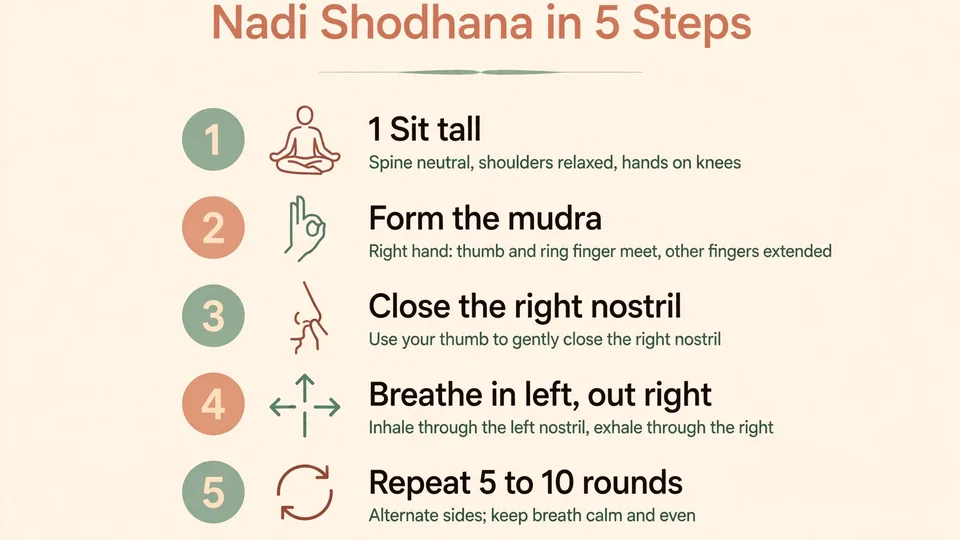
Choose Sukhasana, an easy cross-legged seat, or sit on the front edge of a chair. Lengthen the spine without stiffening it, drop the shoulders away from the ears, and let the chin sit level. Rest the left hand on the left knee, palm down or in Chin mudra with thumb and index finger touching. Close the eyes and take three natural breaths to arrive.
Step 2: Form Vishnu Mudra
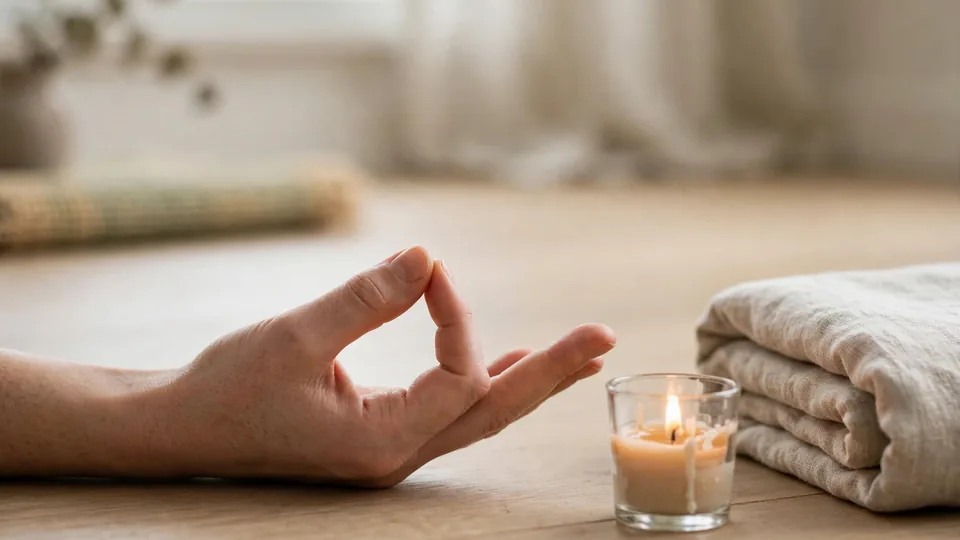
Raise the right hand to the nose and fold the index and middle fingers toward the palm. The thumb, ring finger, and little finger stay extended. The thumb will close the right nostril and the ring finger will close the left. Keep the hand soft. A tight grip tires the arm within a minute, and tired arms rush the breath.
Step 3: The First Round
Close the right nostril gently with the thumb and breathe out slowly through the left nostril. Breathe in through the left nostril for a count of four. Close the left nostril with the ring finger, release the thumb, and breathe out through the right nostril for a count of four. Breathe in through the right nostril for a count of four. Close the right nostril, release the left, and breathe out through the left for a count of four. That is one full round.
Step 4: Count and Repeat
Repeat the round 5 to 10 times, keeping the inhale and exhale equal. Count silently if it helps, and keep the breath quiet enough that you can barely hear it. The exhale should feel unhurried, never forced. When the rounds are done, lower the right hand and breathe naturally for a minute.
Breathing Ratios: Start at 1:1, Build to 1:4:2
Beginners stay at 1:1, an equal inhale and exhale with no hold. After a month of daily practice, add a short hold after the inhale and move toward 1:1:2, for example in for 4, hold for 4, out for 8. The classical target in the Hatha Yoga Pradipika is 1:4:2, in for 4, hold for 16, out for 8, and it takes months or years of guided practice to reach. There is no prize for rushing the ratio. A smooth 1:1 round done daily beats a strained 1:4:2 round done once. These ratios come from the classical texts, and our complete guide to pranayama sets them beside the other classical techniques.
If counting feels fussy, drop the numbers and breathe by feel. The practice still works when the breath is slow, smooth, and even on both sides. The count is a training wheel, not the point.
What Nadi Shodhana Does for Body and Mind
Most of the benefit comes from one mechanism: breathing through one nostril at a time adds resistance, and the counting keeps you from rushing. Most people drop to five or six breaths a minute without trying. Slow breathing with an unhurried exhale shifts the nervous system toward its resting mode.
A Calmer Nervous System
Slow alternate nostril breathing is one of the most reliable ways to downshift out of a wired state. The long exhale is the active ingredient. When the out-breath lasts as long as the in-breath, heart rate eases and the body gets a clear rest signal. This is why teachers place the practice before sitting meditation and why it works well as a reset between work and sleep.
Steadier Focus Before Meditation
The practice gives the mind a small job: switch fingers, count, follow the breath from one side to the other. That gentle occupation quiets mental chatter better than sitting still and trying to think about nothing. Five rounds before meditation often make the sit that follows noticeably steadier. If sitting still is new to you, the basics of meditation pair naturally with this breathing practice as a short daily routine.
Support for Blood Pressure and Heart Rate
A number of small trials, most of them from India, report a lower heart rate and a small drop in blood pressure after weeks of alternate nostril breathing, along with better scores on attention tests. The studies are short and the groups are small, so treat the findings as promising rather than proven.
The practice is a complement to medical care, never a replacement for it, and anyone with a heart condition should check with a doctor first.
Clearer Breathing and Easier Sleep
After a session, both nostrils tend to feel more open, and the slow rhythm carries into the night when practiced before bed. People who struggle to fall asleep often find the counting itself helps: it occupies the mind just enough to crowd out the day’s replay. A cooling left-nostril breath such as Chandra Bhedana works the same way on warm restless evenings, and it is a good alternative when the full alternate pattern feels like too much.
Common Mistakes to Avoid
The most common mistake is forcing the breath. If the inhale feels like sucking air through a straw, the count is too long or the nostril is pressed too hard. Use a feather touch on the nose and shorten the count until the breath flows. A second mistake is hunching over the hand. If the elbow drops and the shoulder creeps up, rest the elbow on a cushion or the chest and let the arm hang.
A third mistake is practicing with a blocked nose. A cold or congestion turns the technique into a struggle, and struggling defeats the purpose. Wait until the nose is clear, or practice slow even breathing through both nostrils instead. A fourth mistake is adding breath holds too soon. Holds are an advanced step, and adding them in week one usually creates tension rather than calm. It helps to know how breathwork and pranayama differ, because the two get mixed up often: breathwork usually means faster active patterns, while pranayama includes slow classical techniques like this one, and they serve different purposes.
Who Should Skip the Breath Holds
The even breath without holds is gentle and suits most people, including older adults and beginners. Leave the holds out entirely if you are pregnant, have high blood pressure or a heart condition, or have a history of panic attacks, since holding the breath can feel distressing. Anyone with asthma or a respiratory condition should practice with the nose clear and the count short, and stop if breathing feels tight. When in doubt, keep the practice simple: equal breaths, no holds, five rounds.
When and How Often to Practice
Five to ten rounds take about three to five minutes, and once a day is enough to start. Morning practice sets a steady tone for the day, and evening practice helps the body wind down. Twice a day suits people who want a stronger effect, once before work and once before bed. The best time is the time you will actually do, so anchor it to something that already happens daily, such as after brushing your teeth or before your morning tea. On busy days, the easy comfortable breath of Sukha Purvaka builds the same slow rhythm without any nostril work.
Consistency matters more than length. Three months of steady practice is the period the Hatha Yoga Pradipika names for the channels to clear, and modern habit research points the same way: short daily sessions build a practice that lasts. Keep a simple note of how you feel after each session for two weeks. Most people see the pattern quickly.
Frequently Asked Questions
How many rounds of Nadi Shodhana should a beginner do?
Start with 5 rounds a day at a 1:1 count, which takes about three minutes. That is enough to feel the calming effect and to learn the hand position without tiring the arm. After two weeks, build to 10 rounds if the practice feels comfortable. Add more rounds only when the breath stays smooth and quiet throughout.
Can I practice Nadi Shodhana every day?
Yes, daily practice is the traditional recommendation and the basic version without breath holds is gentle enough for every day. Practice once a day to begin, on an empty stomach, and add a second short session in the evening if it helps you sleep. Skip the practice on days when your nose is blocked, and rest if you feel dizzy.
Is Nadi Shodhana safe during pregnancy?
The basic version without breath holds is generally considered gentle, but pregnancy changes breathing and blood pressure, so check with your doctor or midwife before starting any new breathing practice. If you do practice, keep the breath equal and comfortable, never hold the breath, and stop if you feel lightheaded or short of breath.
Should I hold my breath in Nadi Shodhana?
Not as a beginner. The basic practice uses no retention at all, and it still delivers the calm and focus most people want. After at least a month of daily practice, you can add a short hold after the inhale and work toward a 1:1:2 ratio. Never force a hold, and leave holds out entirely if you are pregnant or have high blood pressure.
What is the difference between Nadi Shodhana and Anulom Vilom?
The two names describe the same alternate nostril technique in most modern teaching, and they are used interchangeably in many classes. Some teachers use Anulom Vilom for the basic alternate pattern and reserve Nadi Shodhana for the version with breath retention. For a beginner the distinction does not matter: learn the basic alternate pattern first, then add retention later.
Can Nadi Shodhana help with anxiety or sleep?
It can help with both, because slow breathing with a long exhale shifts the nervous system toward rest, which eases anxious feelings and prepares the body for sleep. Practice 5 to 10 rounds in the evening, about 30 minutes before bed, and keep the breath slow and quiet. It is a support for sleep and calm, not a treatment for anxiety disorders.
A Simple Place to Start
Start tonight with five rounds before bed. Sit tall, form the mudra, and breathe left in and right out at a count of four. Notice how you feel when you finish, then repeat tomorrow. That small daily loop is the whole practice, and it is enough.