
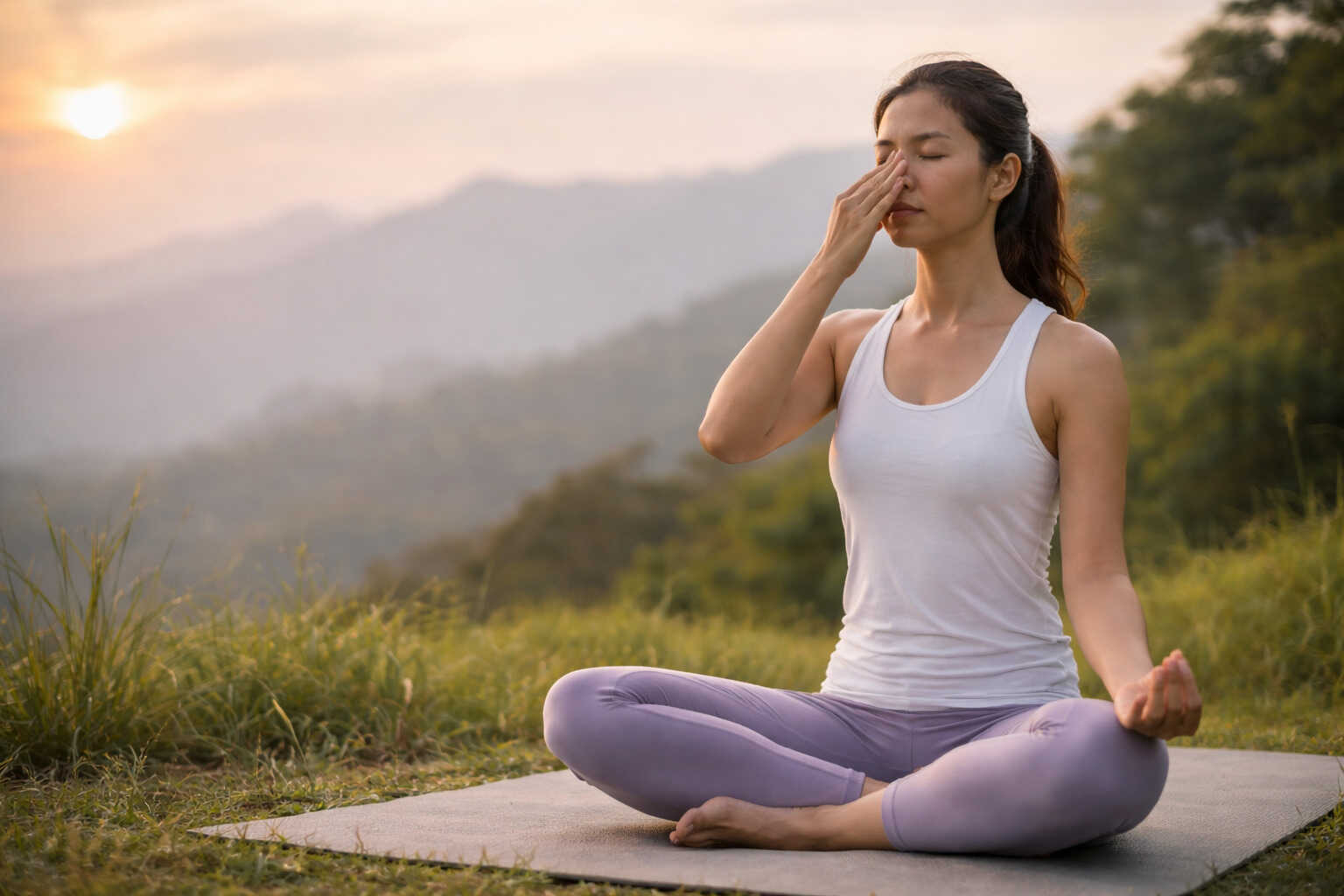
Chandra Bhedana pranayama is the moon breath of yoga: you breathe in through the left nostril and out through the right, and the slow, one-sided pattern cools the body and steadies the mind within a few rounds. It needs no equipment, takes five minutes, and works best in the evening or before bed. This guide gives you the exact steps, the benefits research supports, and the safety rules to follow.
Key Highlights
- Inhale through the left nostril and exhale through the right, and never switch sides.
- Practice 9 to 27 slow rounds, about 5 to 15 minutes, with an exhale twice as long as the inhale.
- Use it in the evening, before bed, in hot weather, or after hard exercise.
- A small 2014 trial found heart rate and systolic blood pressure fell after nine rounds.
- Skip it with low blood pressure, a cold or blocked nose, an asthma flare, or recent abdominal, eye, or ear surgery.
The Moon Breath and the Ida Nadi
Chandra means moon, Bhedana means piercing or passing through, and pranayama means breath control. Together they describe passing the breath through the lunar channel, the Ida Nadi, the pathway linked to the left nostril that yogic texts describe as cool, receptive, and calming. Chandra Bhedana is also called Chandra Bhedi or Chandra Nadi pranayama. Its mirror image is Surya Bhedana, the sun breath, in which you inhale through the right nostril. One cools and the other warms.
The Yoga Chudamani Upanishad, verses 95 to 97, gives one of the oldest descriptions: sit in lotus pose, breathe in through the Ida Nadi, hold as long as comfortable, and breathe out through the right nostril while meditating on the disc of the moon. Modern physiology gives a plain explanation: slow nasal breathing stimulates the vagus nerve and raises parasympathetic activity, which lowers heart rate and blood pressure and quiets the stress response. In a 2008 study of 21 men, right-nostril breathing raised blood pressure while left-nostril breathing lowered it. The evidence is early and the studies are small, so treat the calming effect as plausible rather than proven.
How to Practice Chandra Bhedana Pranayama Step by Step
Set aside five quiet minutes and practice on an empty stomach or at least two hours after a meal, in a ventilated room where you will not be disturbed. Sit tall with your spine straight. Sukhasana, the easy cross-legged seat, suits most people. Sitting on a good yoga mat keeps your knees and ankles comfortable.
Step 1: Form Vishnu Mudra
Raise your right hand to your face and fold the index and middle fingers into your palm: the thumb closes the right nostril and the ring finger closes the left. Rest your left hand on your left knee, palm down. Close your eyes and take two or three normal breaths to settle.
Step 2: Empty the Lungs
Breathe out fully through both nostrils to clear stale air and set the rhythm for the slow breaths that follow.
Step 3: Inhale Through the Left Nostril
Press your thumb gently against your right nostril. Breathe in slowly through the left nostril, filling your belly first and then your chest. Count to four, keeping the breath smooth and silent.
Step 4: Pause Briefly
Close the left nostril with your ring finger and hold for a short, easy pause of one or two seconds. Beginners may skip the pause. Never strain to hold the breath.
Step 5: Exhale Through the Right Nostril
Keep the left nostril closed, lift your thumb, and breathe out slowly through the right nostril. Count to eight, roughly twice the inhale: a long exhale drives the calming effect.
Step 6: Repeat and Close
Close the right nostril again with your thumb and begin the next inhale through the left. That is one round. Start with 9 rounds, about five minutes, and build toward 27 rounds over several weeks. When you finish, lower your right hand, breathe normally for a minute, and sit quietly.
Benefits of Chandra Bhedana Pranayama
Traditional texts credit this practice with cooling the body, purifying the Ida Nadi, and preparing the mind for meditation. The calm and cooling effects have plausible evidence; the spiritual claims rest on tradition. It pairs well with other gentle breathwork such as Sukha Purvaka pranayama, a simple easy-breathing practice that steadies the mind.
Calms Stress and Anxiety
This is the benefit most people feel first. The slow pace, the long exhale, and the one-sided pattern shift the nervous system toward rest-and-restore. Use it when a tense meeting or a restless afternoon has left you wired.
Cools the Body
Chandra Bhedana is the cooling pranayama of choice in Ayurveda for excess pitta, the heat principle behind irritability, acidity, skin inflammation, and overheating. Practice it on a hot afternoon, after a hard workout, or when you feel flushed. The cooling claim is traditional rather than measured in trials, but people report feeling cooler after ten rounds.
Supports Better Sleep
A short session before bed is one of the best uses of this practice. The slow breathing lowers arousal, and the left-nostril pattern adds a drowsy quality that suits the transition to sleep. Five minutes of Chandra Bhedana, followed by lying still in bed, helps many people fall asleep faster. For a fuller evening routine, read our guide to the benefits of meditation before bed.
Supports Healthy Blood Pressure
The closest direct test is a small 2014 trial in 20 yoga-trained adults, twelve of whom were under care for high blood pressure or type 2 diabetes. After nine rounds, heart rate and systolic blood pressure fell and reaction times grew slower. The trial did not measure mood, anxiety, or sleep, so treat this as promising early evidence rather than proof. It is a wellness practice, not a substitute for prescribed blood pressure treatment. The National Center for Complementary and Integrative Health notes that yoga and slow breathing can support relaxation and stress reduction.
When to Practice Chandra Bhedana
Timing shapes the result. The cooling, inward effect suits the second half of the day, and the wrong time can leave you sluggish. The best windows are the evening, the hour before bed, hot weather, and the period after intense exercise. Some teachers also recommend it during moments of acute stress, anger, or overheating. Morning is usually the wrong time: starting the day with a cooling breath can produce heaviness and dullness, so use an energizing practice in the morning instead. The same logic applies to seasons: it shines in summer and feels less suitable in cold weather.
Chandra Bhedana vs Nadi Shodhana vs Sheetali
Nadi Shodhana, also called alternate nostril breathing, switches sides with every breath: inhale left, exhale right, inhale right, exhale left. Its goal is balance, and it suits daily practice at any time. Chandra Bhedana never switches sides, so it pushes the body in one direction only, toward cooling and calm. Think of Nadi Shodhana as balancing and Chandra Bhedana as targeted: classical teaching calls Chandra Bhedana one half of Nadi Shodhana. For a wider view of how breathwork fits into yoga practice, see our complete guide to pranayama breathing.
Sheetali cools the body by a different route. You curl the tongue into a tube, or press it flat if you cannot curl it, and inhale through the mouth. The air passes over the moist tongue and feels cool on the way in. Sheetali suits the same hot, irritated states, but it uses the mouth rather than the nose, so it is less useful with dry mouth or dental sensitivity. Choose Chandra Bhedana for a quiet, seated, nasal practice; choose Sheetali for fast cooling in heat.
Surya Bhedana is the opposite pole. It inhales through the right nostril and warms the body, so it is useful in cold weather and morning sluggishness. Do not practice Surya Bhedana and Chandra Bhedana on the same day: their effects cancel each other and the combination can leave you unsettled.
Precautions and Who Should Avoid It
Skip it with chronic low blood pressure, since the cooling effect can lower it further. Skip it during a cold, sinus congestion, or any respiratory infection, because a blocked left nostril makes the pattern impossible. Avoid it during an asthma flare. People with a heart condition or arrhythmia should check with a doctor first, because a calming effect does not make the breath hold risk-free. The same applies after recent abdominal, eye, or ear surgery: the hold raises pressure inside the body. Pregnant practitioners should ask their doctor first.
Stop at once if you feel dizzy, lightheaded, or short of breath. Never force the inhale, never strain the hold, and never practice while driving or in water. If you are new to breathwork, learn the first sessions under a qualified teacher. Heating breathwork is the contrast: Kapalbhati, the breath of fire, heats and energizes, the opposite of what Chandra Bhedana does, so the two belong at different times of day.
Beginner Tips That Make Practice Easier
Start small. Five minutes a day for two weeks beats one long session that leaves you dizzy. Keep the counts easy: inhale for three, exhale for six, and lengthen them only when the breath stays smooth.
Clear your nose before you begin: a blocked left nostril ruins the practice, so blow your nose or use saline spray if you are congested. If the left nostril stays blocked, skip the session and try another day. Keep the hand light. Many beginners press hard against the nose, which creates tension in the face and neck, but a soft touch closes the nostril fully. If your arm tires, rest your elbow on a cushion.
Conclusion
Practice Chandra Bhedana for five minutes each evening for two weeks, and judge it by your sleep and temper. If both improve, keep it in your routine and add a few rounds each month. If it leaves you sluggish or dizzy, stop and try alternate-nostril breathing.
Frequently Asked Questions
What is Chandra Bhedana pranayama?
Chandra Bhedana pranayama is a yoga breathing technique: you inhale through the left nostril and exhale through the right, using Vishnu Mudra to close each nostril in turn. Its name means moon-piercing breath, and it is traditionally used to cool the body, quiet the mind, and prepare for sleep.
How many rounds of Chandra Bhedana should a beginner do?
Begin with 9 rounds, about five minutes, once a day in the evening. Build toward 15 to 27 rounds over several weeks as the breath stays smooth. Stop early if you feel dizzy or short of breath, and never force a longer session.
Is Chandra Bhedana the same as Nadi Shodhana?
No. Chandra Bhedana keeps one pattern for the whole session: inhale left, exhale right, and never switch sides. Nadi Shodhana alternates the nostrils with every breath to balance both channels. Chandra Bhedana is one half of that pattern, used when cooling and calm are the goal.
Can Chandra Bhedana pranayama lower blood pressure?
A small 2014 trial found heart rate and systolic blood pressure fell after nine rounds of Chandra Bhedana in 20 yoga-trained adults. The sample was small and the effect was short term, so this is promising early evidence rather than proof. It is not a substitute for prescribed blood pressure treatment, so keep taking your medication.
When is the best time to practice Chandra Bhedana?
Evening and the hour before bed are the best times, along with hot weather and the period after intense exercise. Morning is usually the wrong time, since the cooling effect can cause sluggishness. Avoid it in cold weather and skip it with a blocked nose.
Who should not practice Chandra Bhedana pranayama?
People with chronic low blood pressure, a cold or sinus congestion, an asthma flare, or a heart condition should avoid it or check with a doctor first. Pregnant practitioners should also ask their doctor, and anyone recovering from abdominal, eye, or ear surgery should skip the breath hold.