
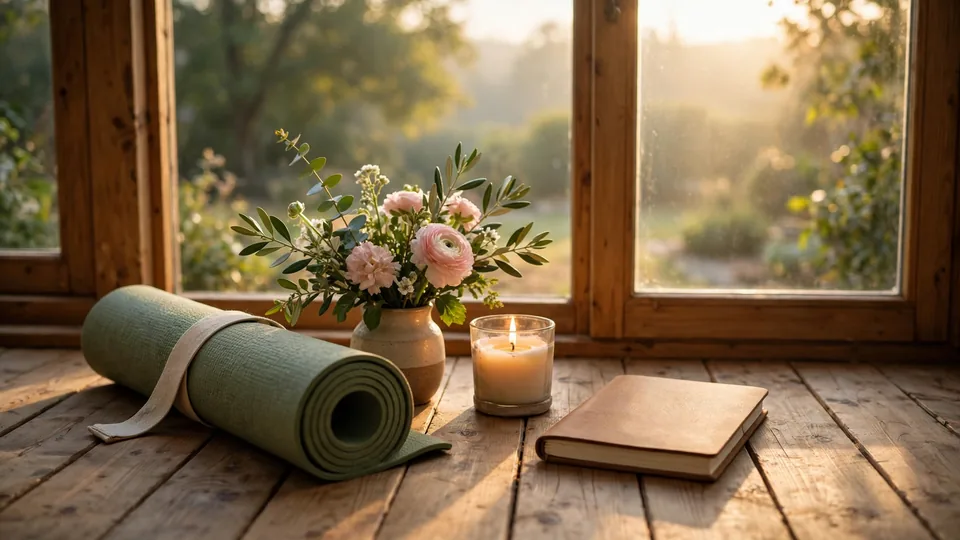
January brings a clean page, and the mat is a good place to meet it. These new year yoga class themes give teachers a clear focus for each class and give students a reason to return week after week. Each theme below pairs a simple idea with poses, breathwork, and a short meditation, so you can teach it as a single class or stretch it across a full January series in 2026.
Key Highlights
- Ten ready-to-teach themes, each with poses, breathwork, and meditation notes.
- Sankalpa gives January classes a clear focus without rigid resolutions.
- Twists, forward folds, and slow exhales anchor the letting-go theme.
- Balance poses and steady breath carry the effort-and-ease theme.
- Each theme works as one class or as part of a four-week January series.
1. Setting Intentions (Sankalpa)
A sankalpa is a short resolve stated in the present tense. “I am steady” or “I meet each day with patience” are good examples. It differs from a resolution: unlike a resolution, which names an outcome to chase, a sankalpa names a quality to live by. That difference matters in January, when big goals fade by February.
Teach this theme in the first class of the year. Start with three minutes of seated breath, then a minute to write one sentence in a notebook. Build the flow around mountain pose, warrior II, and chair pose. End with a short seated meditation so the words have time to settle. Our guide to how to combine yoga with meditation in one session shows a simple way to pair the two.
2. Letting Go of the Old Year
Before a new year takes shape, the old one needs a proper goodbye. This theme gives students room to name what they are done carrying: a habit, a grudge, a pace that left them tired. The practice stays gentle, and the body often lets go of tension before the mind catches up.
Sequence around twists and forward folds. Seated spinal twists, revolved triangle, and a long child’s pose work well, with standing forward fold between poses to reset the breath. Use a slow exhale counted to six, and close with five quiet minutes in savasana. Ask students to picture one thing to leave behind, then end the class in silence.
3. Grounding and Stability
January brings new routines, new schedules, and plenty of noise. A grounding class answers with weight, contact, and slow movement. Feet press into the floor, hands press into the mat, and the breath stays low in the belly. Students leave settled rather than fired up, the right tone for January.
Build the sequence from the ground up. Start in child’s pose and tabletop, move to low lunges and wide-based standing poses, and hold each pose for five breaths. Tree pose fits near the end, once the legs feel warm. Finish with legs up the wall and a body scan of each contact point with the floor.
4. New Beginnings and Beginner’s Mind
A new year invites a fresh look at familiar poses. Beginner’s mind means meeting each pose as if it were the first time: no habit, no autopilot, no judgment about how it looked last year. This theme suits mixed classes because it levels the room. Long-time students rediscover poses they had stopped noticing, and new students feel welcome at once.
Teach the basics with fresh cues. In downward dog, ask students to notice the spread of their fingers; in warrior I, the back heel pressing down. Keep the sequence simple and repeat it twice, so the second round feels easier than the first. Close by asking each student to name one thing to learn this year.
5. Balance: Effort and Ease (Sthira and Sukha)
Patanjali’s Yoga Sutras call a good pose steady and comfortable at once: sthira, steadiness, held with sukha, ease. January is the right month for this balance. Students arrive full of effort and short on ease, and the practice shows them the two belong together. A pose held with strain teaches nothing. A pose held with attention teaches plenty.
Use standing balances to make the idea physical. Tree pose, eagle pose, and warrior III each demand focus, and each falls apart when students grip too hard. Cue soft shoulders and a steady gaze, and let students wobble. Pair each balance with a floor counterpose, and finish by pairing a four-count inhale with a six-count exhale.
6. Inner Strength and Steady Commitment (Tapas)
Strength in yoga is not only muscle. It is the quiet decision to return to the mat on a cold morning, hold a pose for one more breath, and keep a promise made to yourself. The niyama of tapas names this kind of disciplined effort, and it fits January better than talk of willpower. Tapas builds slowly, through small acts repeated with care.
Teach a slow, strong flow. Hold chair pose and warrior II for eight breaths each, link them with slow sun salutations, and add plank and boat pose. Keep the breath audible, and remind students that shaking legs signal effort, not failure. The five niyamas of yoga give this theme a home in classical teaching, and you can name one niyama per week across January.
7. Self-Compassion (Ahimsa Toward Yourself)
Many students start the year with a harsh voice in their heads. They list faults, set punishments, and call it motivation. A self-compassion class offers a different message: practice works better when students treat themselves with kindness. Ahimsa, non-harming, covers how students speak to themselves on the mat too.
Slow the class down and remove the pressure to perform. Offer restorative poses such as supported child’s pose, reclined bound angle, and legs up the wall, bolsters and blankets close at hand. Give clear permission to rest in child’s pose at any point, and say it twice. A short loving-kindness meditation fits the close: silent wishes for ease, for oneself first, then for others.
8. Gratitude and Reflection
Gratitude shifts attention from what is missing to what is already present. That shift suits the start of a year, when ads and social media push students to want more of everything. A gratitude class asks a simpler question: what from last year deserves thanks? The answers often surprise people: health, a friend, a small daily habit, a teacher, a body that kept going.
Open the heart gently with cobra, camel, and supported fish pose, keeping backbends mild so the breath stays free. Pause between poses and invite students to name one thing they are grateful for. A short gratitude meditation fits well at the end of class, and suggest three lines of thanks in a journal each night for a week.
9. Renewal and Energy Flow
Some students arrive in January flat and tired, not fired up. Winter days are short, sleep is broken, energy runs low. This theme wakes the body without pushing it into strain. The aim is steady warmth: moving breath, a spine that bends both ways, and a closing rest that lets energy settle.
Use gentle backbends and flowing movement. Cat-cow, low lunge salutations, and cobra build warmth, and a few calm rounds of sun salutation A keep the flow from turning frantic. Add breath of fire in short rounds of twenty breaths, with normal breathing between. A regular morning yoga practice carries this energy into the week, so mention a ten-minute home routine before savasana.
10. Trusting the Process (Ishvara Pranidhana)
The last of the five niyamas, ishvara pranidhana, means surrender to something larger than personal effort. In class it looks simple: do the work, then let go of the result. Students who spend January chasing perfect poses or habits need this theme most. Effort still matters, but the outcome is not theirs to control, and that brings real relief.
Teach a class with room to breathe. Hold poses longer, leave gaps of stillness between sequences, and let the closing meditation run ten full minutes. A slow chant of Om or a quiet reading fits the month’s end well. The meaning of namaste, the light in me honours the light in you, fits the final January class well, hands at the heart and no rush to leave.
How to Plan a January Series in 2026
Four weeks give these themes room to breathe. Teach intentions in week one, letting go and grounding in week two, strength and balance in week three, gratitude with surrender in week four. Repeat the same opening breath each week so students feel the series build, and keep each class to sixty or seventy-five minutes with ten minutes of rest at the end.
Keep the language plain and the cues fresh. New students join in January, so explain Sanskrit terms in a sentence and offer a simpler version of every hard pose. A short daily meditation habit threads the classes together, and five quiet minutes each morning do more for students than any single class can.
Frequently Asked Questions
How do I choose a theme for my first New Year yoga class?
Start with setting intentions. It fits the first week of January, suits every level, and needs no special props or hard poses. Open with seated breath, invite students to write one short sentence, and build a slow standing flow around it. Keep the theme to one clear idea so students leave with something they can repeat at home.
How long should a New Year themed class run?
Sixty to seventy-five minutes works best for a themed class. That length leaves room for a slow opening, a full sequence, and at least ten minutes of rest and meditation at the end. A thirty-minute class can still carry a theme, but you will need to cut the sequence short and keep the closing brief.
Can beginners join a New Year themed yoga class?
Yes, beginners are welcome in a themed class when the teacher plans for them. Use plain language, explain each Sanskrit term in a sentence, and offer a simpler version of every hard pose. Themes such as grounding, gratitude, and beginner’s mind suit new students well because they rely on slow movement and breath rather than strength or flexibility.
What is a sankalpa, and how is it different from a resolution?
A sankalpa is a short resolve stated in the present tense, such as “I am steady” or “I move with patience.” A resolution names an outcome to chase, like losing weight or running a race. A sankalpa names a quality to live by, so it stays useful even when plans change. The Yoga Institute describes sankalpa as a vow that connects a person to their highest truth.
Which poses work best for a letting-go class?
Twists and forward folds lead a letting-go class. Seated spinal twists, revolved triangle, standing forward fold, and a long child’s pose help the body release tension, while a slow exhale counted to six deepens the effect. Close with five quiet minutes in savasana and let the class end in silence so students can sit with what they chose to release.
How can I carry a New Year theme beyond January?
Pick one theme and repeat it for a full month. Teach it once a week, change the poses a little each time, and ask students to keep a short daily habit tied to it, such as five minutes of breathwork or three lines of gratitude. A theme that lasts four weeks becomes a habit, and a habit outlives January by months.
Conclusion
Pick one theme and teach it well this week. A single clear idea, repeated across a month of classes, does more for students than ten ideas named once. Choose the theme that fits your students today and let January build from there.