
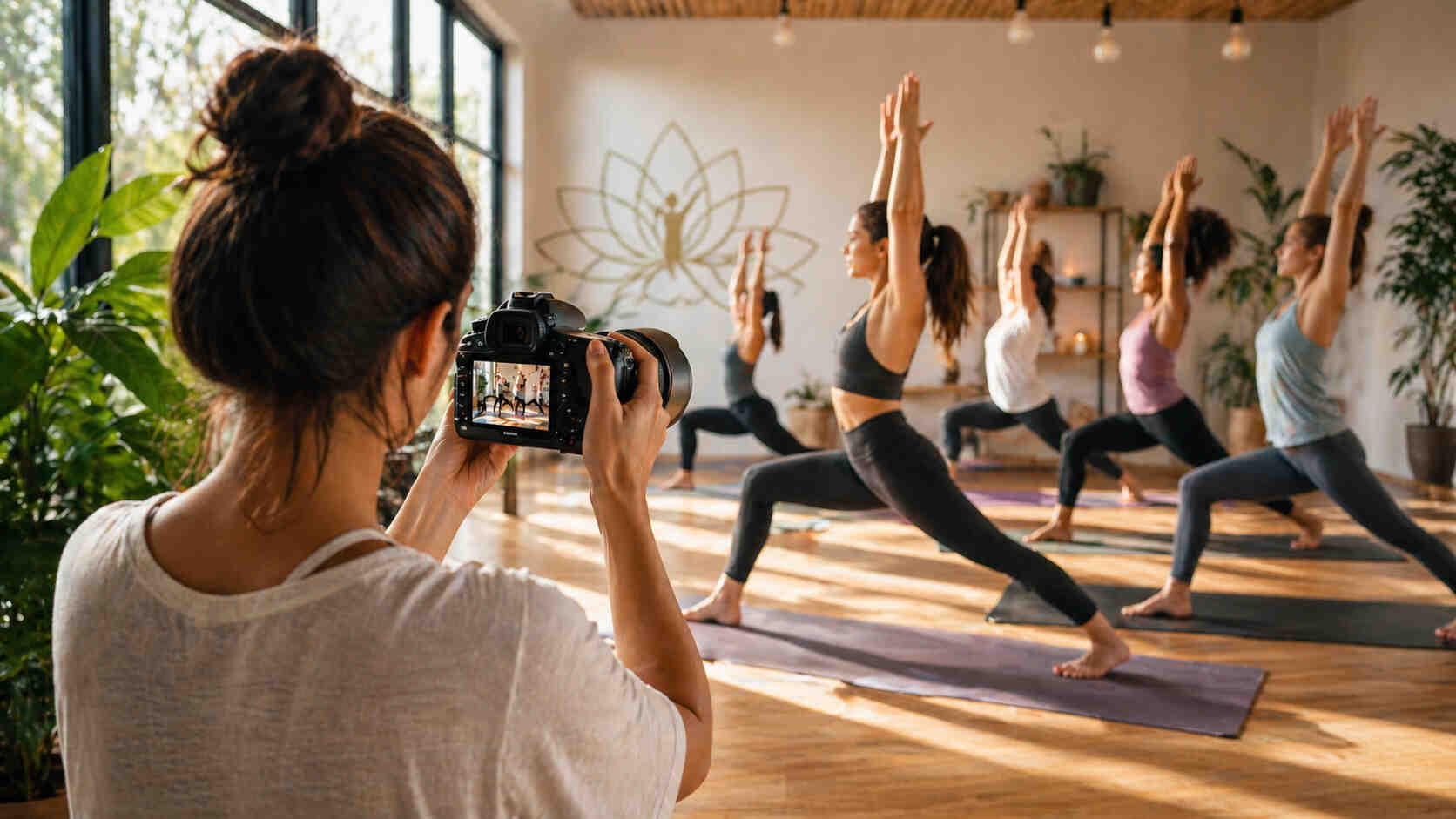
Yoga studio photos decide whether a stranger books a class or scrolls past. Most people meet your studio online first, through a photo on Google, Instagram, or your website, and they judge the space, the teaching, and the atmosphere from that single image. This guide explains what makes a yoga photo work, which shots every studio needs, and how to plan a shoot that brings in real students.
Key Highlights
- Photos are the first thing a new student sees, and they shape trust before a single word is read.
- Natural light, honest composition, and real students beat staged stock images every time.
- Eight core shots cover a studio website, Google profile, and social feeds.
- A smartphone and a tripod are enough to start. Gear matters less than planning.
- Fresh photos every few months keep listings current and classes full.
Why Photos Decide Whether a Student Books
A person searching for a yoga class near them compares several studios in a few minutes. They read almost nothing at first. They look at photos, form an impression in seconds, and then decide which website to open. Research from MIT found that the human brain can identify an image in as little as 13 milliseconds, which explains why a photo lands long before a headline does. Your images are doing the selling while your text waits its turn.
That first impression also sets expectations. A bright, calm room with real students in comfortable poses tells a beginner they will fit in. A dark, cluttered photo of an advanced handstand tells the same beginner to look elsewhere. The photo is not decoration. It is a filter that decides who walks through your door, and it works whether you planned it or not. This is also why so many people start with a simple question about why people start yoga and then choose a studio by how its photos make them feel.
Google rewards the same behavior. Business profiles with photos get more calls, direction requests, and website visits than profiles without them, according to Google’s own guidance for local businesses.
What Makes a Yoga Photo Work
Good yoga photography rests on four choices: light, composition, people, and honesty. Get these right and the camera barely matters.
Light Comes First
Soft, natural light flatters every pose and every room. Shoot near large windows in the morning or late afternoon, when sunlight is warm and low. Midday sun through a bare window creates hard shadows across faces and mats, so diffuse it with a sheer curtain or move the shoot to a shaded side of the room. If you use artificial light, keep it warm and even, and avoid mixing daylight with orange ceiling lights, because mixed color temperatures make skin tones look wrong in a way no filter fixes.
Composition Guides the Eye
Place the practitioner off center using the rule of thirds, with space in the direction they face or stretch toward. Leave room around the pose so the image breathes; a tight crop on a twisted spine looks cramped and confusing. Clean backgrounds matter more than fancy ones. A plain wall, a wooden floor, or a single plant beats a shelf full of props and posters. Remove water bottles, bags, and tangled straps before you shoot, because the camera notices clutter the eye ignores.
Real People Beat Models
Students trust photos of actual classes more than photos of a professional model in a pose they will never attempt. Use a mix of ages, body types, and skill levels, and ask permission before publishing anyone’s face. Candid moments work well: a student laughing after class, a teacher adjusting a pose with a light touch, two friends rolling up their mats. These images say your studio is a community, not a showroom.
Honest Editing Keeps Trust
Edit for exposure, white balance, and gentle contrast, then stop. Heavy filters, oversaturated colors, and skin smoothing make a studio look like an advertisement, and students notice the gap when they arrive. Keep one consistent look across your website and social feeds so people recognize your studio at a glance. Free tools such as Snapseed or Lightroom Mobile handle everything a small studio needs.
The 8 Shots Every Studio Needs
You do not need hundreds of images. Eight well-planned shots cover nearly every place a studio uses photos.
1. The Hero Class Shot
One wide image of a full class in a calm, simple pose, taken from the back corner of the room. It shows the space, the light, and the atmosphere in a single frame. Use it as your website header and Google profile cover.
2. The Teacher Portrait
A relaxed portrait of each teacher, shot at eye level in natural light, with the teacher smiling or sitting in an easy pose. Students choose teachers as much as classes, and a face builds trust faster than a bio. Pair portraits with a short note on each teacher’s style, and point new students toward practical tips for getting better at yoga so they arrive with realistic expectations.
3. The Detail Shot
Close-ups of hands on a mat, feet in a balance pose, or a neatly stacked set of blocks tell a story about care and craft. Detail shots work well on social media and in email newsletters because they stop the scroll without needing a face.
4. The Space Itself
Photograph the empty room from two angles: one wide shot and one from the doorway, as a new student would see it. Include the entrance, the reception area, and the changing space if they are tidy. People want to know where they will leave their shoes and hang their coat before they care about the class schedule.
5. The Candid After-Class Moment
Students chatting over tea, a teacher answering a question, someone folding a blanket. These images sell belonging, which is the real reason many people keep coming back after the first month.
6. The Prop Still Life
A mat, a block, a strap, and a bolster arranged neatly on a wooden floor make a strong image for class pages and workshop announcements. The right yoga mat in the frame also signals quality to experienced practitioners who notice such things.
7. The Outdoor Shot
One or two poses in a park, garden, or rooftop at golden hour give your feed variety and advertise outdoor classes and retreats. Keep the pose simple and safe; a stable standing pose photographs better outdoors than a balance pose on uneven ground.
8. The Behind-the-Scenes Shot
A teacher preparing the room, lighting a candle, or laying out mats shows the work behind the calm. It makes the studio feel human and gives followers a reason to care about the people, not just the poses.
Gear: What You Actually Need
A modern smartphone with portrait mode covers most studio needs. Add a small tripod for self-portraits and class videos, and a clip-on wide-angle lens if your room is small and you need the whole space in frame.
Spend money on light before lenses. A large window costs nothing, and a cheap reflector, even a white bedsheet taped to cardboard, softens shadows better than a new camera body. If you hire a photographer, brief them on yoga first: ask them to learn the names of five basic poses so they know when to press the shutter, and ask for both horizontal and vertical crops of every key shot.
Planning a Studio Photo Shoot
A good shoot takes two hours, not two days. Book the room when no class runs, and invite four to six regular students of different levels who are comfortable on camera. Share the shot list in advance so nobody waits around wondering what happens next. Plan the order around the light: window shots first, then the room shots, then portraits.
Run a short practice class during the shoot so poses look natural rather than held for the camera. A held pose stiffens within seconds, while a moving flow keeps shoulders relaxed and breath visible. Photograph mistakes honestly and fix them on the spot; a student wobbling in tree pose is charming, but a mat placed over a power cable is a hazard, and the same care applies when you avoid common yoga mistakes in your own practice. End the session with a group photo, and send every participant the images they appear in before you publish anything.
Where to Use Your Photos
Your website homepage needs the hero shot and the space shots. Each class page needs one image that matches the class level, so a beginner sees a gentle pose and an advanced student sees a challenge. Your Google Business Profile needs at least ten recent photos, updated monthly, because that profile is what most local searchers see first.
Social media rewards variety: rotate the eight core shots, add seasonal images, and repost student photos with permission. Print still matters for local studios, so keep one high-resolution version of your hero shot for flyers and noticeboards. Wherever you publish, keep file names descriptive and add alt text that says what the photo shows, because that helps search engines and screen readers alike.
Mistakes That Cost Bookings
The most common error is using stock photos of models in poses your teachers would never teach. Students arrive, see the difference, and feel misled. The second error is never updating photos, so a studio that redecorated two years ago still shows its old room. The third is photographing only advanced practitioners, which quietly tells beginners they do not belong.
Remember that your photos should welcome the audience you actually want, including older students and complete beginners. A warm image does more for them than any discount, as our guide to yoga for healthy aging shows in the way it frames practice as open to every age.
Frequently Asked Questions
Do I need a professional photographer for my yoga studio?
No. A smartphone, a tripod, and good window light produce images strong enough for a website and social media. Hire a professional once a year for a full shoot if your budget allows, and handle monthly updates yourself with a phone.
What is the best time of day to photograph a yoga studio?
Early morning or late afternoon gives soft, warm light through windows. Avoid midday, when direct sun creates harsh shadows on faces and mats. If your studio has no windows, shoot with warm, even artificial light instead.
Can I use stock photos for my yoga studio website?
You can, but real photos of your own space and students build more trust. Stock images are easy to spot, and they set expectations your studio may not meet. Use stock only as a temporary filler while you plan a real shoot.
How many photos should my Google Business Profile have?
At least ten, covering the room, teachers, classes, and entrance. Add new photos monthly so the profile looks active. Profiles with fresh photos attract more calls and direction requests than profiles with a few old images.
Do I need permission to photograph students in class?
Yes. Ask every student for written or clearly recorded consent before publishing a photo that shows their face. Offer an opt-out for anyone who prefers not to appear, and respect it every time.
How often should a yoga studio update its photos?
Update your main images at least twice a year, and add new photos to your Google profile and social feeds monthly. Refresh photos whenever the room changes, a teacher joins, or a new class starts.
Strong photos are not about expensive gear. They are about honest light, real people, and a room that looks like the one a student will actually walk into. Plan one shoot, take the eight shots above, and your studio will speak for itself before you say a word.