
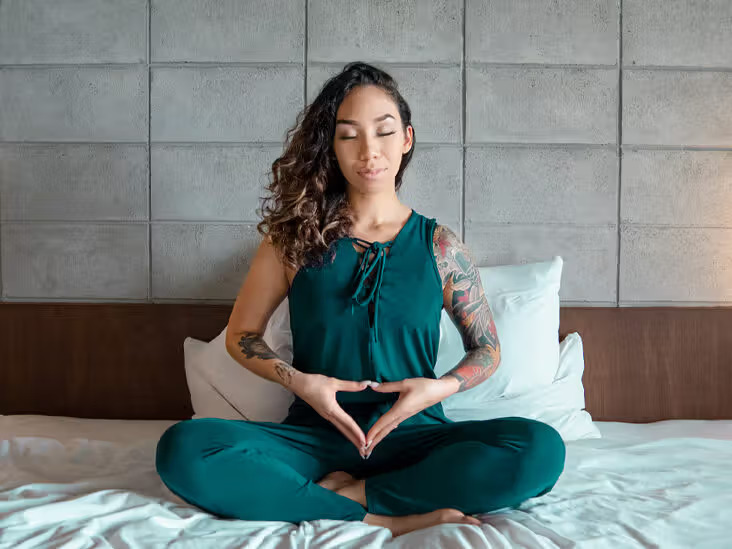
A bedtime yoga routine is one of the simplest, most natural ways to tell your body that the day is over and rest can begin. If you find yourself lying awake replaying conversations or scrolling through your phone, you are far from alone — difficulty winding down in the evening is one of the most common complaints among adults and children alike. Rather than forcing sleep to arrive, gentle yoga eases your nervous system from “alert” to “at ease,” so that sleep feels like something you sink into instead of something you chase.
In this guide, you will learn how to build a 10-minute routine, plus a playful version your kids will enjoy. We will walk through each pose, share breathing techniques that quiet a racing mind, and cover the small mistakes that keep nighttime yoga from working. All you need is a quiet corner and a few minutes before bed.
Key Highlights
- A bedtime yoga routine calms the parasympathetic nervous system, lowers heart rate, and releases muscle tension.
- Just 10 minutes a night is enough — consistency matters far more than the length of your practice.
- The best sequence stays close to the floor: Child’s Pose, Cat-Cow, and Legs Up the Wall, finished with slow breathing.
- Breathing techniques such as 4-7-8 and extended exhale are the real engine of the routine — movement alone is not enough.
- A playful 5–10 minute version with animal poses helps children wind down and bond with parents at bedtime.
Why Bedtime Yoga Helps You Sleep Better
Most sleep problems start in the nervous system. When your body stays in a heightened “alert” state — shoulders tense, jaw clenched, thoughts racing — relaxation becomes difficult even when you are exhausted. Bedtime yoga works directly on this by activating the parasympathetic nervous system, the “rest and digest” system that lowers heart rate, slows breathing, and signals safety to the brain.
Physically, gentle stretching releases tension stored in the hips, lower back, neck, and shoulders, while slow breathing steadies the heart rate. The Sleep Foundation lists calming movement among habits that support good sleep hygiene. Better sleep supports mood, focus, and even appetite control — see our guide on the link between sleep and weight loss for how rest shapes your health.
What Makes a Bedtime Yoga Routine Different from Regular Yoga
Not all yoga belongs at night. Power yoga, fast flows, and hot yoga raise your heart rate and can push sleep away. A true bedtime yoga routine follows the opposite principle: minimum stimulation, maximum release.
- Minimal standing poses: the sequence stays close to the floor so your body can fully relax.
- Floor-based and reclined postures: seated and lying-down shapes that let gravity do the work.
- Gentle, not deep, stretching: ease into each pose at about 60–70% of your full range — never pushing.
- Long, steady holds: each pose is held for a minute or more with slow breathing.
- Restorative finish: the routine ends in stillness, not effort.
The goal is nervous system regulation — teaching your body, night after night, that these movements mean sleep is coming.
The 10-Minute Bedtime Yoga Routine (Step by Step)
This beginner-friendly sequence takes about 10 minutes. Move slowly, breathe through your nose, and never strain. A comfortable mat makes floor poses easier to hold — see our guide on how to choose a yoga mat for the right thickness and grip. Dim the lights, silence your phone, and begin.
1. Seated Neck and Shoulder Rolls — 1 minute
Sit cross-legged with a tall spine. Drop your right ear toward your right shoulder and slowly roll your head in a gentle circle, pausing wherever you feel tightness. After 30 seconds, switch direction, then finish with five slow shoulder rolls. This releases tension built up from screen time and signals to your body that winding down has begun.
2. Cat-Cow Stretch (Marjaryasana-Bitilasana) — 2 minutes
Come onto your hands and knees with wrists under shoulders and knees under hips. Inhale as you arch your back, lifting your chest and tailbone (Cow). Exhale as you round your spine, tucking your chin to your chest (Cat). Move slowly, linking breath to movement; this gentle wave loosens a stiff back and slows your breathing rhythm.
3. Child’s Pose (Balasana) — 1 minute
Sit back on your heels, bring your big toes together with knees slightly apart, then fold forward, resting your forehead on the mat. Breathe slowly into your back ribs and feel your lower back soften. It quiets mental chatter and lowers the heart rate — many teachers call it the single best pose for instant calm.
4. Seated Forward Fold (Paschimottanasana) — 1 minute
Sit with your legs extended in front of you. Inhale to lengthen your spine, then exhale and fold forward from your hips, reaching toward your feet — keep a slight bend in your knees and let your head hang. Forward folds are naturally introspective, stretching the hamstrings and lower back while turning your attention inward.
5. Reclined Butterfly (Supta Baddha Konasana) — 1 minute
Lie on your back, bring the soles of your feet together, and let your knees fall open to the sides. Rest one hand on your heart and one on your belly, and breathe slowly. This gentle hip opener releases deep pelvic tension, and the hands-on-heart position adds a sense of safety.
6. Supine Twist (Supta Matsyendrasana) — 1 minute
Lying on your back, draw both knees to your chest, then slowly lower them to the right while turning your head left and extending your arms to the sides. Hold for 30 seconds, then switch sides. The twist wrings out tension along the spine and through the belly.
7. Legs Up the Wall (Viparita Karani) — 2 minutes
Sit with one hip against a wall, then swing around so your legs rest vertically against the wall and your back lies flat on the floor. Rest your arms by your sides, palms up, and simply breathe. This restorative pose eases tired legs, improves circulation, and calms the nervous system. On low-energy nights, this single pose before bed is enough.
8. Savasana with 4-7-8 Breathing — 1 to 2 minutes
Lie flat on your back, legs slightly apart, arms relaxed by your sides, palms up. Close your eyes: inhale through your nose for 4 counts, hold for 7, exhale slowly for 8. Repeat for four cycles. The long exhale activates the relaxation response, letting the routine settle in before sleep.
Prefer practicing in bed? Every pose except Legs Up the Wall (which needs a headboard or wall) works on a mattress — the gentler stretches are ideal at night.
Breathing Techniques That Make the Routine Work
Movement opens the door, but breathing walks you through it — every long exhale signals to your nervous system that you are safe to rest. Master these two:
- Extended exhale: make your exhales longer than your inhales — for example, inhale for 4 counts, exhale for 6 or 8.
- 4-7-8 breathing: inhale for 4, hold for 7, exhale for 8. The hold allows oxygen to circulate while the long exhale maximizes the calming effect.
Breathe through your nose with a soft belly expansion — it should feel like a sigh, not an exercise. Our complete guide to pranayama benefits explains how conscious breathing supports calm and focus.
Setting Up Your Sleep-Friendly Space
Your environment is part of the routine. Dim the lights and silence your phone at least 30 minutes before you begin — screens suppress melatonin, the hormone that makes you feel sleepy. Many people finish with a few minutes of seated meditation, letting the calm of the poses carry them into stillness. Our guide on the benefits of meditation before bed explores this pairing, and our article on meditating with eyes open or closed helps you pick the style that suits you.
Bedtime Yoga for Kids: A Playful 5–10 Minute Version
Children feel stress too, and bedtime yoga for kids works because it uses movement, imagination, and breathing — it feels like play. Keep it to 5–10 minutes and pressure-free:
- Sleepy Cat and Cow: on hands and knees, arch and round the back with soft “meow” and “moo” sounds.
- Cobra rising: lie on the belly and gently lift the chest like a waking snake, then melt back down. Repeat three times.
- Butterfly wings: sit with feet together and flutter the knees like wings, slowing until the butterfly “falls asleep.”
- Lion’s breath: kneel, inhale through the nose, then exhale with a big open-mouthed “roar.” Three roars release the day’s silliness.
- Sleeping star: lie flat like a starfish for Savasana, then curl into a ball — the star is “closing up for the night.” Finish with three slow belly breaths together.
Practicing together builds trust and emotional safety — an effective antidote to bedtime anxiety. A short shared gratitude reflection is a lovely addition; our ultimate guide to gratitude meditation shows simple ways to weave it into the family wind-down.
Common Mistakes That Keep Bedtime Yoga from Working
- Treating it like a workout: fast flows and power poses raise your heart rate and push sleep away. If you are sweating, it is not bedtime yoga.
- Rushing through poses: without the breathing, yoga is just stretching, which does not calm the nervous system.
- Overstretching cold muscles: in the evening your body is cooling down — stay at about two-thirds of your range.
- Practicing with distractions: bright lights and phone notifications keep the brain alert and undo the calm.
- Expecting instant results: the real transformation comes from repetition — like watering a plant, regular care creates lasting change.
How Often Should You Practice?
Practicing most nights of the week trains your body to associate the sequence with sleep preparation — you will soon notice yourself getting drowsy halfway through. On busy nights, a 5-minute version (Child’s Pose, Legs Up the Wall, and 4-7-8 breathing) still counts.
A note on safety: bedtime yoga is a gentle wellness practice, not a medical treatment. If you experience persistent insomnia, loud snoring, or excessive daytime sleepiness, please speak with a doctor — these can be signs of a sleep disorder that deserves professional care.
Frequently Asked Questions
How long before bed should I do my bedtime yoga routine?
Start about 20–30 minutes before you plan to sleep, so your body can shift into rest mode without feeling rushed.
Can bedtime yoga really help with insomnia?
Gentle evening yoga can help with mild sleep difficulties because it calms the nervous system, releases muscle tension, and quiets the mental activity that keeps people awake. Studies have linked regular evening practice with faster sleep onset and better sleep quality. However, yoga is a supportive habit, not a cure — if insomnia persists for weeks, please consult a doctor.
Can I do my bedtime yoga routine in bed?
Yes. Almost every pose in this sequence — neck rolls, Cat-Cow, Child’s Pose, Seated Forward Fold, Reclined Butterfly, Supine Twist, and Savasana — can be done on a mattress. The stretches will be gentler because of the soft surface, which is ideal at night. Only Legs Up the Wall needs a wall or headboard to work against.
How often should I practice bedtime yoga?
Aim for most nights of the week — at least five nights. Consistency trains your nervous system to recognize the routine as a sleep signal, and even a 5-minute version on busy nights keeps the habit alive.
Which yoga styles should I avoid before sleep?
Avoid anything vigorous or heating — power yoga, Ashtanga, fast vinyasa flows, hot yoga, and deep backbends or inversions. These raise your heart rate, core temperature, and alertness, so stick to slow, floor-based, restorative styles after dinner.
Is bedtime yoga safe and suitable for kids?
Yes, bedtime yoga is safe for children when kept playful, short (5–10 minutes), and pressure-free. Animal poses, storytelling, and breathing games help kids release energy and transition to rest while building healthy sleep habits. Practicing together also strengthens emotional bonding and reduces bedtime resistance.