
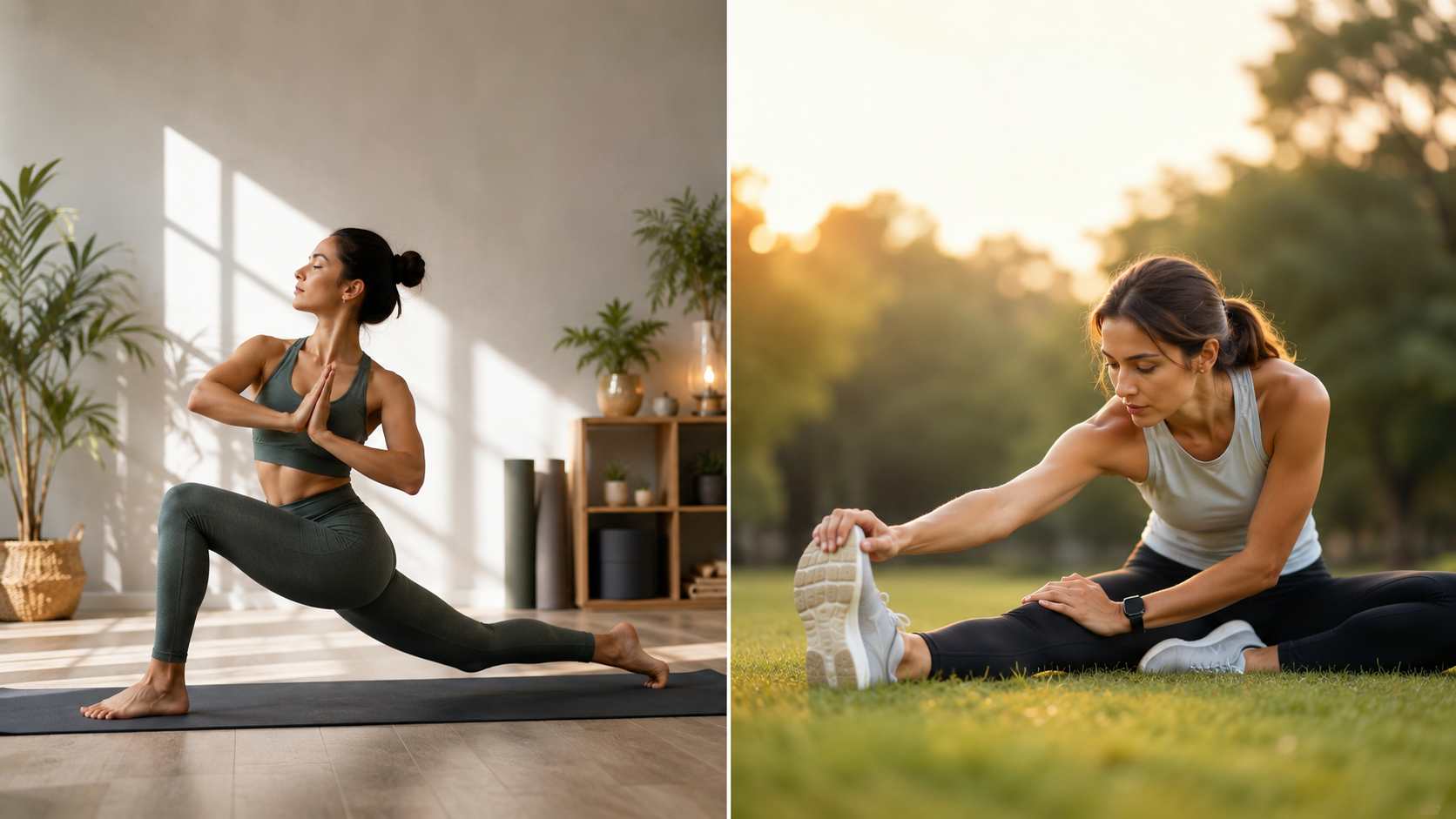
Introduction
Many people use the terms “yoga” and “stretching” interchangeably. At first glance, both practices appear similar because they involve moving the body, lengthening muscles, and improving flexibility. It is common to hear someone say they are “doing yoga” when they are simply performing stretches before a workout, or claiming yoga is nothing more than an advanced stretching routine.
While yoga and stretching do share certain physical similarities, they are fundamentally different practices with distinct goals, methods, philosophies, and benefits. Stretching primarily focuses on improving muscle flexibility and joint mobility, whereas yoga is a complete mind-body discipline that combines physical postures, breathwork, mindfulness, concentration, and often meditation.
Understanding the difference between yoga and stretching is important because each serves unique purposes. Some people may benefit more from simple stretching routines designed for athletic recovery or injury prevention, while others may seek the broader physical, mental, and emotional benefits that yoga offers.
Yoga incorporates flexibility training but also emphasizes breathing, balance, body awareness, mental focus, and relaxation, making it far more comprehensive than traditional stretching alone.
This detailed guide explores the major differences between yoga and stretching, including their goals, techniques, physical and mental benefits, scientific effects on the body, and which option may be best for different lifestyles and fitness goals.
What Is Stretching?
Stretching is a physical activity designed to lengthen muscles, improve flexibility, and increase range of motion around the joints. It is commonly used in sports, fitness routines, rehabilitation programs, and daily mobility exercises.
People stretch for many reasons, including:
- Reducing muscle tightness
- Improving athletic performance
- Preventing injuries
- Relieving stiffness
- Improving posture
- Increasing mobility
Stretching routines can target specific muscles or the entire body. Athletes often stretch before or after workouts, while office workers may stretch to reduce tension caused by prolonged sitting.
Unlike yoga, stretching typically focuses only on the physical body and does not usually involve meditation, controlled breathing, or spiritual philosophy.
Types of Stretching
Stretching is not a single method. There are several forms of stretching, each designed for different purposes.
Static Stretching
Static stretching involves holding a stretch in one position for a period of time, usually between 15 and 60 seconds.
Examples include:
- Hamstring stretches
- Quadriceps stretches
- Shoulder stretches
Static stretching is commonly performed after exercise to relax muscles and improve flexibility.
Dynamic Stretching
Dynamic stretching uses active movement to warm up muscles and joints.
Examples include:
- Leg swings
- Arm circles
- Walking lunges
Dynamic stretches are often used before workouts because they prepare the body for movement.
Passive Stretching
Passive stretching involves using external support, such as a strap, wall, or another person, to deepen the stretch. This method is common in rehabilitation and flexibility training.
Active Stretching
Active stretching requires engaging opposing muscles to hold the stretch without assistance. This improves both flexibility and muscular control.
Ballistic Stretching
Ballistic stretching uses bouncing movements to push muscles beyond their normal range of motion. This method is less commonly recommended because it may increase injury risk when performed improperly.
What Is Yoga?
Yoga is a holistic practice that originated in ancient India thousands of years ago. While many people associate yoga with physical poses, traditional yoga is much broader and includes:
- Physical postures (asanas)
- Breath control (pranayama)
- Meditation
- Concentration
- Mindfulness
- Ethical principles
- Relaxation techniques
Yoga aims to unite the body, mind, and breath while creating physical, mental, and emotional balance. Modern yoga styles vary greatly, ranging from physically demanding practices like Power Yoga to gentle restorative sessions focused on relaxation and healing.
Unlike stretching, yoga integrates mental awareness and breathing into movement, making it both a physical and psychological practice.
The Main Difference Between Yoga and Stretching
The primary difference between yoga and stretching lies in purpose and depth.
Stretching Focuses Mainly on:
- Muscle flexibility
- Joint mobility
- Physical recovery
- Athletic performance
Yoga Focuses On:
- Flexibility
- Strength
- Breath control
- Mental focus
- Mindfulness
- Emotional balance
- Nervous system regulation
Stretching mainly targets muscles and connective tissues, while yoga addresses the entire mind-body connection.
Yoga Involves Breath Awareness
One of the defining features of yoga is conscious breathing. In yoga practice, movement is synchronized with breath. Breathing techniques are used to:
- Improve concentration
- Reduce stress
- Calm the nervous system
- Increase oxygen flow
- Support movement efficiency
Controlled breathing is central to yoga and helps create mindfulness and relaxation throughout practice. Traditional stretching routines rarely emphasize breathing to the same extent.
Yoga Includes Mental and Emotional Benefits
Stretching mainly affects the body physically, while yoga influences both mental and emotional well-being.
Yoga May Help:
- Reduce anxiety
- Improve concentration
- Lower stress levels
- Improve sleep quality
- Increase self-awareness
- Support emotional regulation
Meditation and mindfulness components make yoga especially valuable for mental health. Stretching can feel relaxing, but it does not typically involve intentional mental training.
Stretching Is Usually Goal-Oriented
Stretching routines are often designed for specific physical goals such as:
- Increasing hamstring flexibility
- Improving sports performance
- Preventing muscle stiffness
- Enhancing mobility after injury
The focus is usually targeted and functional. Yoga, however, often aims for overall balance and holistic well-being rather than isolated physical outcomes.
Yoga Builds Strength Along With Flexibility
Many people assume yoga is only about stretching, but yoga also develops significant strength.
Yoga postures require:
- Core stability
- Muscular endurance
- Balance
- Joint control
- Body awareness
Poses like Plank, Warrior, Chair Pose, and Crow Pose build strength while improving flexibility. Traditional stretching routines generally do not emphasize muscular strength to the same extent.
Stretching Usually Requires Less Time and Structure
Stretching routines are often short and simple.
People may stretch:
- Before workouts
- After exercise
- During work breaks
- Before sleeping
Yoga sessions are usually more structured and may include:
- Warm-up sequences
- Breathwork
- Standing poses
- Balance poses
- Relaxation or meditation
This makes yoga feel more like a complete practice rather than a quick physical routine.
The Role of Mindfulness in Yoga
Mindfulness is one of the biggest distinctions between yoga and stretching.
In yoga, practitioners are encouraged to:
- Observe sensations
- Stay mentally present
- Focus on breath
- Notice emotional reactions
- Practice non-judgment
Mindfulness transforms yoga from simple exercise into a meditative movement practice. Stretching may involve awareness of physical sensation, but it rarely incorporates mindfulness as a central component.
Flexibility: Yoga vs Stretching
Both yoga and stretching improve flexibility, but they do so differently.
Stretching for Flexibility
Stretching directly targets muscles to improve range of motion. Athletes often use focused stretches to address tight areas.
Yoga for Flexibility
Yoga improves flexibility gradually through:
- Sustained postures
- Repeated movement patterns
- Breath-supported relaxation
- Full-body engagement
Yoga also improves flexibility while strengthening stabilizing muscles.
Yoga Improves Balance and Coordination
Stretching routines generally focus on isolated muscles.
Yoga includes balancing poses that improve:
- Stability
- Coordination
- Proprioception
- Core control
Examples include:
- Tree Pose
- Warrior III
- Half Moon Pose
These poses train both the body and nervous system.
Stress Reduction: Yoga vs Stretching
Stretching and Relaxation
Stretching may reduce physical tension and temporarily relax muscles. However, stress reduction is usually a secondary effect.
Yoga and Nervous System Regulation
Yoga intentionally activates the parasympathetic nervous system, also called the “rest and digest” system.
Breathing exercises and meditation help:
- Lower heart rate
- Reduce cortisol levels
- Improve relaxation response
This makes yoga especially effective for stress management.
Yoga Includes Philosophy and Lifestyle Principles
Traditional yoga includes ethical and philosophical teachings that extend beyond physical exercise.
Yoga philosophy encourages:
- Self-awareness
- Compassion
- Discipline
- Balance
- Inner calm
Stretching does not include a philosophical or spiritual framework.
Physical Benefits of Stretching
Stretching provides many valuable physical benefits.
Benefits Include:
- Improved flexibility
- Better mobility
- Reduced stiffness
- Enhanced athletic recovery
- Improved posture
- Increased circulation
Stretching is particularly useful for athletes and people with sedentary lifestyles.
Physical Benefits of Yoga
Yoga offers broader physical benefits because it combines movement, strength, balance, and flexibility.
Benefits Include:
- Increased flexibility
- Improved posture
- Better balance
- Enhanced core strength
- Improved breathing capacity
- Better body awareness
- Increased mobility
Many yoga styles also improve cardiovascular fitness and muscular endurance.
Mental Benefits of Yoga
Yoga strongly influences mental health. Research and yoga experts frequently highlight benefits such as:
- Reduced anxiety
- Better emotional regulation
- Improved sleep
- Enhanced focus
- Greater relaxation
Mindfulness and breathing practices are key reasons for these effects.
Can Stretching Replace Yoga?
Stretching can improve flexibility and mobility, but it cannot fully replace yoga because yoga includes:
- Breathwork
- Meditation
- Mindfulness
- Strength development
- Nervous system regulation
However, stretching may still be sufficient for people seeking simple mobility improvement without broader wellness goals.
Can Yoga Replace Stretching?
In many cases, yoga naturally includes stretching and flexibility work. Certain yoga styles may provide enough flexibility training to reduce the need for separate stretching routines. However, athletes or rehabilitation patients may still require targeted stretches alongside yoga practice.
Yoga vs Stretching for Beginners
Stretching may feel more approachable because it is simple and familiar.
Yoga can initially feel more complex because it involves:
- Breath coordination
- Alignment
- Mindfulness
- Pose sequences
However, beginner yoga classes are designed to teach these elements gradually.
Which Burns More Calories?
Stretching burns relatively few calories because it involves low-intensity movement.
Yoga calorie burn depends on style:
- Gentle yoga burns fewer calories
- Power Yoga and Vinyasa burn significantly more
More active yoga styles can provide cardiovascular benefits in addition to flexibility training.
Injury Prevention: Yoga vs Stretching
Both yoga and stretching may help reduce injury risk when practiced correctly.
Stretching Prevents Injury By:
- Improving mobility
- Reducing muscle tightness
- Supporting recovery
Yoga Prevents Injury By:
- Improving balance
- Strengthening stabilizing muscles
- Enhancing body awareness
- Correcting posture
Poor technique in either practice can increase injury risk.
Common Misconceptions About Yoga and Stretching
- Myth 1: Yoga Is Just Stretching: Yoga includes mental, emotional, and breathing components that go far beyond stretching.
- Myth 2: Stretching Is Enough for Overall Wellness: Stretching improves mobility but does not address mindfulness, breathing, or emotional health.
- Myth 3: Yoga Requires Extreme Flexibility: Flexibility develops gradually through practice. Beginners do not need advanced flexibility to start yoga.
- Myth 4: Stretching and Yoga Are Opposites: The two practices complement each other and can be combined effectively.
Which Is Better for Stress Relief?
Yoga is generally more effective for stress reduction because it incorporates:
- Deep breathing
- Meditation
- Mindfulness
- Nervous system regulation
Stretching may feel relaxing physically but does not usually address mental stress directly.
Should You Practice Both?
For many people, combining yoga and stretching offers the best results.
A balanced routine may include:
- Dynamic stretching before workouts
- Yoga for recovery and stress management
- Static stretching after exercise
These practices complement each other rather than compete.
Creating a Balanced Wellness Routine
An effective wellness routine may combine:
- Strength training
- Cardiovascular exercise
- Stretching
- Yoga
- Recovery practices
Yoga adds mindfulness and nervous system support, while stretching provides focused mobility work.
Conclusion
Yoga and stretching may appear similar on the surface, but they serve different purposes and offer distinct benefits. Stretching primarily focuses on flexibility, mobility, and muscle recovery, making it valuable for physical performance and injury prevention. Yoga, on the other hand, is a complete mind-body practice that combines movement, breathing, mindfulness, balance, strength, and emotional well-being.
Neither practice is necessarily better than the other. The ideal choice depends on personal goals, lifestyle, fitness level, and wellness priorities. Some people may prefer the simplicity and practicality of stretching, while others may benefit more from the holistic nature of yoga.
For many individuals, combining both practices creates the most balanced approach to physical and mental health. Understanding the differences between yoga and stretching helps people choose the right tools to support flexibility, mobility, stress management, and overall well-being.