
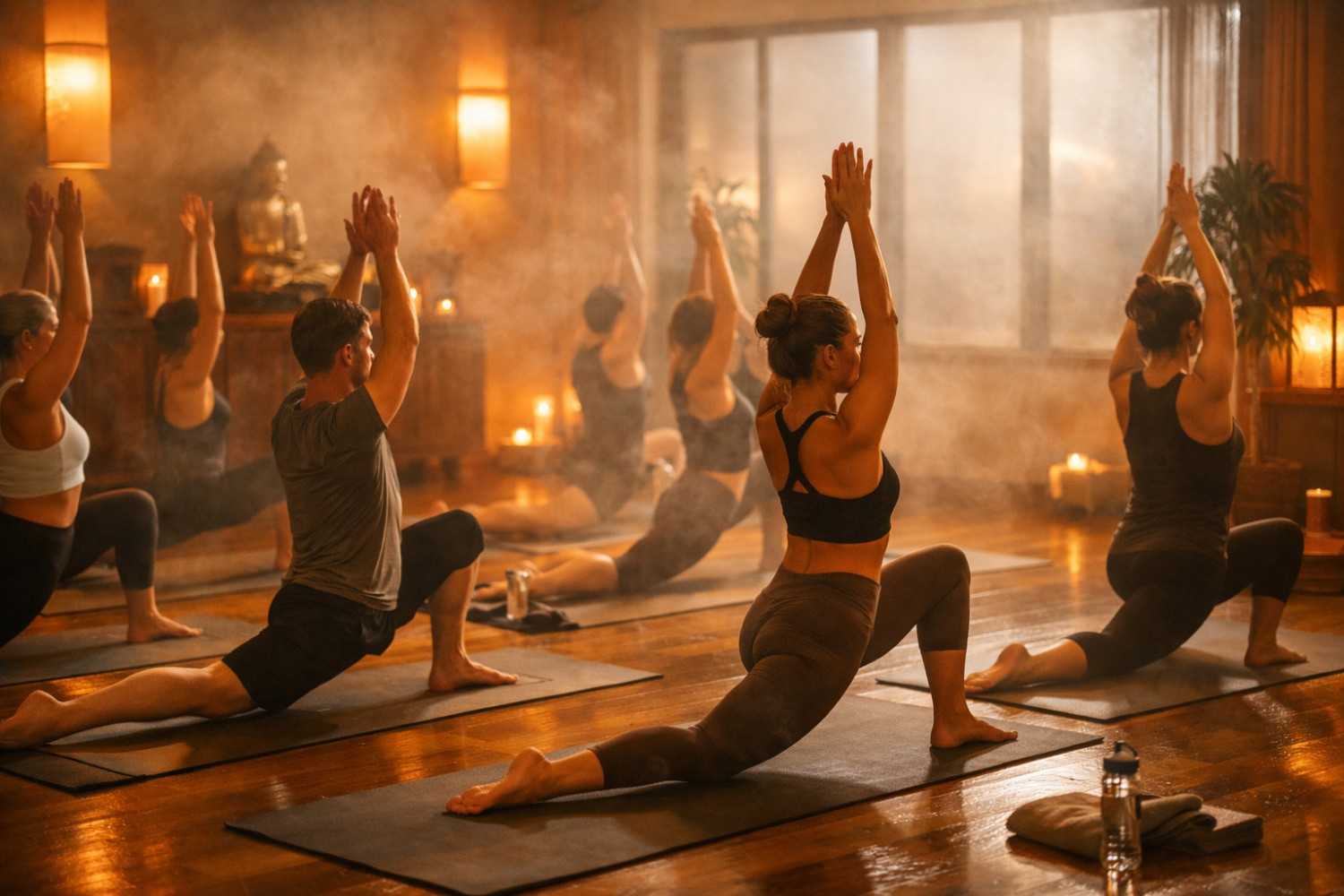
Hot yoga is not one class. The many types of hot yoga differ in temperature, pace, sequence, and purpose, so the right choice depends on your fitness level and what you want from the practice. This guide compares the main styles side by side, so you can walk into your first heated class with a clear idea of what to expect.
Key Highlights
- Bikram follows a fixed 90-minute sequence of 26 postures at 105°F with 40% humidity.
- Hot vinyasa and hot power yoga use flowing movement at 90-100°F and suit students who want a workout.
- Hot yin and warm yoga use gentler heat, around 80-95°F, with long, slow stretches.
- Inferno hot Pilates is a high-intensity, Pilates-based class in a heated room, not a traditional yoga style.
- Hydration, pacing, and knowing the warning signs of overheating matter more than pushing through the heat.
Heat Levels at a Glance
Studios use the word “hot” loosely, and two classes with the same label can feel very different. Temperature, humidity, and pace decide how hard a class feels. A slow class at 105°F can drain you faster than a flowing class at 90°F, because stillness in high heat leaves little room to cool down. Check the exact temperature before you book.
| Style | Typical Room | Sequence | Pace |
|---|---|---|---|
| Bikram | 105°F, 40% humidity | Fixed: 26 postures, 2 breathing exercises | Slow, held postures |
| Hot vinyasa | 90-100°F | Changes each class | Flowing, breath-linked |
| Hot power yoga | 90-100°F | Changes each class | Fast, athletic |
| Hot yin / warm yoga | 80-95°F | Changes each class | Slow, long holds |
| Inferno hot Pilates | 95-100°F | Set Pilates-based format | High intensity, timed intervals |
1. Bikram Yoga: The Original Heated Style
Bikram yoga, created by Bikram Choudhury in the 1970s, is the most rigid style on this list. Every class runs 90 minutes and follows the same order: 26 postures and two breathing exercises, taught from a spoken script, at 105°F with about 40% humidity. The fixed format has one clear advantage. You can track your progress pose by pose, week by week, because the class never changes.
The heat and the long holds demand patience. Standing postures open the class, floor postures close it, and the teacher gives no music and no variation. Beginners often find the first classes tough, and that is normal. Sit down and rest in Child’s Pose whenever you need to; leaving the room breaks your acclimatisation and makes the heat harder to handle. This style suits students who like structure and a clear benchmark for progress.
Because the class is long and hot, recovery matters. Drink water before and after class and expect muscle soreness after your first few sessions. If soreness lingers, our guide to sore muscles from yoga and how to recover covers rest, gentle movement, and when to back off.
2. Hot Vinyasa: Flow in the Heat
Hot vinyasa, often listed on schedules as hot flow, links movement to breath in a continuous sequence. Poses change from class to class, teachers choose their own playlists and themes, and the room usually sits between 90°F and 100°F. The heat loosens muscles, which makes deep stretches feel more accessible, but the constant movement also raises your heart rate more than a static class does.
This style suits students who already know basic poses and want variety. A teacher may build toward arm balances one week and hip openers the next, so no two classes feel identical. That freedom is a strength and a risk: a fast class can overwhelm a beginner. Start with a level-one or all-levels hot flow class, and learn the names of common poses first. Our practical tips for getting better at yoga explain how to build that foundation class by class.
3. Hot Power Yoga: Strength in the Heat
Hot power yoga grows out of Ashtanga yoga and leans athletic. Classes run 60-75 minutes at 90-100°F, with sun salutations, standing strength work, core sequences, and arm balances. Teachers vary the sequence, but the intent stays constant: build muscular endurance and stamina. Expect to sweat heavily and to work hard through the full hour.
This style fits students who want a workout as much as a yoga practice. It builds upper-body and core strength faster than gentler styles, and the heat adds a cardiovascular challenge on top. It is not the best first step into heated practice. Some fitness and familiarity with vinyasa flow will help you keep form.
Many studios schedule power classes early in the day, and the intensity makes a strong start for people who train before work. If you prefer a calmer start, read about the benefits of morning yoga and decide which pace fits your routine. Either way, bring a large water bottle and plan a proper cool-down.
4. Hot Yin Yoga: Deep Stretch at Gentle Heat
Hot yin, often called warm yoga, is the quiet end of the heated spectrum. Classes run 60-90 minutes at 80-95°F, and each pose is held for three to five minutes while you stay still and breathe. The targets are connective tissue and joints rather than muscle strength, so the work feels passive even as holds grow intense.
The lower heat makes this style the easiest entry point into heated practice. It suits students with stiff joints, older practitioners, and anyone returning from injury, though you should clear any injury with a doctor first. Props matter here: bolsters, blocks, and blankets support the long holds and keep joints comfortable.
If getting up and down feels hard, a seated practice may suit you better. Our guide to chair yoga exercises and benefits shows how the same principles work with a chair for support.
5. Inferno Hot Pilates: Heated Intensity, Pilates Roots
Inferno hot Pilates is not yoga in the traditional sense, but studios often list it beside heated yoga classes, so it belongs in this comparison. Developed by Gabi Walters, it uses Pilates-based exercises performed on a yoga mat in a room heated to around 95-100°F. Classes use timed intervals, high repetitions, and no weights, with a focus on core strength and endurance.
The format is demanding. One hour of fast, repetitive movement in high heat builds stamina, but it offers little of the breathwork, meditation, or flexibility focus that defines yoga. Treat it as a heated workout class rather than a yoga class. It suits fit students who want intensity, and it pairs well with a slower yoga style on alternate days.
Choosing the Right Style for You
Match the class to your goal, not to the trend. Pick Bikram if you want a fixed, measurable practice. Pick hot vinyasa if you want flow and variety. Pick hot power if strength and stamina top your list. Pick hot yin if flexibility, joint health, and calm matter most. Pick Inferno hot Pilates if you want a hard heated workout and already have a fitness base.
Hydration and Safety in Heated Classes
Heat illness is the real risk in this practice, and it is preventable. Drink water through the day before class, not just during it. The U.S. Centers for Disease Control and Prevention advises drinking about one cup of water every 15-20 minutes during moderate activity in the heat, and replacing salt and minerals with a sports drink when sweating lasts for hours. Its heat stress recommendations also stress gradual acclimatisation: build exposure over 7-14 days rather than jumping straight into the hottest class.
Watch for warning signs and act on them at once. Dizziness, nausea, headache, confusion, or a pounding heart mean you should stop, sit down, and cool off. Do not push through these symptoms to finish the class. People with heart conditions, low blood pressure, or heat sensitivity should talk to a doctor before heated practice, and pregnant students should ask their doctor too.
Heat sensitivity deserves honest attention. If you already struggle with sudden warmth, for example during menopause, a heated room can feel far harder than the class description suggests. Our guide to yoga for hot flashes and natural relief covers cooling breathwork and gentler practices that may suit you better on sensitive days.
What to Bring and How to Prepare
Pack for sweat. You need a large water bottle, a towel for your mat and one for your face, and light, breathable clothing that stays put when wet. Eat a small meal two to three hours before class, and skip heavy food, alcohol, and caffeine close to class time. Arrive early and tell the teacher you are new.
Your mat choice matters more in a heated room than in a regular class. A mat that grips when wet keeps you stable in standing poses and saves your wrists in flow sequences. If your current mat turns slippery with sweat, read our guide on how to choose a yoga mat before your first heated class, and consider a microfibre towel that lies over the mat for extra grip.
Conclusion
Start with hot yin or a beginner hot flow class, build heat tolerance over a few weeks, and then try the stronger styles. Book one class this week at the gentlest heat level that interests you, and judge the style by how you feel the next morning.
Frequently Asked Questions
What is the best type of hot yoga for beginners?
Hot yin or a beginner-level hot flow class is the best starting point. Both use lower heat than Bikram and let you rest without falling behind a fixed sequence. Start with one class a week, drink water through the day beforehand, and move up to hotter styles only after a few comfortable sessions.
How hot is a hot yoga class?
It depends on the style. Bikram runs at 105°F with 40% humidity, hot vinyasa and hot power classes usually sit between 90°F and 100°F, and hot yin or warm yoga stays near 80-95°F. Studios vary, so check the exact temperature on the class schedule before you book your first session.
Is hot yoga safe?
Hot yoga is safe for most healthy adults when they hydrate well, pace themselves, and respect warning signs like dizziness or nausea. The risks rise with heart conditions, low blood pressure, pregnancy, and heat sensitivity. Talk to a doctor first if any of these apply, and sit out the rest of class if you feel unwell.
What should I wear and bring to hot yoga?
Wear light, breathable clothing that stays in place when wet, and bring a large water bottle, a mat towel, and a face towel. A grip-friendly mat matters in heated rooms, since sweat makes standard mats slippery. Arrive early, tell the teacher you are new, and choose a spot near the door for better airflow.
How often should I practice hot yoga?
Two to three times a week works well for most students, with rest days or gentler practices between heated sessions. Daily hot classes suit experienced students who hydrate well and recover fully, but beginners should start with once a week and add sessions gradually as heat tolerance builds over several weeks.
Does hot yoga burn more calories than regular yoga?
Hot yoga burns more calories than a gentle room-temperature class, mainly because flowing and power styles raise heart rate, but the heat itself adds only a modest amount. A vigorous 60-minute hot power class may burn roughly 400-600 calories, while a slow hot yin class burns far less. Pick the style for its other benefits, not for calorie burn alone.