
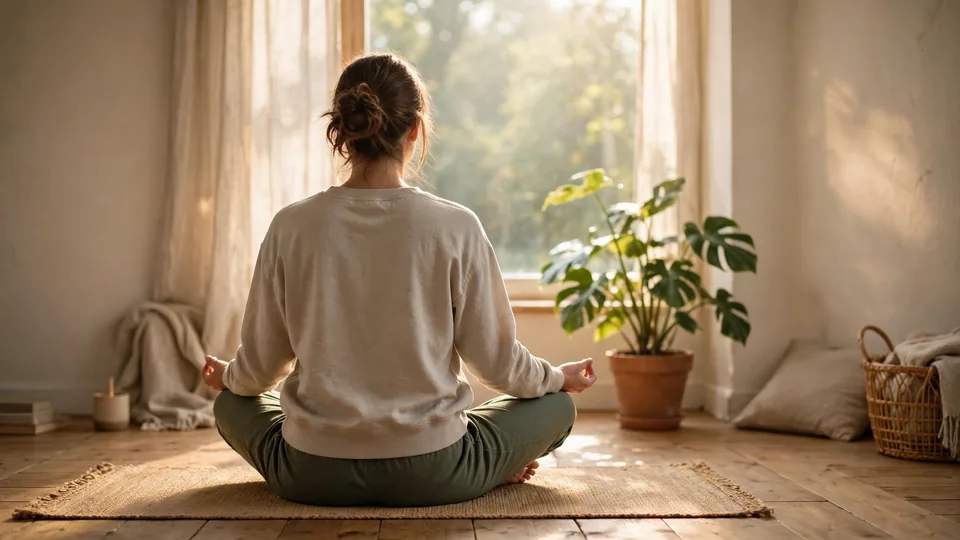
ADHD makes focus, impulse control, and emotional regulation harder than they need to be, for children and adults alike. Yoga for ADHD works as a practical complement to standard care, because it trains the same skills ADHD disrupts: attention, self-monitoring, and calm under pressure. This guide covers what the research shows, which poses and breathing practices help most, and how to build a routine that sticks in 2026.
Key Highlights
- Yoga trains attention directly: every pose asks the mind to return to breath or balance.
- Research shows small to moderate gains in attention, impulse control, and emotional regulation, mostly in children so far.
- Slow breathing shifts the nervous system out of fight-or-flight and puts a pause between impulse and action.
- Balance poses such as Tree pose double as focus drills, while Child’s pose offers a fast reset when frustration peaks.
- Short daily sessions beat long occasional ones: 10 to 20 minutes at the same time each day.
ADHD Is More Than a Short Attention Span
ADHD is a neurodevelopmental condition, not a character flaw or a lack of effort. The U.S. Centers for Disease Control and Prevention (CDC) estimates about 6 million American children have received an ADHD diagnosis, and roughly 4.4 percent of adults live with it too. Inattention is only one part of the picture. Hyperactivity, impulsivity, weak working memory, and trouble with planning and emotional regulation all shape daily life, from school to sleep and relationships. That breadth matters, because yoga helps on several fronts at once: movement burns restless energy, breath slows reactivity, and focused poses rehearse sustained attention.
How Yoga Works on the Brain and Nervous System
Yoga reaches ADHD through the nervous system first. Slow, deliberate breathing activates the parasympathetic branch, the rest-and-digest response that counters the constant alertness many people with ADHD live in. Research has also linked yoga with increased GABA activity, a calming neurotransmitter, and steadier regulation of the autonomic nervous system. The result is a wider gap between impulse and action.
A second mechanism is interoception, the ability to sense what is happening inside your own body. Studies of experienced practitioners found changes in the insular cortex, the brain region that handles interoceptive awareness. For someone with ADHD, that skill is practical: noticing restlessness early makes it possible to choose a response instead of reacting on autopilot. Movement also supports dopamine, the neurotransmitter tied to motivation and reward, which is why physical practice can sharpen focus. The same body-mind link explains how yoga supports mental health more broadly.
None of this makes yoga for ADHD a treatment on its own. It makes it a useful training ground for the skills ADHD makes hard: noticing, pausing, and returning attention.
What the Research Says in 2026
The evidence is promising and honest about its limits. A 2023 systematic review of 10 studies found yoga and meditation improved attention, hyperactivity, and impulsive behavior in children with ADHD. A 2019 meta-analysis of 682 participants reached a similar conclusion for mindfulness-based training, including yoga. A 2013 study in the Journal of Attention Disorders found children who practiced yoga showed clear gains in attention and behavior.
Effects are small to moderate, and most strong trials involve children rather than adults. An 8-week program for children aged 8 to 13 improved accuracy and reaction time on attention tasks. A 6-week Bikram yoga pilot in young adult women found no clear gains in executive function, which suggests short programs may not be enough for adults. The pattern is consistent: regular practice over weeks, not a single class, drives results. That is also why practices that sharpen memory and concentration work best as habits, not one-off fixes.
The National Center for Complementary and Integrative Health notes that mind-body practices such as yoga show early promise for attention and self-regulation, while calling for larger trials. Read the science this way: real support, real limits, and no excuse to drop proven care.
Poses That Build Focus and Calm
The best poses pair movement with a clear point of attention. Each one below gives the mind a job to do.
Mountain Pose (Tadasana)
Stand tall with feet rooted and arms relaxed, breathing slowly for 10 breaths while noticing each point of contact with the floor. It looks simple, and that is the point: holding still on purpose trains the sustained attention homework and meetings demand. Open every session with it.
Tree Pose (Vrksasana)
Stand on one leg, place the other foot on the ankle or calf, fix your eyes on one still point, and hold for 5 to 10 breaths per side. Balance leaves no room for a wandering mind, so Tree pose is a focus drill in disguise. Wobbling is normal; returning to the pose is the practice.
Warrior I (Virabhadrasana I)
Step one foot back, bend the front knee, and reach both arms overhead while breathing steadily. The strong stance channels restless energy into effort instead of fidgeting. Hold 5 breaths per side, then switch.
Cat-Cow Pose
Move slowly between arching and rounding the spine, one breath per movement, for 8 to 10 rounds. The rhythm links breath to motion and gives a busy mind a simple pattern to follow. It also releases tension after long sitting.
Child’s Pose (Balasana)
Kneel, fold forward, rest your forehead on the mat, and breathe slowly for 1 to 3 minutes. The tucked shape and forehead contact calm the nervous system fast, which makes it the best reset when frustration or restlessness peaks. Return to it any time a session feels like too much.
Savasana (Corpse Pose)
Lie flat with arms at your sides and stay still for 2 to 3 minutes, building toward 5. Stillness is the hardest skill for an ADHD brain, and one of the most useful. Guided imagery or a slow body scan can help at first.
Breathing Practices That Slow the Impulse
Breath is the fastest lever yoga offers, because breathing rate connects straight to the autonomic nervous system. Belly breathing is the starting point: inhale through the nose for 4 counts, let the belly rise, then exhale for 6 counts. The longer exhale signals safety and slows the heart. Counting breaths adds a focus task that keeps the mind from drifting.
Alternate nostril breathing, or Nadi Shodhana, steadies attention before homework, study, or a difficult conversation. Try 6 to 8 rounds with slow, even breaths. More forceful techniques such as Kapalbhati, the breath of fire, can energize a sluggish morning, but keep them short and skip them when anxiety is already high.
Teach one technique at a time. Mastering one calming breath you can use anywhere beats half-learning five.
Yoga for Children With ADHD
Children respond best when yoga feels like play. Keep sessions to 10 to 20 minutes, use animal poses and storytelling, and let them move between poses rather than holding long stillness. A few minutes before school or homework can shift a child into a calmer state, and teachers in school-based programs report better classroom attention after regular practice.
Games that mix balance and breath work well: hold Tree pose while naming something you can see, hear, and feel. That kind of five-senses grounding check builds the same body awareness that steadies behavior in class. Praise effort and returning to the pose, not perfect form.
Keep expectations realistic. Benefits usually show after 6 to 8 weeks of steady practice, and yoga sits alongside school support and any prescribed treatment, not in place of them.
Yoga for Adults With ADHD
Adults face a different mix: racing thoughts, hard transitions between tasks, emotional burnout, and broken sleep. Yoga helps by giving the day fixed anchor points. A short morning flow steadies the day, and a slow evening sequence with long exhales helps the mind wind down before bed.
The real gain is self-monitoring. After a few weeks of practice, many adults notice distraction sooner and catch themselves before a task derails. Pairing yoga with a short daily meditation habit strengthens that effect, since both train the same return of attention.
Choose classes with clear structure and minimal chatter. A predictable sequence removes decision fatigue and leaves more attention for the practice.
Choosing a Style That Fits an ADHD Brain
Hatha yoga suits most people with ADHD: a steady pace, pauses between poses, and time to notice breath and alignment. Slow vinyasa works when restlessness runs high, because continuous movement keeps the mind engaged. Restorative yoga fits evenings and burnout, when rest matters more than effort.
Skip fast, hot, or loud classes at first. Overstimulation can undo the calm a session builds, and crowded rooms add competing distractions. A small class or home practice with a guided video often works better than a packed studio.
A Simple Weekly Routine
Start with 4 days a week, 15 to 20 minutes per session, at the same time each day. Morning suits children before school; adults often do better with a morning session plus a 5-minute breathing break in the afternoon. Keep the sequence short: Mountain, Cat-Cow, Warrior I, Tree, Child’s Pose, then Savasana.
Track one thing only, such as days practiced or how calm the 10 minutes after a session feel. A dedicated mat helps here: choosing a yoga mat that stays put removes friction and signals to the brain that practice time has started.
Add 5 minutes every two weeks if the routine holds. When a day is missed, return the next day without doubling up. Consistency, not intensity, is what the research rewards.
Yoga as a Complement, Not a Replacement
Yoga supports ADHD care; it does not replace it. Medication, behavioral therapy, and professional guidance remain the foundation for most people, and yoga works best layered on top of them. Anyone starting a new movement practice should check with a doctor first, especially children or anyone with a physical condition. The honest promise is narrower than the hype and more useful: better attention, steadier emotions, and a way to pause before reacting.
Frequently Asked Questions
Can yoga really help with ADHD?
Yes, as a complement to standard care. Trials show small to moderate gains in attention, impulse control, and emotional regulation, with the strongest evidence in children. Yoga trains the same skills ADHD disrupts, but it is not a substitute for medication or therapy.
How long does it take to see results?
Most studies report changes after 6 to 8 weeks of regular practice. Short daily sessions of 10 to 20 minutes tend to work better than occasional long classes. If nothing shifts after two months of steady practice, try a different style or time of day.
What is the best yoga style for ADHD?
Hatha yoga is the safest starting point, with its steady pace and pauses between poses. Slow vinyasa suits people who need movement to stay engaged, while restorative yoga helps with burnout and sleep. Avoid fast or overstimulating classes at first.
Which poses help focus most?
Balance poses such as Tree pose demand full attention, so they act as focus drills. Mountain pose builds stillness, Warrior I channels restless energy, and Child’s pose offers a fast reset. Pair any of them with slow breathing for the strongest effect.
Can children with ADHD do yoga safely?
Yes, with age-appropriate sessions led by a teacher who understands children. Keep sessions short and playful, avoid forceful breathing techniques, and skip advanced poses. Sessions should stay fun and pressure-free, with plenty of movement and choice. Check with a pediatrician first if your child has any health condition.
Does yoga replace ADHD medication?
No. Yoga is a complementary practice, not a treatment on its own. Research supports it alongside medication, therapy, and school support, because it can make standard care work better by building focus and self-regulation. Never stop prescribed medication because of yoga; discuss any change with the prescribing doctor.
Try one short session this week: 10 minutes, three poses, slow breathing, and notice how the next hour feels. If it helps, make it a daily habit and let the practice do the slow work.