
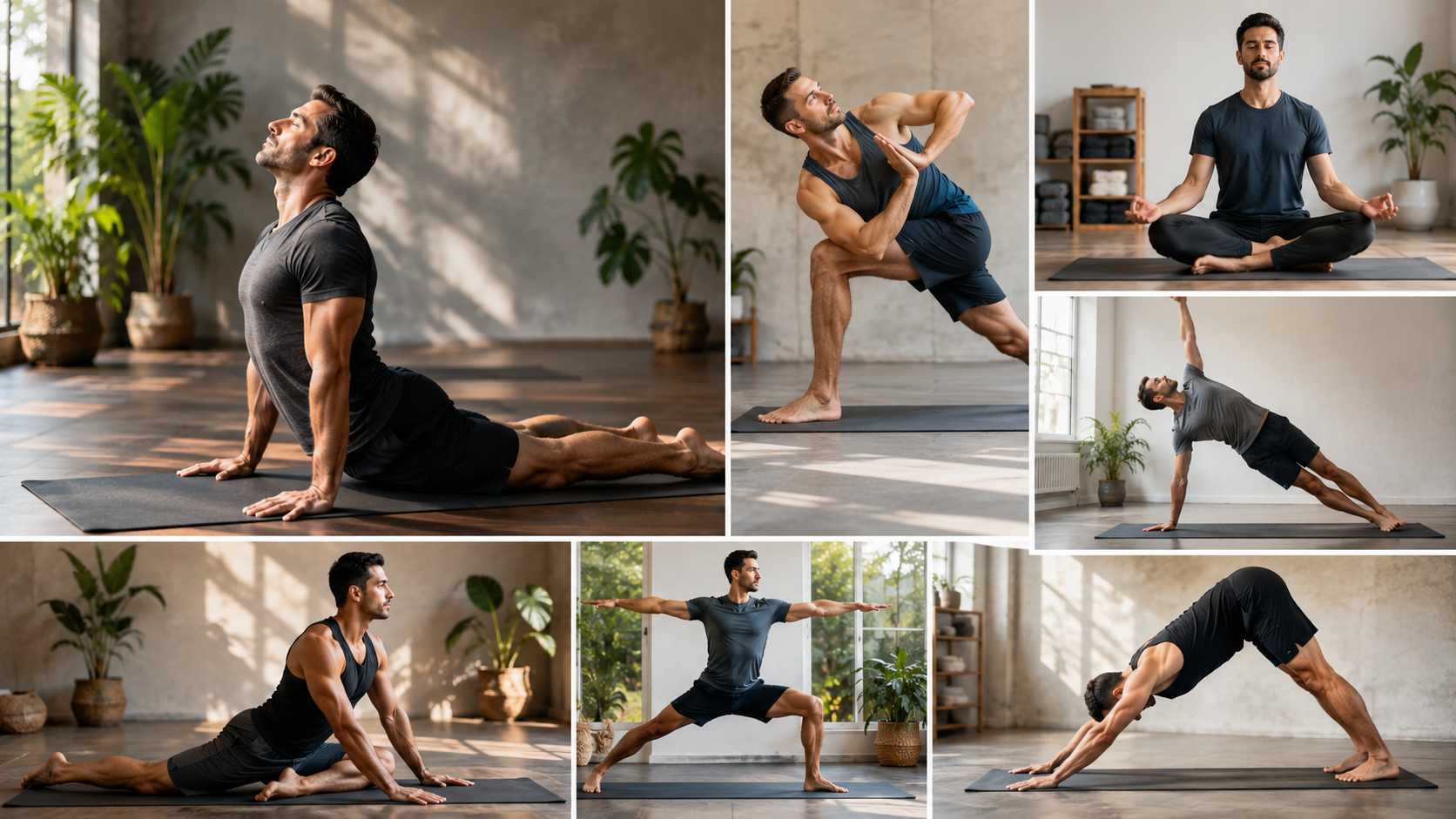
Introduction
For many years, yoga was incorrectly viewed as an activity primarily for women or people who were already flexible. However, this outdated stereotype has rapidly changed as more men discover the physical, mental, and athletic benefits of yoga. Today, athletes, bodybuilders, runners, martial artists, office professionals, and fitness enthusiasts are incorporating yoga into their routines to improve strength, mobility, recovery, posture, and mental clarity.
Contrary to common misconceptions, yoga is not simply stretching or relaxation. It is a complete mind-body discipline that challenges muscular endurance, balance, concentration, breathing, flexibility, and stability simultaneously. In many cases, yoga exposes weaknesses and tightness that traditional workouts fail to address.
Yoga helps men build strength using bodyweight resistance while also improving flexibility, balance, recovery, and body awareness. Many men initially avoid yoga because they believe they are not flexible enough, but experts consistently emphasize that lack of flexibility is actually one of the best reasons to start practicing yoga.
This detailed guide explores everything men need to know about yoga, including its benefits, common misconceptions, physical and mental advantages, beginner-friendly poses, yoga styles, recovery benefits, athletic performance improvements, and practical tips for starting a yoga routine.
Why Yoga Is Becoming Popular Among Men
Over the last decade, yoga has become increasingly popular among men across different fitness levels and professions. Professional athletes, military personnel, runners, and gym enthusiasts now regularly use yoga as part of their training and recovery routines.
One major reason for this shift is that modern lifestyles create physical imbalances. Many men spend long hours sitting at desks, driving, lifting weights, or performing repetitive movements. These habits often lead to:
- Tight hips
- Lower back pain
- Poor posture
- Shoulder stiffness
- Reduced flexibility
- Joint discomfort
Yoga directly addresses these issues by improving movement quality, mobility, and muscular balance. Experts note that yoga trains the body as an integrated system rather than isolating muscles individually.
Men are also increasingly recognizing yoga’s mental health benefits. In addition to physical improvements, yoga helps reduce stress, improve focus, regulate breathing, and promote emotional balance.
Breaking the Biggest Myth: “Men Are Not Flexible Enough for Yoga”
One of the biggest reasons many men avoid yoga is the belief that they are too stiff or inflexible.
However, yoga experts consistently explain that flexibility is not a requirement for yoga—it is a result of practicing yoga regularly.
Weightlifting, running, cycling, and many sports often shorten and tighten muscles over time. Tight hips, hamstrings, shoulders, and lower backs are extremely common among men. Yoga helps gradually lengthen muscles, improve joint mobility, and restore range of motion.
The goal of yoga is not achieving perfect poses immediately. Instead, yoga focuses on gradual improvement, awareness, and consistency.
Many beginner men notice improvements in flexibility within a few weeks of regular practice. Recent flexibility experts also note that consistent yoga and stretching routines can improve mobility and reduce injury risk significantly over time.
Physical Benefits of Yoga for Men
1. Improved Flexibility
Flexibility is one of the most obvious and immediate benefits of yoga.
Men often develop stiffness from:
- Weight training
- Sports
- Long sitting hours
- Poor posture
- Lack of stretching
Yoga stretches muscles dynamically and statically, helping improve range of motion throughout the body.
Yoga lubricates joints, lengthens muscle fibers, and realigns the body to create better physical balance.
Improved flexibility supports:
- Better posture
- Easier movement
- Reduced stiffness
- Improved athletic performance
- Lower injury risk
2. Functional Strength
Many people assume yoga only improves flexibility, but yoga can also build significant strength.
Yoga uses bodyweight resistance rather than machines or external weights. Poses such as plank, Chaturanga, Warrior poses, and arm balances challenge multiple muscle groups simultaneously.
Experts explain that yoga develops “functional strength,” meaning strength that improves real-life movement and stability rather than isolated muscle size.
Yoga strengthens:
- Core muscles
- Shoulders
- Legs
- Back muscles
- Stabilizer muscles
- Grip strength
Unlike many gym exercises, yoga often trains muscles in lengthened positions, improving mobility and joint stability simultaneously.
How Yoga Improves Athletic Performance
Athletes increasingly use yoga because it improves movement quality, coordination, recovery, and injury prevention.
Better Mobility
Sports and lifting often create muscular imbalances. Yoga helps restore mobility in areas commonly tight in men, including:
- Hips
- Hamstrings
- Chest
- Shoulders
- Spine
Improved mobility allows athletes to move more efficiently and safely.
Enhanced Balance and Coordination
Balancing poses improve:
- Proprioception
- Joint stability
- Coordination
- Reaction time
Better balance improves performance in sports requiring agility and body control.
Increased Endurance
- Certain yoga styles, especially vinyasa and power yoga, build muscular endurance through sustained holds and continuous movement.
- Community discussions also highlight improvements in endurance and core stability from consistent yoga practice.
Better Breathing Efficiency
Yoga emphasizes breath control, which improves:
- Lung capacity
- Oxygen efficiency
- Cardiovascular endurance
- Stress regulation
Controlled breathing can significantly benefit athletes during training and competition.
Yoga for Men and Injury Prevention
Injury prevention is one of yoga’s most important benefits.
The body often compensates for weak or tight muscles by overusing surrounding muscles, leading to imbalances and strain. Yoga helps expose and correct these weaknesses before they become serious injuries.
Yoga improves:
- Joint stability
- Muscle balance
- Posture
- Flexibility
- Core support
These improvements reduce stress on joints and connective tissues.
Many runners, lifters, martial artists, and cyclists use yoga specifically to prevent recurring injuries.
Yoga for Recovery and Muscle Soreness
Recovery is essential for long-term fitness progress.
Yoga supports recovery by:
- Increasing blood circulation
- Reducing muscular tension
- Improving mobility
- Supporting connective tissue health
- Relaxing the nervous system
Relaxed muscles allow more blood and nutrients to reach tissues, improving healing and reducing soreness.
Gentle yoga sessions after workouts can help reduce stiffness and improve movement quality.
Mental Benefits of Yoga for Men
Yoga benefits mental health just as much as physical fitness.
Stress Reduction
- Breathing exercises and mindful movement calm the nervous system and lower stress levels.
- Modern experts consistently emphasize yoga’s ability to regulate stress hormones and improve emotional well-being.
Improved Focus and Mental Clarity
Yoga requires concentration, body awareness, and breath control.
This mental focus can improve:
- Productivity
- Athletic performance
- Emotional regulation
- Decision-making
Better Sleep
- Yoga helps relax the body and reduce tension, which may improve sleep quality.
- Men experiencing stress, anxiety, or physical tension often notice better rest after consistent yoga practice.
Increased Body Awareness
- Yoga develops awareness of posture, movement patterns, and physical tension.
- Yoga continuously encourages awareness of grace, balance, flexibility, and movement patterns.
- This awareness improves both exercise technique and everyday movement.
Best Yoga Styles for Men
Different yoga styles offer different benefits.
- Hatha Yoga: Best for beginners because it focuses on foundational poses and slower pacing.
- Vinyasa Yoga: A more dynamic style connecting movement with breath. Benefits include Strength, Endurance, Mobility, Cardiovascular challenge
- Power Yoga: Fitness-focused and physically intense. Popular among men seeking strength and athletic conditioning.
- Yin Yoga: Focuses on long-held stretches targeting deep connective tissue. Excellent for recovery and flexibility.
- Restorative Yoga: Gentle and calming practice focused on relaxation and nervous system recovery.
Best Beginner Yoga Poses for Men
Downward Dog
Benefits:
- Stretches hamstrings and calves
- Strengthens shoulders and arms
- Lengthens the spine
Plank Pose
Benefits:
- Builds core strength
- Improves shoulder stability
- Develops endurance
Warrior II
Benefits:
- Strengthens legs
- Improves balance
- Opens hips and chest
Warrior poses are indentified as powerful strength builders for the lower body.
Child’s Pose
Benefits:
- Relaxes the back
- Reduces tension
- Encourages deep breathing
Pigeon Pose
Benefits:
- Opens tight hips
- Improves mobility
- Relieves lower back tension
Yoga vs Weightlifting for Men
Yoga and weightlifting are often compared, but they serve different purposes.
Weightlifting Focuses On:
- Muscle hypertrophy
- Maximal strength
- Bone density
- Progressive overload
Yoga Focuses On:
- Mobility
- Balance
- Functional strength
- Recovery
- Breath control
- Body awareness
Experts increasingly recommend combining yoga with resistance training for a more balanced fitness approach.
Yoga complements gym workouts rather than replacing them entirely.
Common Challenges Men Face in Yoga
- Tight Hamstrings: Very common among runners and lifters.
- Tight Shoulders and Chest: Often caused by desk work or upper-body training.
- Ego and Comparison: Many men feel discouraged when they cannot perform advanced poses immediately. Yoga encourages progress without competition.
- Difficulty Slowing Down: Yoga requires patience and mindfulness, which may feel unfamiliar initially.
Tips for Men Starting Yoga
- Start With Beginner Classes. Avoid advanced classes initially. It is recommended to start with gentle or slow-flow classes rather than intense styles immediately.
- Focus on Consistency: Short regular sessions are more effective than occasional long sessions.
- Use Props: Blocks, straps, and bolsters improve accessibility and alignment.
- Breathe Properly: Breath control is essential for relaxation and stability.
- Accept Gradual Progress: Flexibility and balance improve over time.
Yoga for Men Over 40
As men age, mobility, recovery, and joint health become increasingly important.
Yoga helps older men:
- Maintain flexibility
- Improve posture
- Reduce stiffness
- Preserve balance
- Support healthy aging
Experts also emphasize yoga’s role in maintaining movement quality and long-term physical resilience.
Yoga and Masculinity
Modern perceptions of masculinity are changing, and yoga is increasingly viewed as a tool for strength, resilience, and self-awareness rather than weakness or softness.
- Historically, yoga was originally practiced primarily by men in ancient India. The idea that yoga is “only for women” is a modern misconception.
- Today, athletes, military veterans, martial artists, and professional sports players regularly practice yoga to improve performance and recovery.
How Often Should Men Practice Yoga?
Beginners can start with:
- 2–3 sessions weekly
- 15–30 minutes per session
More advanced practitioners may practice daily. Consistency matters more than intensity.
The Long-Term Benefits of Yoga for Men
Long-term yoga practice can improve:
- Mobility
- Joint health
- Strength
- Posture
- Mental focus
- Recovery ability
- Emotional balance
- Longevity
Experts increasingly connect flexibility and mobility with healthier aging and improved quality of life.
Yoga supports sustainable movement rather than short-term fitness trends.
Conclusion
Yoga for men is far more than stretching or relaxation. It is a complete physical and mental discipline that improves strength, mobility, flexibility, recovery, focus, and overall well-being. Whether someone is an athlete, weightlifter, office worker, beginner, or older adult, yoga offers benefits that traditional workouts often overlook.
Yoga strengthens the body, improves flexibility, enhances body awareness, prevents injuries, and supports recovery. Modern fitness experts and yoga practitioners increasingly recognize yoga as a powerful tool for long-term physical and mental health.
The most important thing for beginners to remember is that flexibility is not required to start yoga. Progress comes with patience, consistency, and practice. Over time, yoga not only transforms physical movement but also improves focus, resilience, and overall quality of life.