
Introduction
Autumn is a season of transition. The warmth of summer fades, the days grow shorter, and nature begins its slow return inward. Just as trees shed their leaves, autumn invites us to let go of excess, tension, and the constant outward momentum of warmer months.
In yoga philosophy, seasonal changes affect both the body and the mind. Autumn is associated with movement, dryness, and subtle instability. Without balance, this shift can lead to restlessness, fatigue, anxiety, or lowered immunity.
Practicing yoga for courage in alignment with the autumn season helps restore equilibrium. Gentle grounding poses, calming breathwork, and mindful movement support physical health while encouraging emotional stability and inner reflection.
This guide explores the most beneficial yoga poses for autumn and explains how to adapt your practice to stay centered, nourished, and resilient throughout the season.
The Energetic Nature of Autumn
Autumn represents transition—between activity and rest, light and dark, outward energy and introspection. In many holistic traditions, this season is associated with the air element, which governs movement, breath, and the nervous system.
When imbalanced, autumn energy may show up as:
- Restlessness or anxiety
- Dry skin or joints
- Irregular digestion
- Difficulty sleeping
- Mental distraction
Yoga helps counterbalance these tendencies by encouraging grounding, warmth, and steadiness.
Why Yoga Practice Should Change With the Seasons
Just as nature adapts with the seasons, so should our yoga practice. What feels energizing in summer may feel overstimulating in autumn.
Autumn yoga should focus on:
- Slowing down
- Stabilizing energy
- Grounding through the lower body
- Supporting the breath and nervous system
- Encouraging inward reflection
This seasonal shift helps maintain balance and prevent burnout.
Benefits of Practicing Yoga in Autumn
A seasonally attuned yoga practice offers both physical and emotional benefits.
Physical Benefits
- Improves circulation as temperatures drop
- Maintains joint mobility
- Supports digestion and immunity
- Reduces seasonal stiffness
Mental & Emotional Benefits
- Calms anxiety and overthinking
- Encourages emotional grounding
- Supports restful sleep
- Promotes mindfulness and clarity
Autumn yoga is not about intensity—it’s about stability, nourishment, and awareness.
Best Yoga Poses for Autumn
Below are some of the most effective yoga poses to support the body and mind during the fall season.
1. Mountain Pose (Tadasana)
Mountain Pose is a powerful grounding posture that encourages stability and presence.
Benefits:
- Improves posture
- Builds body awareness
- Encourages mental stillness
- Promotes grounding
In autumn, this pose helps reconnect with the earth and establish balance as energy shifts.
2. Forward Fold (Uttanasana)
Forward folds naturally calm the nervous system and encourage introspection.
Benefits:
- Relieves stress and anxiety
- Stretches the back and legs
- Encourages inward focus
- Supports digestion
Move slowly and use props if needed to avoid strain.
3. Child’s Pose (Balasana)
Child’s Pose is deeply nurturing and grounding, making it ideal for autumn practice.
Benefits:
- Relaxes the spine and hips
- Calms the mind
- Encourages deep breathing
- Provides emotional comfort
This pose is perfect for moments of overwhelm or fatigue.
4. Tree Pose (Vrksasana)
Autumn is about finding balance amid change, and Tree Pose reflects this beautifully.
Benefits:
- Improves balance and focus
- Strengthens legs and core
- Encourages mental stability
- Builds confidence
Practicing balance poses helps cultivate steadiness during seasonal transitions.
5. Seated Twist (Ardha Matsyendrasana)
Twists help detoxify the body and stimulate digestion—important during autumn.
Benefits:
- Aids digestion
- Supports spinal mobility
- Releases tension
- Encourages internal cleansing
Move gently and focus on breath with each twist.
6. Legs Up the Wall (Viparita Karani)
This restorative pose is ideal for grounding and relaxation.
Benefits:
- Calms the nervous system
- Improves circulation
- Reduces fatigue
- Promotes deep relaxation
Perfect for evenings or cooler days when energy feels low.
7. Corpse Pose (Savasana)
Savasana allows the body to integrate the effects of practice and deeply rest.
Benefits:
- Encourages nervous system reset
- Reduces stress
- Enhances mindfulness
- Supports emotional balance
In autumn, longer savasana periods are especially beneficial.
Breathwork for Autumn
Breathing practices play an essential role in seasonal yoga.
Recommended techniques include:
- Slow nasal breathing
- Extended exhales
- Gentle belly breathing
These practices help calm the nervous system, counter dryness, and promote grounding.
Avoid overly stimulating breathwork during autumn, as it may increase restlessness.
Creating an Autumn Yoga Routine
A balanced autumn yoga session might include:
- Gentle warm-up
- Standing grounding poses
- Slow forward folds
- Light twisting
- Restorative postures
- Breath awareness
- Extended relaxation
Aim for consistency rather than intensity. Even 20–30 minutes of mindful movement can be deeply beneficial.
Autumn Yoga and Emotional Well-Being
Autumn often brings emotional shifts—nostalgia, reflection, or melancholy. Yoga provides a safe space to process these feelings without judgment.
Through mindful movement, you can:
- Release emotional tension
- Cultivate acceptance
- Strengthen emotional resilience
- Develop inner calm
Yoga becomes a grounding ritual that supports emotional balance as the year winds down.
Practicing Yoga Outdoors in Autumn
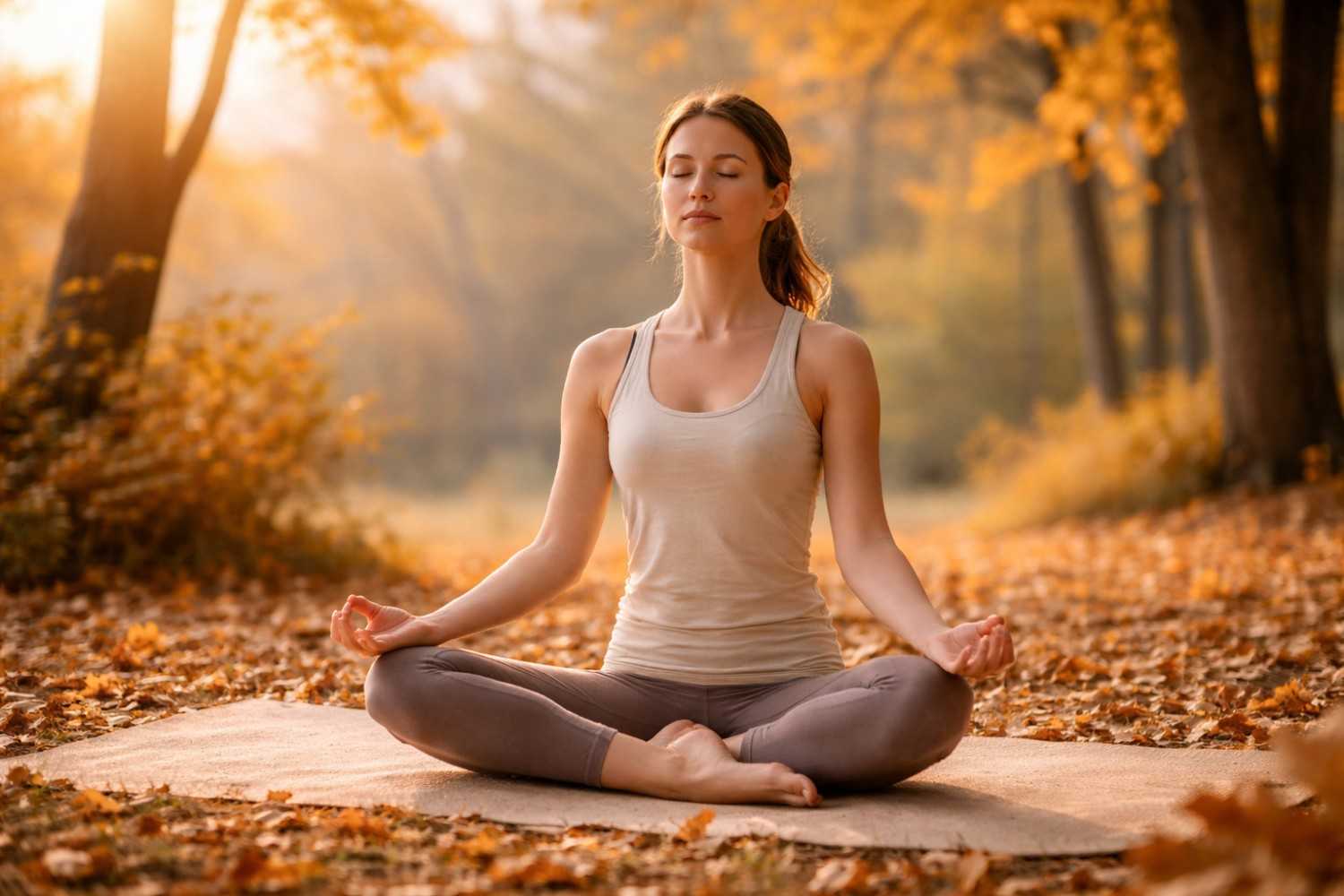
If weather allows, practicing yoga outdoors during autumn can be deeply grounding.
Benefits include:
- Fresh air and natural light
- Connection with seasonal rhythms
- Enhanced sensory awareness
Choose a quiet space and dress warmly to stay comfortable.
Supporting Immunity Through Autumn Yoga
Seasonal transitions can challenge the immune system. Gentle yoga helps by:
- Improving circulation
- Reducing stress (which impacts immunity)
- Supporting digestion
- Encouraging restful sleep
Consistent practice strengthens the body’s natural defenses.
Yoga as a Tool for Seasonal Reflection
Autumn is traditionally associated with reflection and letting go. Yoga supports this process by encouraging awareness and presence.
Use your practice to:
- Reflect on the past year
- Release habits that no longer serve you
- Set intentions for the months ahead
- Cultivate gratitude
This reflective quality makes autumn yoga deeply meaningful.
Conclusion
Yoga teaches us to move in harmony with nature rather than against it. Autumn invites us to slow down, ground ourselves, and turn inward.
By embracing yoga poses that support balance, calm, and reflection, we align with the natural rhythm of the season. This mindful approach not only supports physical health but also fosters emotional clarity and inner peace.
As the leaves fall and the air cools, let your practice become a steady anchor—rooted, calm, and deeply nourishing.