
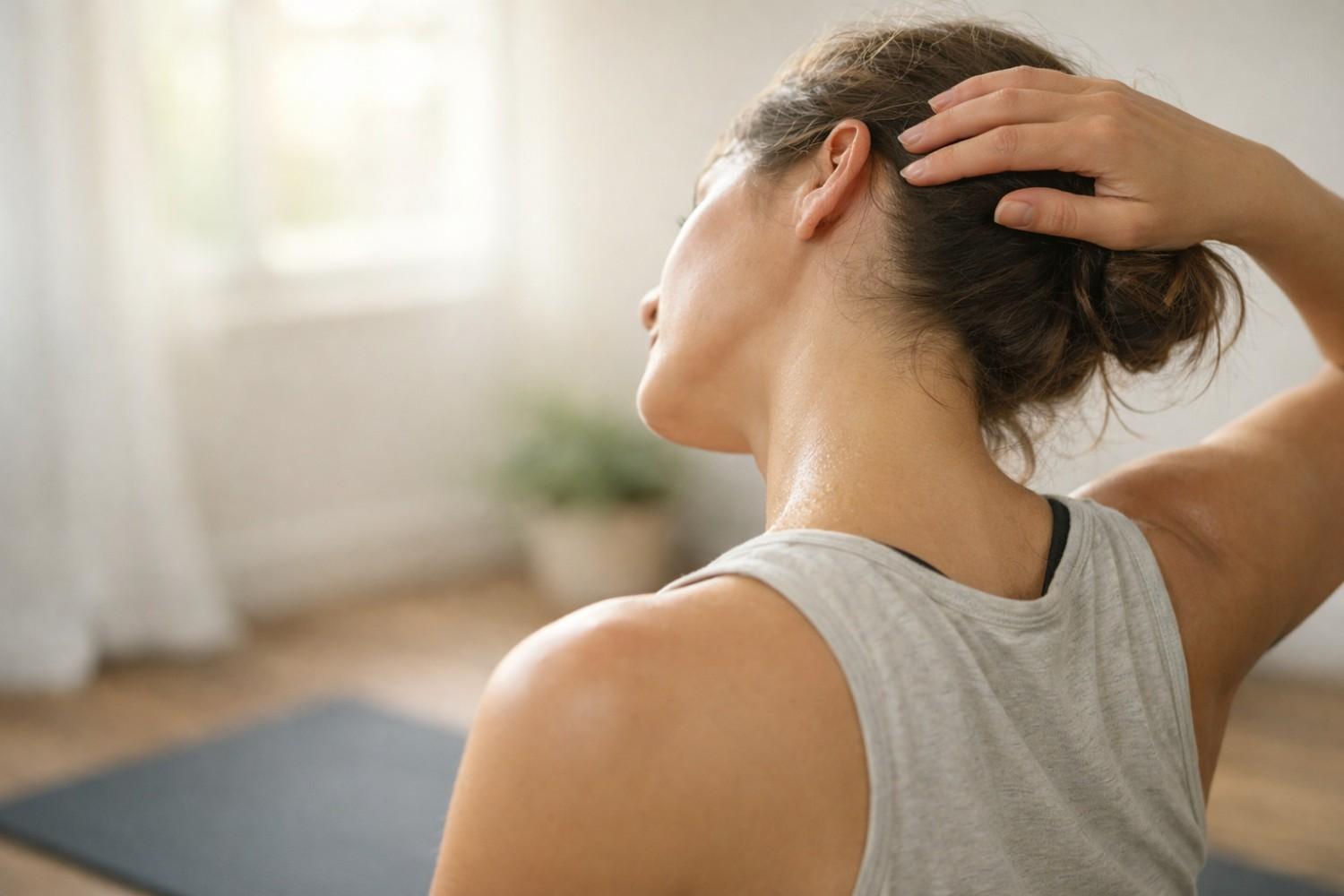
Introduction: Understanding the Modern Neck Pain Epidemic
Let’s be honest, that nagging ache in your neck is more than just a minor inconvenience. For many of us, it’s a constant companion born from hours at desks, scrolling on phones, and the general stresses of daily life. This persistent tension can ripple outwards, often leading to yoga for neck pain and headaches.
But there is a gentle, powerful way to find relief. This guide is your invitation to explore Yoga for Neck Pain, not as a strenuous workout, but as a mindful practice of listening to your body. We’ll move beyond just stretching and into the realm of releasing deep-seated tension and reclaiming comfortable, fluid movement in your cervical spine.
The Root of the Problem: How Modern Life Stresses Our Cervical Spine
Our necks are engineering marvels, designed for both stability and a wide range of motion. However, the “tech neck” posture—head jutted forward, shoulders rounded—places immense strain on these delicate structures. This misalignment compresses vertebrae, overworks muscles, and can pinch nerves.
Over time, this doesn’t just cause local discomfort; it can manifest as that familiar neck tension yoga for neck pain seeks to soothe, along with tight shoulders and even jaw pain. Understanding this connection is the first step toward healing. By bringing conscious awareness to our daily habits, we can start to reverse the damage and create space for healing.
Foundational Principles: Safety First in Your Yoga for Neck Pain Practice
Before we move into any poses, this is the most important part: your neck is delicate, and its safety is paramount. Yoga for Neck Pain should never involve forceful, jerky movements or deep, uncontrolled backbends. The golden rule is micro-movements. Think in terms of centimeters, not inches.
Always keep your movements slow and within a pain-free range of motion. If you feel any sharp pain, dizziness, or numbness, stop immediately. This practice is about coaxing tension out with kindness, not winning a gold medal in flexibility. Listening to your body’s whispers prevents you from hearing its screams later.
Gentle Warm-Ups: Awakening Awareness and Breath
We can’t release what we don’t feel. Start by simply finding a comfortable seat. Close your eyes and tune into the sensation of your breath. Without changing anything, notice where you feel movement. Now, begin to guide your inhale deliberately into the sides and back of your neck, imagining you’re creating space between each vertebra.
On your exhale, visualize softening and releasing the weight of your head. This conscious breathing is the foundation. Then, add subtle movement: slow ear-to-shoulder drops, gentle chin tucks, and effortless head turns. This isn’t stretching yet; it’s simply waking up the area with mindful attention, preparing it for the best yoga for neck pain practices to come.
Seated & Supine Poses: The Core of Your Practice for Relief
Now, let’s explore some of the most effective and gentle poses. These can be done right in your office chair or on a mat. Thread the Needle (in a seated or tabletop position) is phenomenal for yoga for neck pain and shoulder pain, releasing the often-knotted area between your shoulder blades. Supine Chin Tucks (lying on your back) gently strengthen the deep front neck muscles that counter “tech neck.”
A Supported Fish Pose with a block or rolled blanket under your upper back opens the chest and decompresses the cervical spine. Remember the teachings of experts like yoga for neck pain, Cole Chance, who emphasize prolonged, supported holds. Stay in each pose for 8-10 breaths, allowing the body to truly let go.
Integrating Movement: Flowing Sequences for Neck and Shoulders
While stillness is powerful, integrating gentle, flowing movements can bring new levels of mobility. Think of movements like Cat-Cow, focusing on letting the head hang heavily in Cat pose to release the back of the neck. Combine shoulder rolls with synchronized breath.
Practice a slow, mindful Standing Forward Fold with bent knees, allowing your head and neck to be completely passive and heavy. These simple flows encourage circulation, prevent stiffness, and remind the neck and shoulders how to move as a cohesive unit. This integrated approach is key for long-term relief, moving beyond spot treatment to whole-body wellness.
The Power of Rest: Restorative Yoga for Neck Pain and Deep Release
Sometimes, the most profound healing happens when we stop doing and start being. This is where restorative yoga for neck pain shines. Using props like bolsters, blankets, and blocks, you can set up poses that fully support your body, allowing muscles to surrender without any effort.
A classic example: lying on your back with a bolster under your knees and a folded blanket supporting your head and neck, just thick enough to bring your forehead slightly above your chin. In this total support, your nervous system shifts from “fight-or-flight” to “rest-and-digest,” facilitating deep release that active stretching can’t always reach.
Building a Sustainable Habit: Your Personal Yoga Toolkit
Consistency beats intensity every single time. A five-minute daily practice is infinitely more powerful than a 60-minute session once a month. Your personal toolkit might include a 3-minute desk sequence for midday resets, a 10-minute evening wind-down routine, and a longer 20-minute practice for the weekends.
Bookmark a few favorite videos (like those from teachers such as yoga for neck pain Cole Chance) for guidance. The goal is to weave these practices seamlessly into your life so that Yoga for Neck Pain becomes less of a treatment and more of a nourishing ritual of self-care, preventing tension from building up in the first place.
Conclusion: Embracing a Life with Less Pain and More Mobility
Embarking on this journey of Yoga for Neck Pain is a gift you give to yourself—a commitment to moving through your days with more ease and presence. It’s not about achieving a perfect pose, but about rebuilding a compassionate relationship with your body. By consistently applying these gentle practices, you’re doing more than relieving sore muscles; you’re retraining postural patterns, calming your nervous system, and investing in the long-term health of your cervical spine.
Be patient and celebrate the small victories—the easier turn of your head, the quieter moment without a headache. A life with greater mobility and less tension is not just a possibility; it’s within your reach, one gentle breath and movement at a time.