
Introduction
Courage is often misunderstood as fearlessness. In reality, courage is the willingness to show up despite fear, uncertainty, or discomfort. It is the quiet strength that allows us to face challenges, make changes, and remain grounded during difficult times.
Yoga offers a powerful pathway to cultivate this kind of courage. Through conscious movement, steady breath, and self-awareness, yoga teaches us how to stay present even when things feel uncomfortable. It encourages us to meet resistance with compassion rather than avoidance.
Yoga for courage is not about dramatic postures or pushing limits—it is about building inner stability, confidence, and trust in oneself. Over time, this practice helps transform fear into clarity and hesitation into strength.
What Does Courage Mean in Yoga?
In yoga philosophy, courage is deeply connected to awareness and discipline. It is not about force or aggression, but about inner steadiness, a quality that becomes especially important during Kundalini awakening, when heightened energy and awareness require grounding, patience, and conscious integration.
Courage in yoga means:
- Facing physical or emotional discomfort without retreating
- Observing thoughts without being controlled by them
- Committing to growth, even when it feels challenging
- Staying present instead of reacting impulsively
This form of courage develops gradually through consistent practice and mindful attention.
The Mind–Body Connection and Courage
One of yoga’s greatest strengths is its ability to link the body and mind. Fear and stress often show up physically—as tension in the chest, shallow breathing, or tight shoulders. Yoga helps release these patterns by bringing awareness to how emotions live in the body.
Through regular practice, yoga:
- Teaches the body how to relax under stress
- Helps regulate the nervous system
- Builds emotional resilience
- Strengthens the connection between breath and awareness
When the body feels safe, the mind follows. This is the foundation of courage.
How Yoga Builds Emotional Strength
Courage is not something we “have” or “don’t have”—it is something we practice.
Yoga strengthens emotional resilience by:
- Encouraging presence in difficult moments
- Teaching patience through slow, intentional movement
- Building confidence through consistency
- Helping practitioners sit with discomfort without panic
Each time you hold a pose a little longer or return to the breath during challenge, you are practicing courage.
The Role of Breath in Cultivating Courage
Breath is central to yoga and plays a vital role in emotional regulation. When we are afraid or anxious, breathing becomes shallow and rapid. Yoga teaches us to reverse this pattern.
Slow, conscious breathing:
- Activates the parasympathetic nervous system
- Reduces stress hormones
- Enhances mental clarity
- Creates a sense of grounding
In moments of fear or doubt, the breath becomes an anchor—steady, reliable, and always accessible.
Yoga Poses That Encourage Courage
Certain yoga postures are traditionally associated with strength, confidence, and openness. These poses encourage both physical stability and emotional resilience.
Mountain Pose (Tadasana)
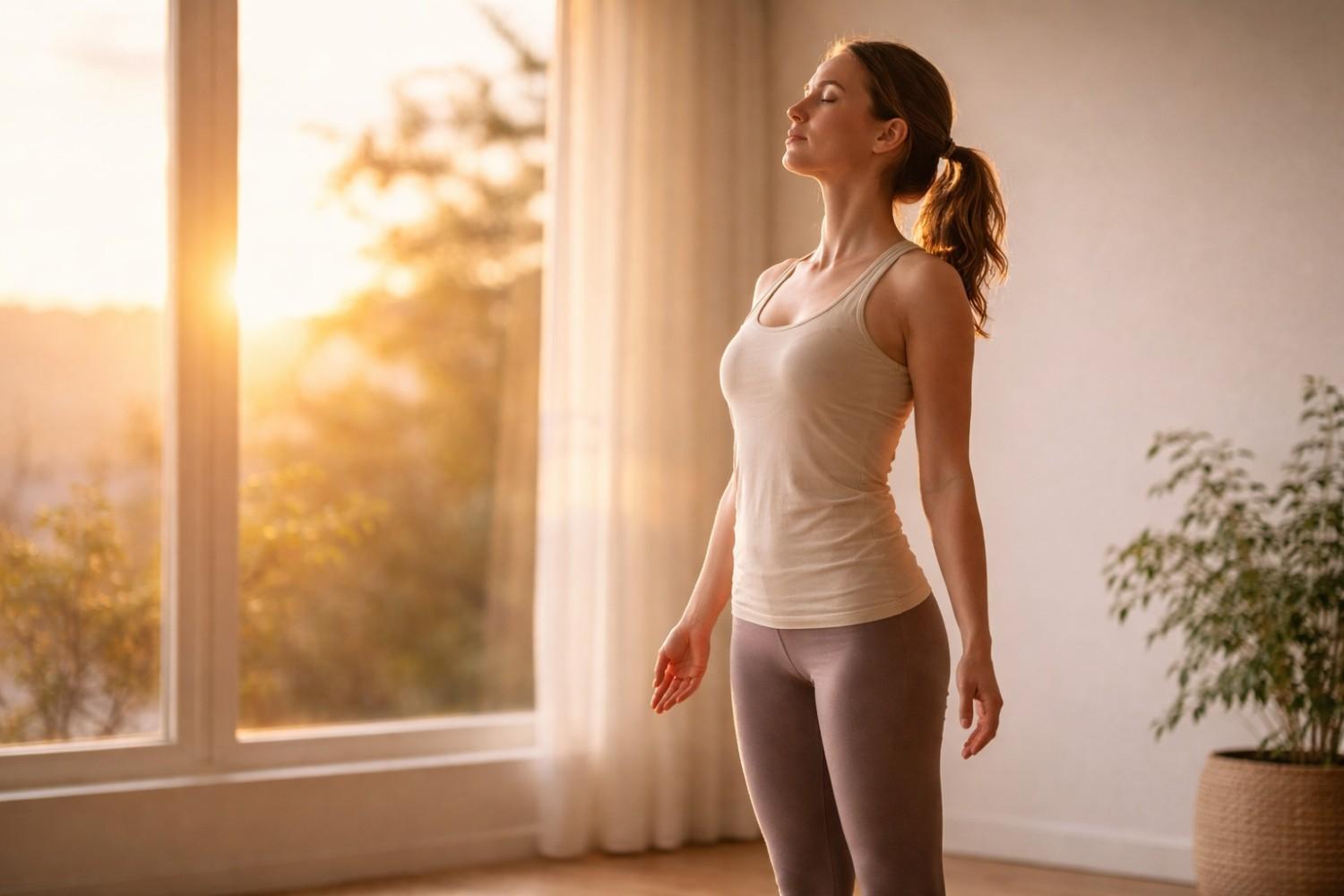
Teaches grounding, alignment, and self-awareness. Standing tall builds confidence from the ground up.
Warrior Poses (Virabhadrasana I & II)
Symbolize inner strength, determination, and focus. These poses encourage steady breathing while holding powerful stances.
Backbends
Heart-opening postures promote emotional openness and vulnerability—key components of courage.
Balance Poses
Postures like Tree Pose require concentration and patience, reinforcing inner steadiness.
Practicing these poses with awareness—not force—helps cultivate courage safely and sustainably.
Yoga for Courage in Everyday Life
The courage developed on the mat extends into daily life. Over time, practitioners often notice changes such as:
- Greater confidence in decision-making
- Improved ability to handle stress
- Increased emotional awareness
- Reduced fear of failure
Yoga teaches that courage is not about controlling outcomes but about staying present through uncertainty.
The Role of Mindfulness in Courage
Mindfulness allows us to observe fear without becoming overwhelmed by it. Yoga trains this skill through breath awareness and slow movement.
When we observe rather than react:
- Fear loses its intensity
- Clarity increases
- Emotional responses soften
This mindful approach is especially helpful during life transitions, challenges, or periods of self-doubt.
Courage as a Practice, Not a Trait
One of yoga’s most empowering lessons is that courage is not fixed—it is cultivated.
Each time you:
- Step onto the mat
- Breathe through discomfort
- Stay present during difficulty
- Show compassion toward yourself
- You strengthen your capacity for courage.
Yoga reframes courage as a daily practice rather than a personality trait.
Emotional Healing Through Yoga
Yoga creates space for emotional processing without judgment. For many people, emotions surface during practice—sadness, frustration, or fear.
Rather than suppressing these emotions, yoga encourages:
- Awareness without attachment
- Acceptance without resistance
- Release without force
This process supports emotional healing and builds long-term resilience.
Yoga for Courage During Life Transitions
Life changes—new careers, relationships, loss, or uncertainty—often require deep courage. Yoga provides stability during these times.
A consistent yoga practice can help:
- Reduce anxiety during change
- Improve emotional balance
- Foster trust in the process
- Strengthen self-belief
Through breath and movement, yoga reminds us that we can meet change with grace.
Courage Through Consistency
Yoga does not demand perfection. It asks for consistency.
Small, regular practices:
- Build confidence gradually
- Reinforce healthy habits
- Strengthen mind–body connection
Courage grows not from intensity, but from showing up again and again.
Yoga as a Safe Space for Growth
Yoga offers a non-competitive, non-judgmental environment. This safety allows individuals to explore vulnerability, fear, and strength at their own pace.
In this space:
- There is no comparison
- Progress is personal
- Growth is internal
This environment is essential for cultivating authentic courage.
Bringing Courage Off the Mat
The true test of yoga is how it influences daily life. Over time, practitioners may notice they:
- Speak up more confidently
- Handle stress with greater calm
- Approach challenges with curiosity
- Trust themselves more deeply
Yoga teaches that courage is not dramatic—it is steady, grounded, and quietly powerful.
Conclusion
Yoga for courage is ultimately about showing up—for yourself, your breath, and your life. It is about meeting fear with awareness and uncertainty with trust.
Through mindful movement, breathwork, and reflection, yoga helps build a foundation of inner strength that supports every aspect of life.
Courage doesn’t arrive all at once. It grows with each conscious breath, each intentional movement, and each moment of presence.
And that journey begins—right where you are.