
Introduction: The Transformative Power of Sound
Have you ever felt a song shift your entire mood? Now, imagine harnessing that power intentionally for peace and clarity. This is the heart of Mantra Yoga, an ancient practice that moves beyond physical postures into the vibrational realm of sound. It’s not just about exercise; it’s about using sacred, repetitive phrases—mantras—to tune your inner instrument.
Whether you’re seeking calm in chaos or a deeper spiritual connection, Mantra Yoga offers a profound pathway. Think of it as a daily reset button for your soul, using the oldest tool we have: your own voice. Let’s explore how these potent sounds can transform your daily life.
What is Mantra Yoga? Unraveling the Meaning
So, what does Mantra Yoga meaning all about? At its core, it’s the yoga of mindful sound. The word “mantra” comes from Sanskrit: “man” meaning mind, and “tra” meaning instrument or vehicle. Therefore, a mantra is literally a “tool for the mind.” Mantra Yoga is the dedicated practice of using these tools to steady, focus, and ultimately transcend the chatter of the conscious mind.
It’s less about perfect pronunciation and more about the resonance and intention you pour into each repetition. This practice teaches us that sound is a form of energy that can shape our reality, making Mantra Yoga a journey into the power of conscious vibration.
The Core Definition: More Than Just Words
Let’s simplify the Mantra Yoga definition. It is a distinct branch of yoga that prioritizes the systematic repetition of specific Sanskrit syllables, words, or phrases to purify the mind and awaken higher consciousness. Unlike a simple affirmation, a traditional mantra is considered to be a sacred sound capsule, imbued with spiritual potency.
The Mantra Yoga definition hinges on the science of vibration (Nada Yoga). By chanting, whispering, or mentally revolving these sounds, we align our personal energy with the universal energy they represent. It’s a precise, time-tested method for inner alchemy, transforming scattered thoughts into a single, powerful point of focus.
Key Techniques: How to Practice Mantra Yoga
Ready to try it? The basic technique of Mantra Yoga meditation is beautifully simple yet deep. First, choose a mantra—’Om’ is a universal start. Sit comfortably with a straight spine. Close your eyes, take a few deep breaths, and begin to repeat your mantra. You can chant it aloud, whisper it, or recite it silently in your mind.
The key is consistency and gentle focus. When your mind wanders (and it will!), patiently return to the sound. A classic Mantra Yoga practice might use a mala (prayer beads) for 108 repetitions. This repetitive anchor during Mantra Yoga meditation creates a rhythmic wave that washes over distracting thoughts, leading you inward.
The Multifaceted Benefits: From Mind to Spirit
The benefits of Mantra Yoga are both immediate and cumulative. On a mental level, it’s a powerhouse for reducing stress and anxiety, acting as a focal point to break cycles of worry. It enhances concentration and mental clarity. Emotionally, the vibrations can soothe the nervous system, promoting deep relaxation and emotional balance.
Spiritually, regular practice is said to purify the subconscious, elevate consciousness, and foster a sense of inner connectedness. Whether you approach it as a tool for calm or a path to awakening, the benefits of Mantra Yoga offer a holistic upgrade for your well-being, proving that healing can be as simple as a repeated sound.
Mantra Yoga and Meditation: A Sacred Union
Mantra Yoga meditation is one of the most accessible forms of meditation. Why? Because the mantra gives the busy mind a specific job to do. Instead of struggling to “empty the mind,” you gently fill it with a single, meaningful vibration. This union of Mantra Yoga and meditation creates a seamless practice.
The sound becomes a vehicle that carries you from surface-level thoughts into deeper states of awareness (dhyana). It’s like using a boat (the mantra) to cross a river (the restless mind) to reach the peaceful shore (stillness). For anyone who finds silent meditation challenging, Mantra Yoga meditation provides the perfect, engaging anchor.
Exploring Mantra Yoga for Kundalini Awakening
In the realm of Mantra Yoga Kundalini practices, mantras are considered essential tools. Kundalini yoga views specific mantras as codes that can activate and safely guide the primal energy (Kundalini) at the base of the spine. The vibration of certain bija (seed) mantras like “Lam” or “Vam” is said to resonate with particular chakras, helping to clear blockages.
The practice of Mantra Yoga Kundalini often involves rapid, rhythmic chanting paired with breath and movement to generate transformative energy. It’s a potent, specialized application of Mantra Yoga where sound becomes the precise key to unlocking your latent spiritual potential.
Mantra Yoga in Practice: From Surya Namaskar to Studios
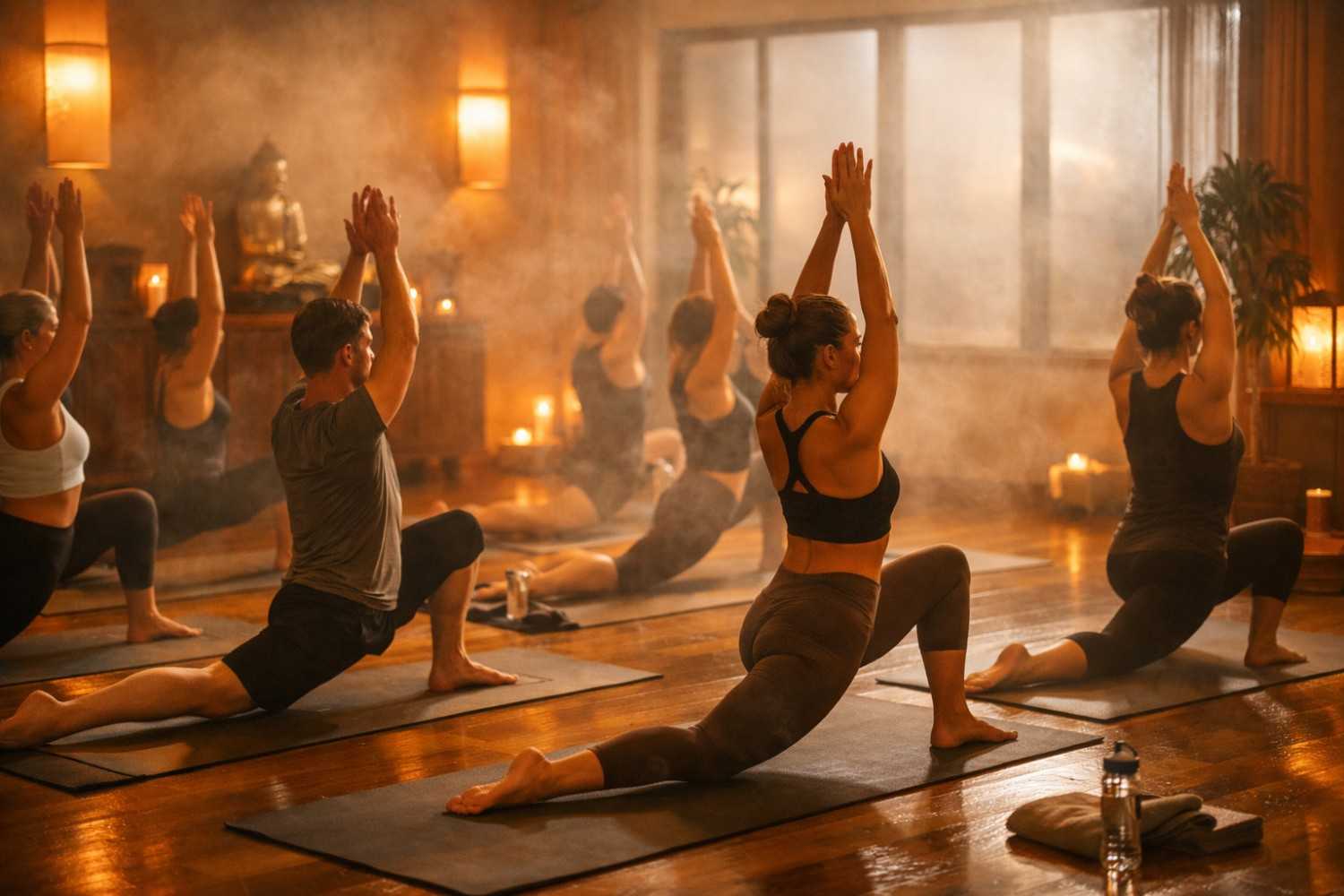
Mantra Yoga beautifully integrates into broader yoga practices. For instance, you can enrich your Surya Namaskar (Sun Salutation) by silently chanting the 12 solar mantras that correspond to each pose, transforming a physical flow into a moving Mantra Yoga meditation. Beyond the home practice, seeking out a dedicated space can deepen the experience.
You might find an Om Mantra Yoga Studio that focuses specifically on sound healing, or visit a local haven like Mantra Yoga Huntington Beach to practice by the ocean. Whether woven into Mantra Yoga Surya Namaskar or practiced in a studio, it shows how seamlessly sound complements movement.
Finding Your Rhythm: Classes and Communities
Starting a personal practice is wonderful, but Mantra Yoga classes offer unique advantages. A knowledgeable teacher can guide you in proper pronunciation, explain the meaning of mantras, and help you choose one that resonates with your intentions. In a class setting, the collective energy of group chanting creates a powerful, uplifting vibration that can accelerate your experience.
From a cozy Om Mantra Yoga Studio to welcoming studios nationwide, these Mantra Yoga classes provide structure and community. They are ideal for both beginners seeking a foundation and seasoned practitioners looking to deepen their sadhana (practice) in a supportive environment.
Conclusion: Your Personal Journey with Sound Begins
The journey into Mantra Yoga is a personal exploration of vibration. It requires no fancy equipment, just your voice, your intention, and a few quiet moments. From the simple Mantra Yoga definition to its profound benefits for Kundalini, this practice is a timeless gift. Start small—with one “Om.”
Feel its vibration in your chest. Notice the stillness that follows. Let the search for the perfect Mantra Yoga Huntington Beach class or the decision to simply practice at home be your first step. Your mantra is waiting to become your own personal sanctuary, a sound you can return to, anytime, anywhere. The path of sound begins now.