
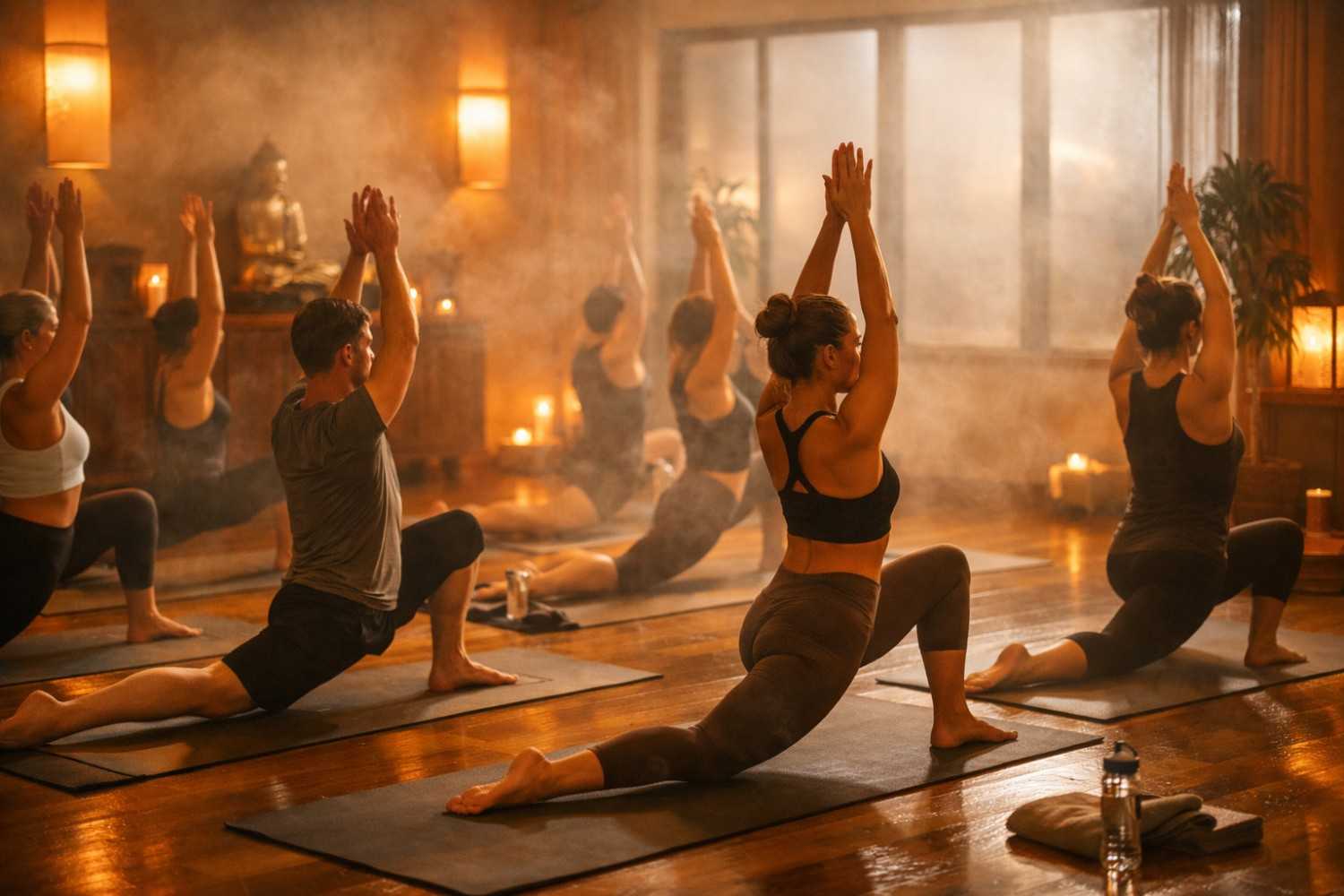
When people hear “hot yoga,” they often picture one intense, sweaty room. But here’s the secret: the world of heated practice is wonderfully diverse. Exploring the different types of hot yoga is key to finding the style that resonates with your body and goals. It’s not just about turning up the thermostat; it’s about how heat amplifies the benefits of yoga exercises, from deepening stretches to detoxifying sweat. Whether you seek dynamic movement or deep, meditative release, there’s a heated practice for you. Let’s move beyond yoga clichés and discover the perfect style to ignite your practice.
Bikram Yoga: The Original Blueprint
Welcome to the structured, sweat-drenched original. Bikram is the most specific of all types of hot yoga classes, created by Bikram Choudhury. It’s a 90-minute series of 26 set yoga poses and two breathing exercises, performed in a room heated to 105°F (40°C) with 40% humidity. The sequence never changes, which allows you to deeply measure your progress. Think of it as a moving meditation with a fierce internal fire. The high heat promotes flexibility and an intense cardiovascular workout. For those who love consistency and a clear challenge, Bikram remains a foundational practice in many dedicated yoga studios.
Hot Vinyasa (or Hot Flow): The Creative Current
If Bikram is a set playlist, Hot Vinyasa is a live jazz session. This popular style takes the fluid “flow” of Vinyasa—where movement is synced with breath—and turns up the heat to around 95-100°F. The sequence is never the same, offering creative yoga exercises that build heat internally and externally. You’ll move dynamically from pose to pose, creating a moving meditation that strengthens, stretches, and detoxifies. It’s perfect for those who find monotony stifling. Each teacher and studio brings a unique flavor, making it a fantastic way to explore different types of hot yoga within one versatile style.
Hot Power Yoga: The Strength Builder
Derived from the Ashtanga tradition, Hot Power Yoga turns the intensity dial up a notch. The room is hot (typically 95-100°F), but the focus is squarely on building muscular endurance and core strength. Expect a vigorous, fitness-oriented series of challenging yoga poses held for longer to engage muscle groups deeply. The heat adds a cardiovascular element, making you sweat profusely as you power through each posture. It’s less about flow and more about sustained effort. If your goal is to sculpt, strengthen, and leave every muscle feeling worked, this powerful style goes beyond yoga into full-body conditioning.
Hot Yin or Warm Yoga: The Deep Release
Not all types of hot yoga are about vigorous movement. Hot Yin (often called “Warm Yoga”) uses a lower, more comfortable heat (around 80-95°F) to target the deep connective tissues. Poses are held passively for 3-5 minutes each, allowing gravity and warmth to help you sink into a profound stretch. This style is a beautiful complement to more athletic practices, promoting joint mobility and a deep sense of calm. It shares principles with somatic yoga, emphasizing internal awareness and release over external form. It’s the ultimate practice for patience, letting go, and nourishing the body from the inside out.
Infrared Hot Yoga: The Gentle Glow
This modern twist uses infrared panels to heat your body directly rather than warming the air. The room feels more gently warm (usually 80-95°F) and less stifling, but the infrared rays penetrate deeply into tissues. Advocates love it for promoting detoxification, muscle recovery, and circulation with a softer feel. It’s an excellent entry point for those sensitive to the intense humidity of traditional hot yoga studios. Many styles, from gentle flow to restorative, can be taught using infrared. It represents how innovation is expanding the different types of hot yoga available today.
Finding Your Fit & What to Expect in Class
Ready to try? Start by researching local yoga studios and reading class descriptions carefully. Hydrate well before class, bring a towel (or two!), a non-slip mat, and an open mind. In any hot class, listen to your body—it’s okay to rest in Child’s Pose. The heat can make familiar yoga poses feel different, so move with care and don’t push beyond your edge. Remember, every practitioner was a beginner once. Whether you’re drawn to the discipline of Bikram or the creativity of Hot Flow, showing up is the most important part.
Conclusion: Your Journey Begins on the Mat
The beautiful array of types of hot yoga means there’s a perfect fit for every intention, from building strength to finding deep release. Each style uses heat as a tool to enhance the timeless benefits of yoga exercises. The best way to find yours is to step onto the mat and experience it firsthand. So grab your water bottle, embrace the warmth, and discover how a heated practice can transform not just your body, but your mind and spirit. Your journey into the world of hot yoga awaits.