
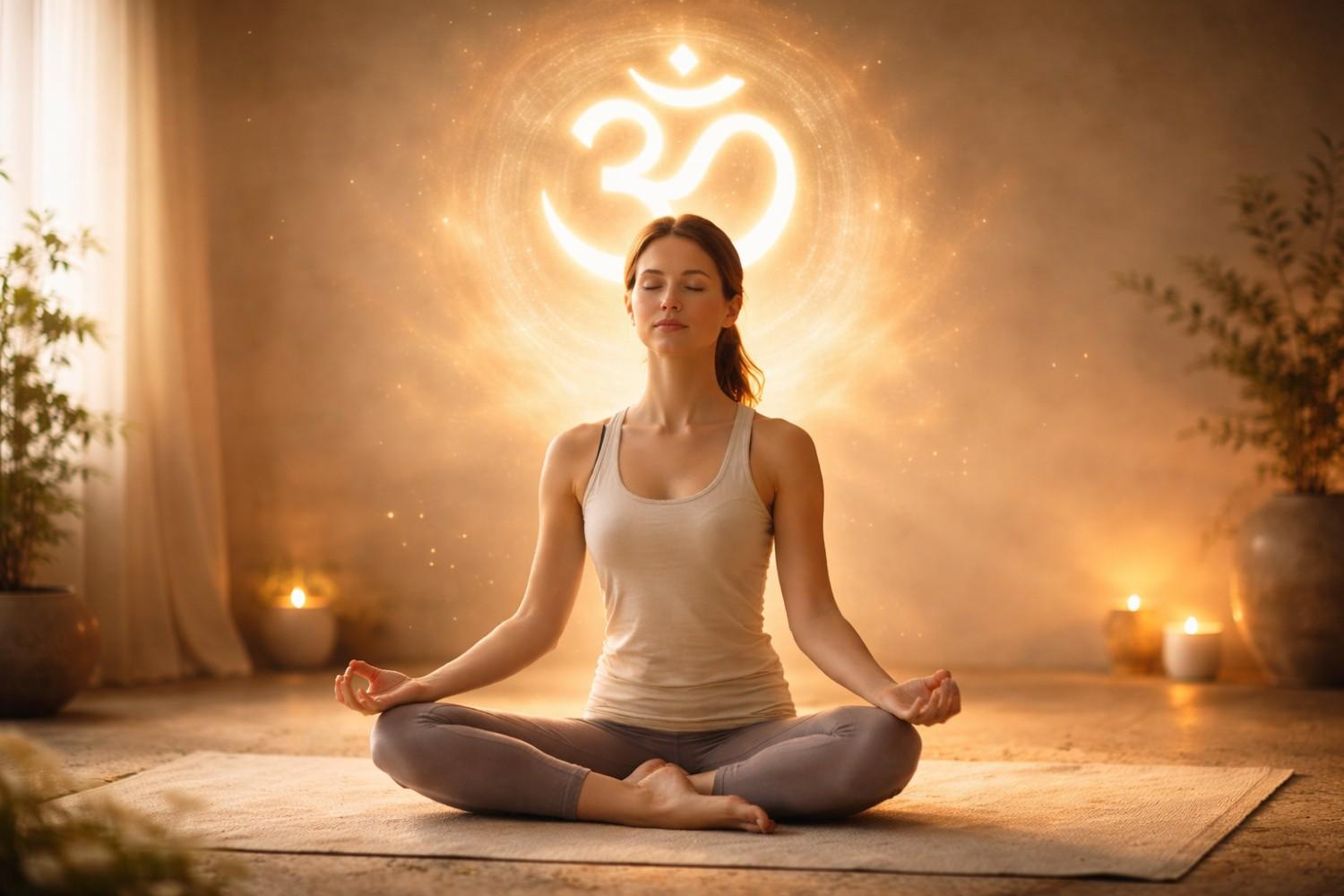
Across cultures, philosophies, and spiritual traditions, few symbols hold as much reverence as Om (ॐ). Often seen at the beginning or end of yoga classes, written in sacred texts, or used during meditation, the Om symbol represents far more than a sound—it embodies the essence of existence itself.
Om is considered the primordial vibration from which all creation emerges. It is both a sound and a symbol, a vibration and a philosophy. For centuries, yogis, sages, and spiritual seekers have utilized Om as a tool for enhancing awareness, fostering connection, and facilitating transformation.
Understanding the meaning of the Om symbol allows practitioners to deepen their yoga and meditation practices while connecting more consciously with the present moment, a principle closely aligned with yoga and positive psychology, both of which emphasize mindfulness, emotional balance, and cultivating a more meaningful, fulfilling life.
What Is the Om Symbol?
The Om symbol (ॐ) originates from ancient Sanskrit texts and is considered one of the most sacred sounds in Hinduism, Buddhism, and yogic philosophy.
It represents:
- The sound of creation
- Universal consciousness
- The connection between mind, body, and spirit
- The beginning, middle, and end of existence
Unlike ordinary sounds, Om is believed to carry a vibrational frequency that aligns the body and mind with the rhythm of the universe.
The Meaning Behind the Sound of Om
Om is traditionally broken into three syllables:
- A – Creation: Represents the waking state, physical body, and conscious awareness.
- U – Preservation: Symbolizes the dream state, subconscious mind, and ongoing flow of life.
- M – Dissolution: Represents deep sleep, transformation, and the return to source.
After the sound fades, there is silence—this silence represents pure consciousness, the state beyond thought and form.
Together, A-U-M encompasses the entirety of existence.
Symbolism of the Om Symbol
The visual form of Om also holds deep meaning:
- Lower curve: Waking state
- Middle curve: Dream state
- Upper curve: Deep sleep
- Dot at the top: Enlightenment or higher consciousness
- Crescent shape: Illusion or separation
- Space between dot and curve: Liberation
This symbolism reflects the journey from ordinary awareness to spiritual awakening.
Om in Yoga Philosophy
In yoga philosophy, Om is considered the sound of universal truth. It appears at the very beginning of the Yoga Sutras, emphasizing its importance.
Om represents:
- Unity between mind and body
- Stillness beneath movement
- Awareness beneath thought
- Conscious presence
Chanting Om before or after yoga practice helps transition the mind into a meditative state and cultivates mindfulness.
Why Om Is Chanted in Yoga Practice
Chanting Om is more than a ritual—it has measurable effects on the body and mind.
Benefits of Chanting Om:
- Calms the nervous system
- Slows the breath
- Enhances focus
- Reduces stress and anxiety
- Promotes emotional balance
- Encourages mindfulness
The vibration of Om stimulates the vagus nerve, which plays a role in relaxation and emotional regulation.
Om and the Nervous System
Modern research suggests that chanting Om creates a soothing resonance in the body. This vibration can:
- Reduce heart rate
- Lower blood pressure
- Activate the parasympathetic nervous system
- Encourage relaxation
This explains why many people feel calm, grounded, or emotionally centered after chanting Om.
Om in Meditation Practice
In meditation, Om serves as a point of focus. Repeating the sound helps quiet mental chatter and anchor awareness.
There are two common ways to use Om in meditation:
- Vocal Chanting: Chanting Om aloud allows you to feel the vibration throughout the body, especially in the chest and throat.
- Silent Repetition: Mentally repeating Om helps deepen concentration and inner stillness.
Both methods support mindfulness and spiritual awareness.
The Spiritual Meaning of Om
Spiritually, Om represents the interconnectedness of all things. It reminds practitioners that individual consciousness is part of a greater whole.
Many traditions view Om as:
- The sound of divine energy
- A symbol of unity
- A bridge between the physical and spiritual realms
- A reminder of inner stillness
Om encourages surrender, awareness, and acceptance.
Om and Chakras
Om is often associated with the crown chakra, which governs higher consciousness and spiritual connection. However, its vibration resonates throughout the entire chakra system.
Regular chanting can:
- Balance energy centers
- Promote clarity
- Support emotional healing
- Enhance spiritual awareness
The sound moves upward through the body, symbolizing the ascension of awareness.
Om in Daily Life
Om doesn’t need to be limited to formal meditation. Its essence can be integrated into daily routines.
You can practice Om by:
- Taking a deep breath and chanting once in the morning
- Using Om as a mental anchor during stress
- Beginning yoga practice with Om
- Ending the day with a few quiet repetitions
These small rituals help bring calm and clarity into everyday life.
Common Misconceptions About Om
“Om is only religious.”
While rooted in spiritual tradition, Om is also used secularly for mindfulness and relaxation.
“You must chant it perfectly.”
There is no perfect sound—intention matters more than accuracy.
“Om is just a symbol.”
Om represents a lived experience of awareness, not just a visual icon.
Om and Mindfulness
Mindfulness is the practice of being fully present. Om naturally supports this by anchoring attention in sound and vibration.
Through regular practice, Om helps:
- Reduce mental distractions
- Increase focus
- Promote emotional stability
- Cultivate inner stillness
It serves as a reminder to return to the present moment.
Using Om in Yoga Classes
Many yoga instructors use Om to:
- Open or close class
- Create a shared energetic space
- Signal transition into mindfulness
- Ground students before relaxation
Even a single Om can help unify group energy and deepen practice.
The Universal Message of Om
At its core, Om represents unity—between breath and body, thought and awareness, self and universe.
It reminds us that:
- We are connected
- Stillness exists beneath movement
- Awareness is always accessible
This makes Om a powerful symbol not only in yoga, but in life itself.
Conclusion
The Om symbol carries wisdom that transcends time, culture, and belief systems. Whether chanted aloud or reflected upon silently, it offers a gateway into presence, balance, and deeper understanding.
By incorporating Om into yoga or meditation practice, we reconnect with something ancient yet ever-present—a reminder that peace, clarity, and awareness are already within us.