
Breathing is something we do unconsciously every moment of the day, yet it holds tremendous power over our physical, mental, and emotional well-being. In yogic traditions, conscious breathing—known as pranayama—is considered a gateway to balance, clarity, and inner calm.
Among the many pranayama techniques, Sukha Purvaka Pranayama stands out for its simplicity and gentle nature. Often described as a foundational breathing practice, Sukha Purvaka Pranayama helps regulate the breath, calm the nervous system, and prepare the mind for meditation.
Unlike more advanced or forceful breathing techniques, Sukha Purvaka is accessible to beginners and suitable for daily practice. It promotes ease, rhythm, and awareness—qualities essential for long-term mental and physical health.
What Is Sukha Purvaka Pranayama?
Sukha Purvaka Pranayama translates roughly to “easy or comfortable breathing practice.”
- Sukha means ease or comfort
- Purvaka refers to the inhalation phase
- Pranayama means breath regulation
This practice focuses on slow, rhythmic breathing using controlled inhalation, retention, and exhalation, and is often practiced as a preparatory technique before deeper pranayama or meditation, helping practitioners experience the spiritual benefits of yoga through enhanced awareness, calmness, and inner balance.
Sukha Purvaka Pranayama is traditionally associated with Nadi Shodhana (alternate nostril breathing) but is gentler and less structured, making it ideal for beginners.
Why Sukha Purvaka Pranayama Is Important
Modern life places constant demands on the nervous system. Stress, screen exposure, lack of sleep, and emotional overload can disrupt natural breathing patterns.
Sukha Purvaka Pranayama helps restore balance by:
- Slowing the breath
- Calming the mind
- Reducing nervous tension
- Improving oxygen circulation
- Enhancing mental clarity
It acts as a bridge between physical yoga and meditation, helping practitioners transition smoothly into deeper states of awareness.
Benefits of Sukha Purvaka Pranayama
1. Calms the Nervous System
Slow breathing activates the parasympathetic nervous system, which promotes relaxation and reduces stress.
2. Improves Breathing Efficiency
This practice trains the lungs to breathe fully and evenly, improving oxygen intake.
3. Reduces Anxiety and Stress
By regulating breath rhythm, Sukha Purvaka helps calm anxious thoughts and emotional restlessness.
4. Enhances Mental Focus
The steady breathing pattern improves concentration and mental clarity.
5. Supports Meditation Practice
It prepares the mind and body for meditation by reducing mental chatter.
6. Improves Sleep Quality
Practicing before bedtime can help quiet the mind and promote restful sleep.
7. Balances Energy Channels
In yogic philosophy, this practice helps balance ida and pingala nadis, supporting emotional and physical harmony.
How to Practice Sukha Purvaka Pranayama (Step-by-Step)
This practice should be performed in a calm, quiet environment.
Step 1: Choose a Comfortable Position
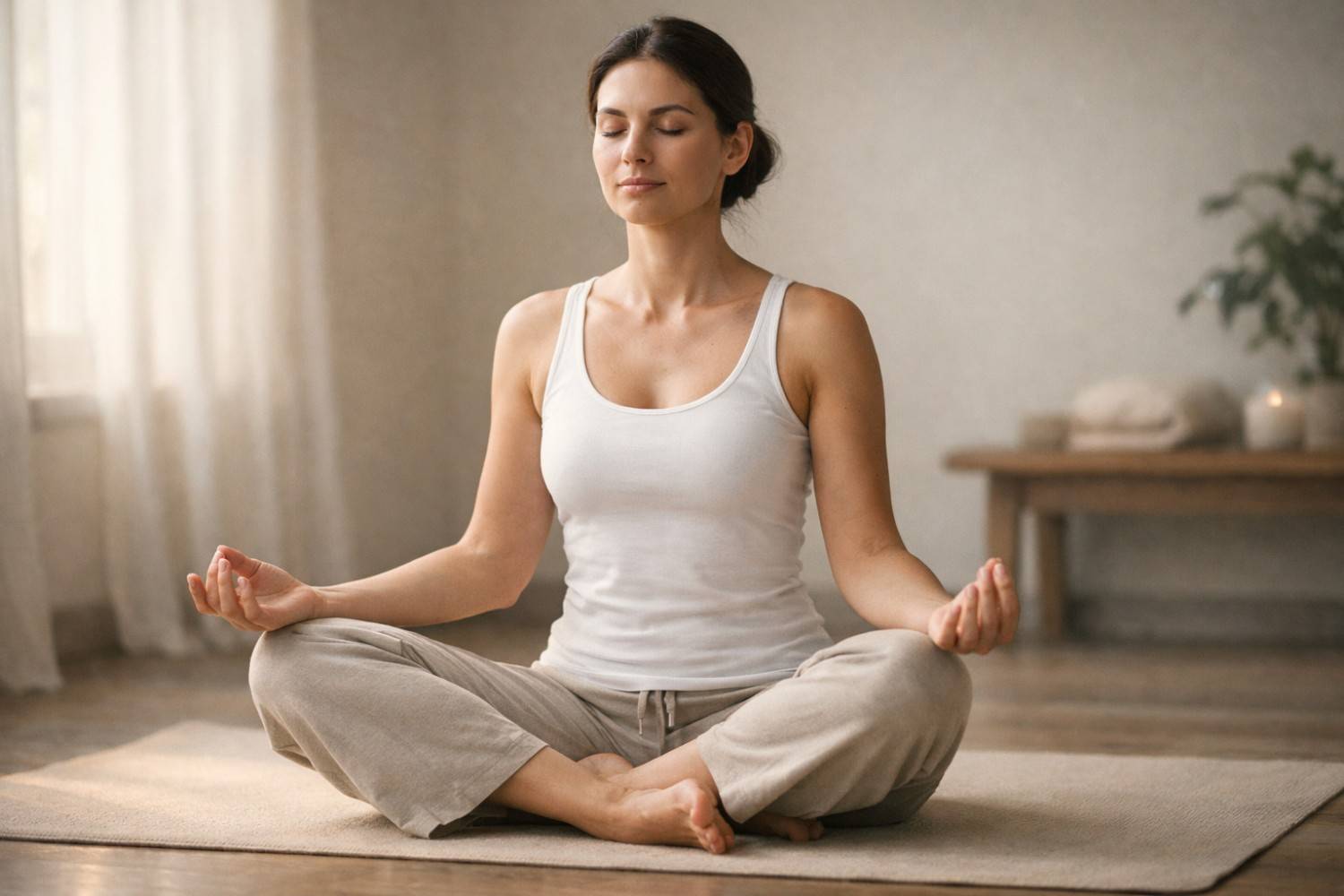
Sit in a cross-legged position or on a chair with your spine upright. Keep your shoulders relaxed and your chest open.
Step 2: Relax the Body
Close your eyes gently and take a few natural breaths to settle your body and mind.
Step 3: Begin Conscious Breathing
- Inhale slowly through both nostrils.
- Exhale slowly through both nostrils.
- Keep the breath smooth, steady, and relaxed.
Step 4: Add Gentle Awareness
Begin to notice:
- The sensation of air entering the nostrils
- The rise and fall of the chest
- The rhythm of the breath
- Do not force the breath—allow it to flow naturally.
Step 5: Introduce Mild Retention (Optional)
Once comfortable, you may add a short pause after inhalation and exhalation, without strain.
Step 6: Continue for 5–10 Minutes
Maintain slow, relaxed breathing. If thoughts arise, gently return focus to the breath.
Step 7: End Gradually
Take a few natural breaths, open your eyes slowly, and observe how you feel.
Best Time to Practice Sukha Purvaka Pranayama
The best times include:
- Early morning (ideal for mental clarity)
- Before meditation
- In the evening to reduce stress
- Before bedtime for relaxation
Avoid practicing immediately after meals.
Who Should Practice Sukha Purvaka Pranayama?
This practice is suitable for:
- Beginners
- Students
- Office workers
- Seniors
- People with anxiety or stress
- Those starting meditation
It is one of the safest pranayama techniques available.
Precautions and Safety Tips
Although gentle, keep the following in mind:
- Do not force the breath
- Avoid breath retention if uncomfortable
- Practice on an empty or light stomach
- Stop if dizziness occurs
- Consult a doctor if you have respiratory issues
Pranayama should always feel calming, not straining.
Sukha Purvaka Pranayama and Mental Well-Being
Regular practice can:
- Reduce mental fatigue
- Improve emotional stability
- Increase mindfulness
- Enhance self-awareness
It is especially helpful for people who feel overwhelmed or mentally scattered.
Integrating Sukha Purvaka Into Daily Life
You can practice this breathing technique:
- Before starting work
- During short breaks
- Before meditation
- While sitting quietly at home
Even a few minutes a day can make a noticeable difference.
Common Mistakes to Avoid
- Breathing too fast
- Holding the breath forcefully
- Slouching while sitting
- Expecting instant results
- Practicing inconsistently
Gentle, regular practice yields the best results.
Conclusion
Sukha Purvaka Pranayama reminds us that transformation does not always require complexity. Sometimes, simply slowing down the breath is enough to calm the mind, relax the body, and restore balance.
By practicing regularly, this gentle breathing technique can become a powerful tool for emotional well-being, mental clarity, and inner peace.