
Introduction
In recent years, sound healing has gained global attention as a powerful holistic wellness practice that combines ancient traditions with modern therapeutic insights. Rooted in spiritual traditions and vibrational medicine, sound healing uses specific sound frequencies, instruments, and vibrations to promote relaxation, emotional release, and energetic balance.
From yoga studios to meditation retreats and wellness clinics, sound healing sessions are becoming increasingly popular among people seeking stress relief, emotional healing, improved sleep, and deeper meditation.
At its core, sound healing is based on the idea that sound vibrations influence the body’s nervous system, brainwaves, and energy centers, helping restore harmony between the mind and body.
In this detailed guide, we will explore the science, history, techniques, instruments, benefits, and modern applications of sound healing, along with practical insights for beginners interested in experiencing this transformative practice.
What Is Sound Healing?
Sound healing is a therapeutic practice that uses sound frequencies, musical instruments, chanting, and vibrations to restore balance within the body and mind. The therapy works by exposing individuals to soothing sounds that promote deep relaxation and mental clarity.
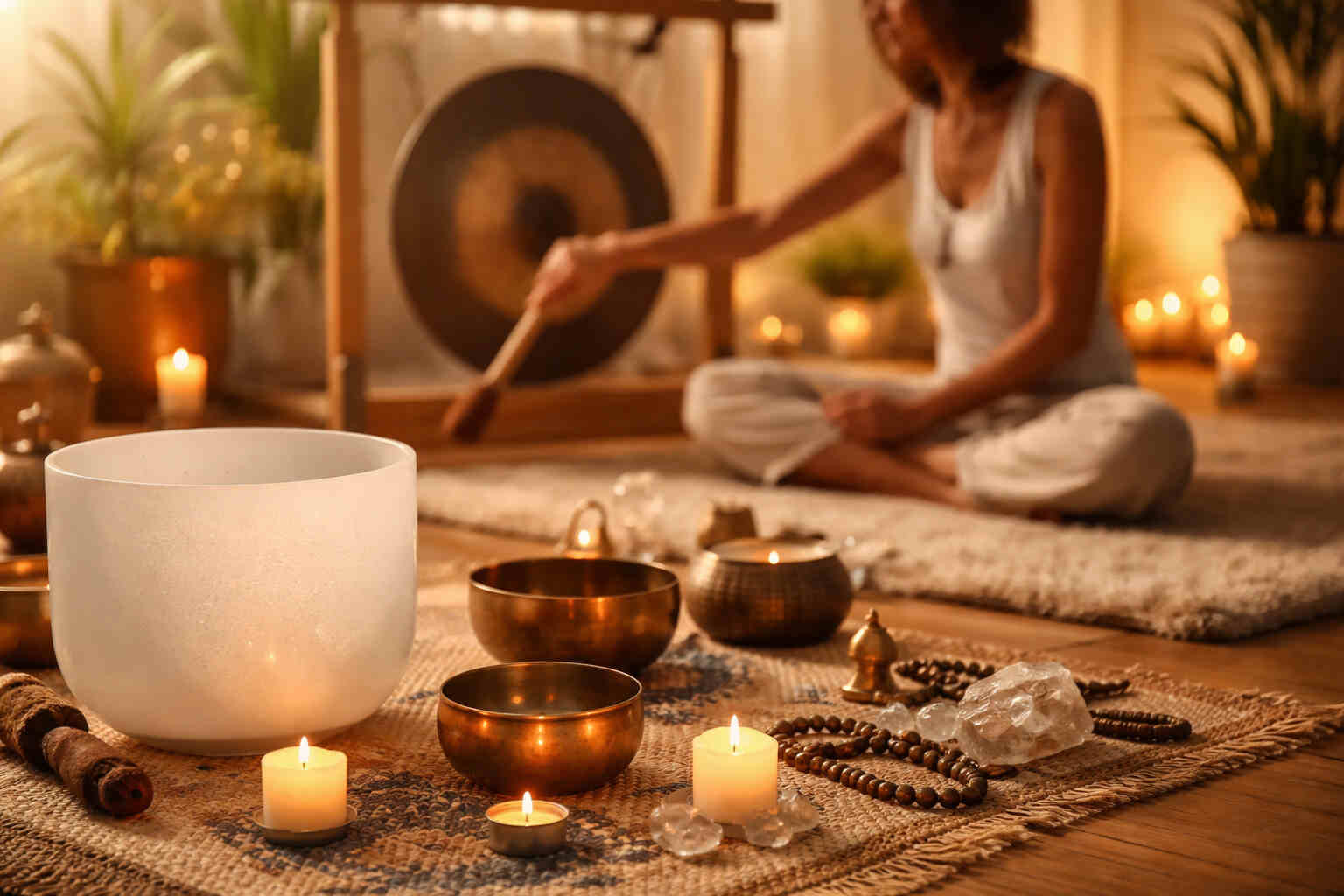
During a sound healing session, participants usually lie down or sit comfortably while a practitioner plays instruments such as:
- Singing bowls
- Gongs
- Chimes
- Tuning forks
- Drums
- Bells
The vibrations produced by these instruments interact with the body’s energy field and nervous system, helping release stress and emotional tension.
Many sessions also incorporate guided meditation, breathing exercises, and visualization techniques, which enhance the therapeutic experience.
The Science Behind Sound Healing
Sound healing works through the principles of vibration and resonance. Every object—including the human body—vibrates at a certain frequency. When external sound frequencies interact with the body, they can influence the nervous system and brainwave patterns.
Research and wellness studies suggest that sound therapy can affect the body in several ways:
- Slow brainwave activity
- Activate the parasympathetic nervous system
- Reduce stress hormones
- Encourage emotional release
These effects help the body move from a “fight-or-flight” stress state to a relaxed restorative state, allowing natural healing processes to begin.
Many sound healing practices also focus on the body’s energy centers (chakras). According to yogic philosophy, balanced energy flow through these centers contributes to emotional and physical well-being.
Historical Origins of Sound Healing
Sound healing is far from a modern trend—it has been practiced for thousands of years across different civilizations.
Ancient cultures believed that sound vibrations had spiritual and healing powers.
- Ancient Egypt: Priests used chanting and musical tones as part of sacred healing rituals.
- Ancient Greece: The philosopher Pythagoras explored the healing effects of musical intervals and referred to music as a form of medicine.
- Indigenous Traditions: Many Native American cultures used drums, rattles, and chants to promote healing and spiritual balance.
- Indian Yogic Tradition: In Indian spirituality, the concept of Nada Yoga describes the universe as a manifestation of sound vibrations. Sacred chants such as “Om” are believed to harmonize mind and spirit.
These ancient traditions laid the foundation for modern sound therapy practices used today.
Benefits of Sound Healing
Sound healing offers a wide range of mental, emotional, physical, and spiritual benefits. Many practitioners report feeling calmer, more focused, and emotionally balanced after sessions.
Below are some of the most recognized benefits.
1. Deep Relaxation and Stress Relief
Sound therapy helps reduce stress by calming the nervous system. Listening to soothing vibrations triggers the release of “feel-good” hormones such as dopamine and serotonin, creating a sense of peace and relaxation.
This makes sound healing an effective tool for managing anxiety and emotional tension.
2. Improved Sleep Quality
Many people struggle with insomnia due to stress or overactive thoughts. Sound healing can slow brainwaves and induce meditative states that promote restful sleep.
Gentle sound frequencies encourage the body to enter deeper relaxation phases that support restorative sleep cycles.
3. Emotional Release and Healing
Sound vibrations can help release suppressed emotions and stored stress within the body.
People often experience:
- Emotional clarity
- Reduced anxiety
- Greater emotional resilience
This emotional release is one reason sound healing is commonly used in trauma-informed wellness practices.
4. Enhanced Focus and Mental Clarity
Sound therapy can help quiet mental chatter and improve concentration.
By calming the mind and reducing stress, sound healing enhances cognitive performance and creative thinking.
5. Pain Reduction and Physical Relaxation
Certain sound frequencies can stimulate the release of endorphins, which help reduce pain and inflammation in the body.
This makes sound therapy beneficial for people experiencing:
- Chronic pain
- Muscle tension
- Headaches
- Fatigue
6. Chakra Balancing and Energy Alignment
Many sound healing techniques focus on balancing the body’s seven chakras, which are believed to regulate physical, emotional, and spiritual health.
Different sound frequencies correspond to different energy centers in the body, helping restore energetic harmony.
Types of Sound Healing Practices
There are several forms of sound healing, each offering a unique experience and therapeutic effect.
Sound Baths
Sound baths are one of the most popular sound healing experiences.
Participants lie down while practitioners play instruments such as:
- Singing bowls
- Gongs
- Bells
- Chimes
The sounds create a layered vibrational environment that encourages meditation and deep relaxation.
Guided Sound Meditation
In guided sound meditation, practitioners combine soothing sound frequencies with meditation instructions and visualization techniques.
This approach helps participants enter deeper states of mindfulness and awareness.
Chanting and Mantra Meditation
Chanting sacred mantras is a traditional sound healing practice found in many spiritual traditions.
Group chanting, often called kirtan, creates powerful collective vibrations that enhance emotional connection and spiritual focus.
Vibroacoustic Therapy
This modern sound healing technique uses specialized equipment that transmits low-frequency vibrations through chairs, beds, or mats.
The vibrations stimulate the body’s cells and nervous system, promoting relaxation and healing.
Binaural Beats
Binaural beats are sound recordings that use slightly different frequencies in each ear to influence brainwave activity.
Listening to these tones through headphones can help induce:
- Meditation states
- Focus and creativity
- Deep relaxation
Common Instruments Used in Sound Healing
Sound healing practitioners use a variety of traditional and modern instruments.
Singing Bowls
Tibetan singing bowls are one of the most widely used sound healing tools. When struck or rubbed with a mallet, they produce deep resonant tones that promote relaxation.
Crystal Singing Bowls
Made from quartz crystal, these bowls create clear, sustained vibrations that correspond with specific chakras.
Gongs
Large metal gongs produce powerful sound waves that fill a room with deep vibrations. Gong baths are known for creating transformative meditative experiences.
Tuning Forks
Tuning forks are placed on specific points of the body to stimulate energy flow and release blockages.
Drums and Flutes
Traditional instruments such as frame drums and bamboo flutes are used to create rhythmic patterns and soothing melodies during healing sessions.
What Happens During a Sound Healing Session?
A typical sound healing session follows a simple but powerful structure.
- Preparation: Participants lie down on yoga mats or sit comfortably while the practitioner explains the process.
- Guided Relaxation: The session often begins with breathing exercises or meditation to calm the mind.
- Sound Immersion: The practitioner plays instruments around the room or near the body, creating waves of sound and vibration.
- Integration: The session ends with silence or gentle meditation to allow the body to integrate the experience.
Many participants report feeling deeply relaxed, emotionally lighter, and mentally refreshed afterward.
Sound Healing and Modern Wellness
Today, sound healing is widely used in:
- Yoga studios
- Meditation centers
- Holistic therapy clinics
- Wellness retreats
- Mental health programs
Many practitioners combine sound healing with other holistic therapies such as yoga, breathwork, mindfulness, and energy healing.
The practice is increasingly popular among professionals seeking stress relief and emotional balance in modern urban lifestyles.
How to Start Practicing Sound Healing
If you’re interested in exploring sound healing, there are several ways to begin.
- Attend a Sound Bath: Look for local yoga studios or meditation centers that offer group sound healing sessions.
- Use Guided Sound Meditations: Online recordings with singing bowls or binaural beats can provide a beginner-friendly experience.
- Practice Chanting or Mantras: Simple practices like chanting “Om” can help calm the mind and improve meditation.
- Learn an Instrument: Singing bowls, chimes, or tuning forks can be used for personal meditation practices.
Who Can Benefit From Sound Healing?
Sound healing is suitable for most people, including those who want to:
- Reduce stress and anxiety
- Improve sleep quality
- Deepen meditation practice
- Enhance emotional wellbeing
- Increase mental clarity
However, individuals with certain neurological sensitivities should consult healthcare professionals before attending intense sound therapy sessions.