
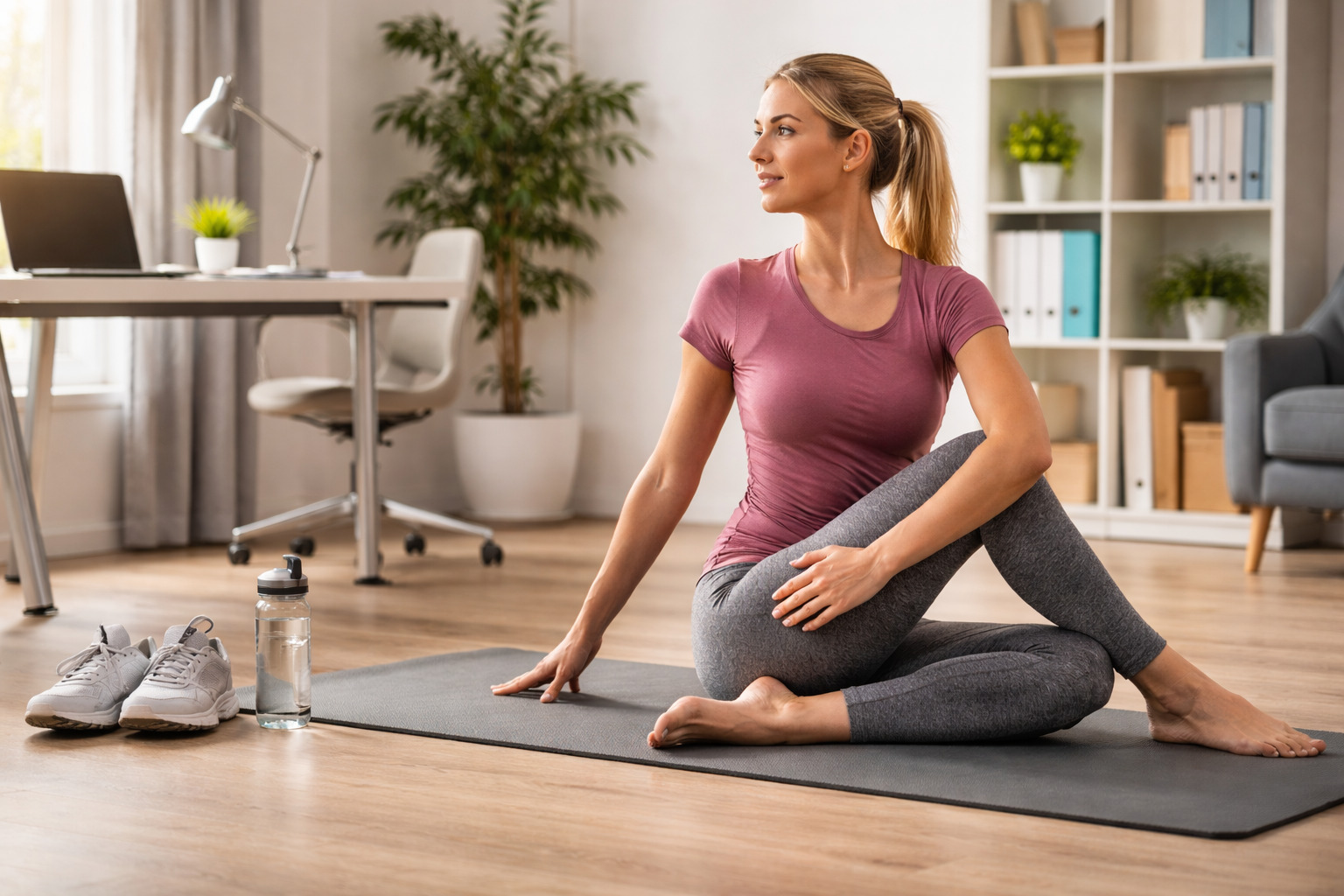
Introduction
Modern lifestyles often involve long hours of sitting — whether working at a desk, studying, commuting, or using digital devices. While this routine may seem normal, prolonged sitting can gradually lead to stiffness, reduced mobility, muscle imbalances, and discomfort in the neck, back, hips, and shoulders.
Many health experts now warn that extended sitting can negatively affect posture, joint health, circulation, and overall physical well-being. Fortunately, incorporating simple mobility exercises throughout the day can help counteract these effects.
Mobility exercises are gentle movements designed to improve joint flexibility, increase blood circulation, and restore natural movement patterns in the body. Unlike intense workouts, these exercises are easy to perform at home, at the office, or even during short breaks.
This guide explores how sitting affects the body and introduces simple mobility exercises that help reduce stiffness and improve overall movement.
Why Sitting All Day Causes Stiffness
When the body stays in one position for long periods, certain muscles become tight while others weaken. Over time, this imbalance can lead to discomfort and limited mobility.
Reduced Blood Flow
Sitting for hours slows down circulation, especially in the hips and legs. Reduced blood flow can make muscles feel stiff and fatigued.
Tight Hip Flexors
One of the most common issues caused by prolonged sitting is tight hip flexors. When hips remain bent for long periods, the muscles shorten and lose flexibility.
Weak Core and Back Muscles
Sitting too much reduces the engagement of core muscles, which are essential for posture and spinal support.
Poor Posture
Many people tend to lean forward toward screens, leading to forward head posture, rounded shoulders, and back stiffness.
Joint Immobility
Joints need movement to stay healthy. Lack of movement can reduce the range of motion and lead to discomfort.
Mobility exercises help reverse these effects by restoring movement and activating muscles.
Benefits of Mobility Exercises for Desk Workers
Incorporating mobility exercises into your daily routine offers several benefits.
- Improved posture
- Reduced muscle stiffness
- Better joint health
- Improved circulation
- Reduced risk of injury
- Increased energy levels
- Better productivity and focus
Even short mobility breaks can make a noticeable difference.
10 Simple Mobility Exercises to Reduce Stiffness
These exercises are designed to target the areas most affected by prolonged sitting.
1. Neck Rolls
Neck stiffness is extremely common among people who work at computers for long hours.
This exercise helps release tension and improve neck mobility.
How to do it:
Slowly roll your head in a circular motion. Move gently and avoid forcing the stretch.
Benefits:
- Relieves neck tension
- Improves flexibility
- Reduces headaches caused by posture
2. Shoulder Rolls
Shoulder tightness develops when we sit with rounded shoulders.
Shoulder rolls help open up the chest and release tension.
How to do it:
Lift your shoulders toward your ears and roll them backward in a circular motion.
Benefits:
- Improves shoulder mobility
Reduces upper back stiffness
Encourages better posture
3. Seated Spinal Twist
This mobility exercise helps loosen the spine and improve back flexibility.
How to do it:
Sit upright and gently twist your torso to one side while keeping your hips stable.
Benefits:
- Improves spinal mobility
- Reduces lower back tension
- Encourages healthy posture
4. Cat-Cow Stretch
This is one of the best exercises to relieve back stiffness.
It helps improve spinal flexibility and movement.
How to do it:
Move between arching and rounding your back slowly while breathing deeply.
Benefits:
- Relieves spinal tension
- Improves posture
- Increases back mobility
5. Hip Flexor Stretch
Sitting for long hours tightens the hip flexors.
This stretch helps lengthen those muscles.
How to do it:
Step one foot forward into a lunge position and gently push the hips forward.
Benefits:
- Improves hip mobility
- Reduces lower back pressure
- Improves posture
6. Thoracic Spine Rotation
This exercise improves mobility in the upper back.
Many people experience stiffness in this area due to prolonged sitting.
Benefits:
- Improves upper back movement
- Reduces shoulder tension
- Supports better breathing posture
7. Standing Hamstring Stretch
Hamstrings often become tight when sitting all day.
Stretching them improves flexibility and reduces back strain.
Benefits:
- Improves leg mobility
- Reduces stiffness
- Improves posture and movement
8. Ankle Circles
Long periods of sitting can reduce ankle mobility and circulation.
How to do it:
Rotate your ankles slowly in both directions.
Benefits:
- Improves circulation
- Reduces stiffness
- Supports joint health
9. Chest Opener Stretch
This exercise counters the rounded posture caused by desk work.
Benefits:
- Improves posture
- Opens the chest
- Relieves shoulder tension
10. Deep Squat Hold
The deep squat position helps restore natural hip and ankle mobility.
Benefits:
- Improves joint flexibility
- Strengthens lower body muscles
- Enhances mobility
A Quick 10-Minute Mobility Routine for Office Workers
You don’t need a long workout session to feel the benefits. A short daily routine can help reduce stiffness significantly.
Try this simple routine:
- Neck rolls – 1 minute
- Shoulder rolls – 1 minute
- Seated spinal twist – 1 minute
- Cat-Cow stretch – 2 minutes
- Hip flexor stretch – 2 minutes
- Hamstring stretch – 1 minute
- Ankle circles – 1 minute
- Chest opener stretch – 1 minute
This routine can be done during work breaks.
How Often Should You Do Mobility Exercises?
Experts recommend moving every 30–60 minutes if you sit for long periods.
Even short movement breaks can:
- Reduce stiffness
- Improve focus
- Boost energy levels
- Improve posture
A combination of mobility exercises and short walks can greatly improve physical comfort throughout the day.
Signs Your Body Needs Mobility Exercises
If you experience these symptoms regularly, your body may benefit from mobility training:
- Back stiffness
- Tight hips
- Neck pain
- Reduced flexibility
- Fatigue from sitting
- Poor posture
- Joint discomfort
Mobility exercises help restore balance in the body.
Tips to Prevent Stiffness From Sitting All Day
In addition to exercises, small daily habits can help reduce stiffness.
- Stand up frequently
- Adjust your workstation ergonomically
- Stretch during breaks
- Stay hydrated
- Take short walks
- Maintain proper posture
- Use an adjustable chair or a standing desk
Combining these habits with mobility exercises provides the best results.
Long-Term Benefits of Mobility Training
Practicing mobility exercises regularly can lead to significant long-term improvements.
- Better posture
- Reduced chronic pain
- Improved joint health
- Greater flexibility
- Lower risk of injuries
- Improved movement patterns
- Better physical performance
Over time, these exercises help the body move more naturally and comfortably.
Conclusion
Sitting for long hours has become a normal part of modern life, but it does not have to lead to stiffness, discomfort, or poor mobility. Simple mobility exercises can help restore movement, improve posture, and reduce the physical strain caused by prolonged sitting.
The key is consistency. Taking short breaks, performing gentle movements, and maintaining awareness of posture can make a significant difference in how your body feels throughout the day.
By incorporating mobility exercises into your routine, you can protect your joints, improve flexibility, and support long-term physical wellbeing.