
Introduction
Breathing is something we do every moment of our lives, yet most people rarely think about how they breathe. In yoga, breath is considered far more than a physical function—it is the bridge between the body, mind, and consciousness. This is where pranayama comes in.
Pranayama is an ancient yogic practice that regulates the breath to influence energy, mental clarity, emotional balance, and physical health. It is one of the most powerful tools in yoga, capable of calming the mind, energizing the body, and preparing the practitioner for meditation.
While modern yoga often focuses on postures, pranayama is the foundation that supports deeper awareness and inner transformation.
What Is Pranayama?
The word pranayama comes from two Sanskrit roots:
- Prana – life force or vital energy
- Ayama – expansion, control, or regulation
Together, pranayama means the conscious regulation and expansion of life energy through breath.
In yogic philosophy, prana flows through subtle energy channels called nadis. When the breath is shallow or irregular, energy becomes blocked. Pranayama helps cleanse these channels and restore balance to the body and mind.
Pranayama is not simply breathing exercises—it is a mindful practice that influences the nervous system, emotions, and awareness, making it an essential component when combining yoga with meditation to deepen focus and enhance overall mind–body balance.
The Role of Pranayama in Yoga
Pranayama is one of the eight limbs of yoga outlined in the Yoga Sutras of Patanjali. It serves as a bridge between the physical and mental aspects of yoga.
The eight limbs include:
- Yama (ethical discipline)
- Niyama (personal observance)
- Asana (postures)
- Pranayama (breath control)
- Pratyahara (withdrawal of senses)
- Dharana (concentration)
- Dhyana (meditation)
- Samadhi (deep awareness)
Pranayama prepares the body and mind for meditation by calming mental fluctuations and increasing energy flow.
Why Pranayama Is Important
Modern lifestyles often lead to shallow breathing due to stress, poor posture, and inactivity. This reduces oxygen intake and overstimulates the nervous system.
Pranayama helps by:
- Regulating breath patterns
- Calming the mind
- Improving oxygen circulation
- Enhancing focus and clarity
- Supporting emotional balance
Regular practice helps restore natural breathing rhythms and supports overall well-being.
Benefits of Pranayama
1. Improves Respiratory Health
Pranayama strengthens the lungs, improves breathing capacity, and supports efficient oxygen exchange.
2. Reduces Stress and Anxiety
Slow, controlled breathing activates the parasympathetic nervous system, reducing stress hormones and calming the mind.
3. Enhances Mental Clarity
Pranayama improves focus, concentration, and memory by increasing oxygen supply to the brain.
4. Balances the Nervous System
Breath regulation helps stabilize the nervous system, reducing fatigue and restlessness.
5. Boosts Energy Levels
By improving prana flow, pranayama increases vitality and reduces lethargy.
6. Supports Emotional Stability
Regular practice helps regulate emotions and reduces mood fluctuations.
7. Prepares the Mind for Meditation
Pranayama quiets mental chatter and deepens meditative awareness.
Types of Pranayama
There are many pranayama techniques, each serving a specific purpose. Below are some of the most commonly practiced types.
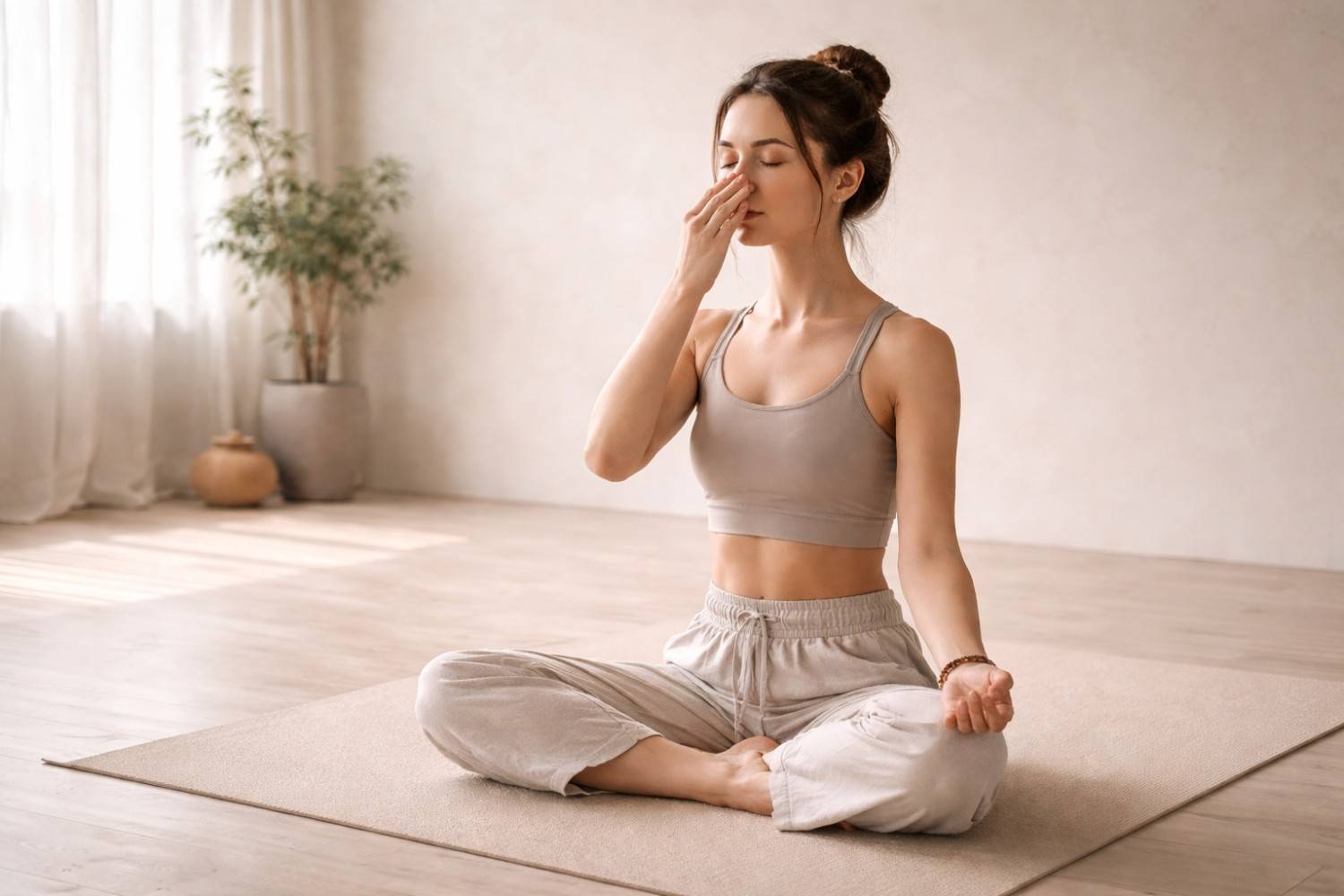
1. Nadi Shodhana (Alternate Nostril Breathing)
This is one of the most calming pranayama techniques.
Benefits:
- Balances left and right brain activity
- Reduces stress
- Improves focus
- Calms the nervous system
It is ideal for beginners and can be practiced daily.
2. Kapalbhati (Skull Shining Breath)
A cleansing breathing technique involving forceful exhalation.
Benefits:
- Detoxifies the body
- Improves digestion
- Increases energy
- Strengthens abdominal muscles
Not recommended for beginners without guidance.
3. Bhastrika (Bellows Breath)
A powerful breathing technique involving rapid inhalation and exhalation.
Benefits:
- Energizes the body
- Improves lung capacity
- Clears mental fog
Should be practiced cautiously and under guidance.
4. Ujjayi Pranayama (Victorious Breath)
A slow, controlled breathing technique often used during yoga practice.
Benefits:
- Enhances concentration
- Regulates breath
- Creates internal warmth
- Promotes calm awareness
5. Bhramari (Bee Breath)
This pranayama involves producing a gentle humming sound while exhaling.
Benefits:
- Reduces anxiety
- Calms the nervous system
- Improves sleep
- Relieves mental tension
How to Practice Pranayama Safely
To gain the full benefits of pranayama, follow these guidelines:
- Practice on an empty stomach
- Sit comfortably with a straight spine
- Breathe through the nose unless instructed otherwise
- Start slowly and increase gradually
- Avoid strain or force
- Practice in a calm, quiet environment
Consistency is more important than duration.
Best Time to Practice Pranayama
The ideal time is:
- Early morning (before breakfast)
- Evening (before dinner or sleep)
Morning practice energizes the body, while evening practice promotes relaxation.
Common Mistakes to Avoid
- Holding the breath forcefully
- Practicing after heavy meals
- Rushing the breath
- Ignoring discomfort
- Practicing without guidance
Pranayama should always feel controlled and comfortable.
Pranayama and Mental Well-Being
Pranayama has a direct effect on mental health. It helps:
- Reduce anxiety
- Improve mood
- Increase emotional awareness
- Enhance mental clarity
Regular practice creates a calm mental state that supports meditation and mindfulness.
Pranayama and Spiritual Growth
In yogic philosophy, breath is closely linked to consciousness. As breath becomes steady and controlled, the mind naturally becomes still.
This makes pranayama a powerful tool for:
- Deepening meditation
- Enhancing awareness
- Experiencing inner stillness
- Supporting spiritual growth
Many practitioners consider pranayama essential for experiencing the deeper spiritual benefits of yoga.
Conclusion
Pranayama is far more than a breathing technique—it is a pathway to balance, awareness, and inner peace. By learning to control the breath, you gain greater control over your energy, emotions, and thoughts.
Whether you are new to yoga or an experienced practitioner, pranayama offers a simple yet profound way to improve health, clarity, and well-being.
With regular practice, conscious breathing becomes a powerful tool for living a calmer, more centered life.