
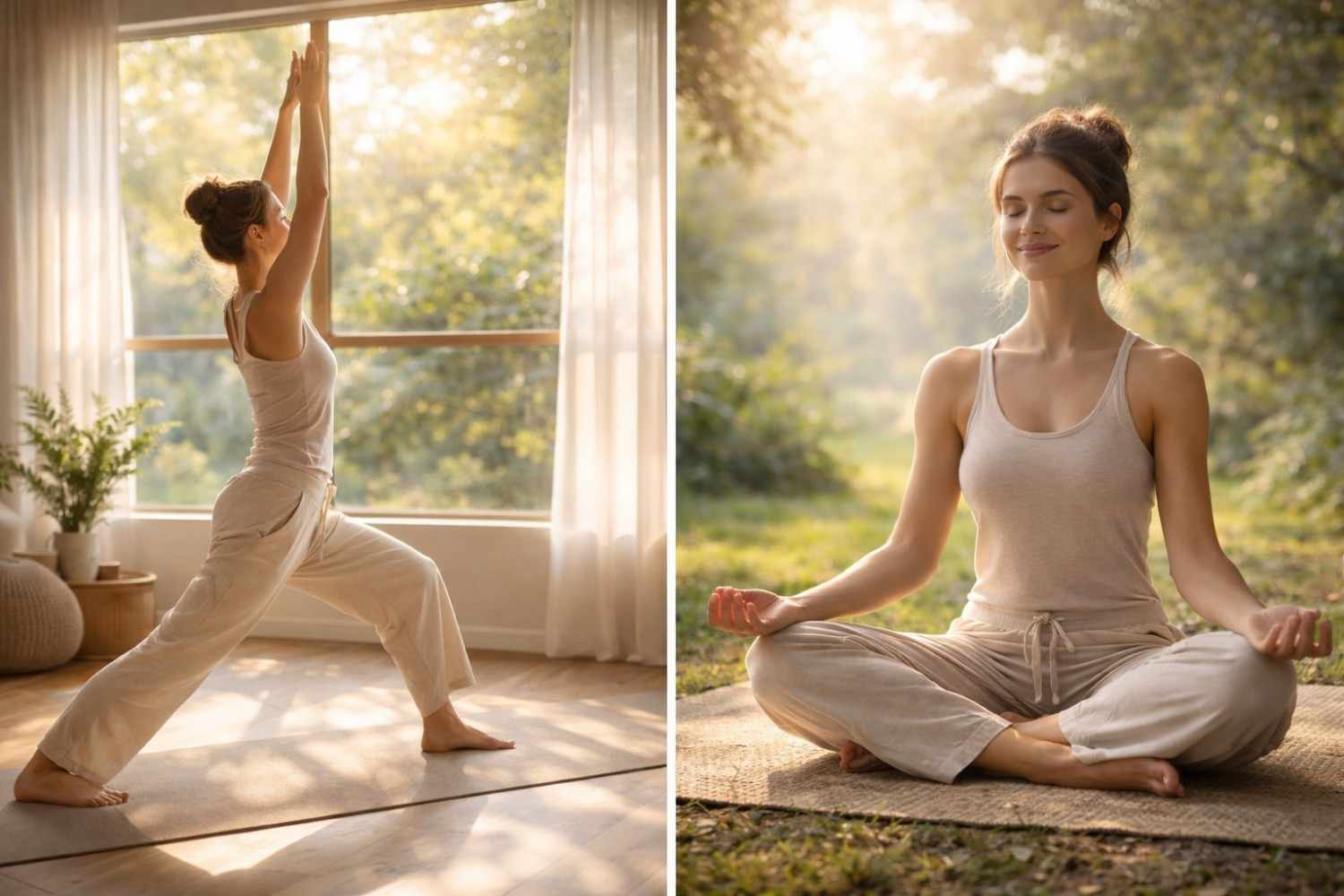
Mantra Yoga is an ancient yogic practice that uses sound and repetition to calm the mind and develop inner awareness. Unlike physical yoga styles, this path focuses on mantra meditation, where sacred sounds or phrases are repeated to bring mental clarity and emotional balance. In today’s stressful lifestyle, Mantra Yoga offers a simple and effective way to slow down the mind and reconnect with inner peace.
What Is Mantra Yoga?
Mantra Yoga is often described as the yoga of sound. In this practice, a mantra—such as “Om” or “So Hum”—is repeated either aloud or silently during meditation. This process, known as mantra chanting, helps reduce distractions and keeps the mind focused on a single point. Because it does not require physical flexibility, Mantra Yoga is suitable for people of all ages.
Meaning and Purpose of Mantra Yoga
The word “mantra” comes from Sanskrit, where man means mind and tra means tool. This explains the true meaning of Mantra Yoga—it is a tool to train and protect the mind. The purpose of this practice is not only relaxation but also inner transformation. Through regular practice, practitioners begin to understand how the mantra calms the mind and creates emotional stability.
Benefits of Mantra Yoga
The benefits of Mantra Yoga are experienced on mental, emotional, and spiritual levels. Regular practice can help:
- Improve concentration and focus
- Reduce stress and anxiety
- Create emotional balance
- Support inner peace and self-awareness
Because of these benefits, Mantra Yoga for beginners is often recommended as a starting point for meditation. It is easy to learn and can be practiced anywhere.
How to Practice Mantra Yoga for Beginners
Learning how to practice Mantra Yoga for beginners is simple:
- Sit comfortably in a quiet place
- Close your eyes and relax your breath
- Choose a simple mantra
- Repeat the mantra softly or silently
- Practice for 5–10 minutes daily
This mantra yoga meditation practice gradually trains the mind to stay calm and focused, even outside meditation.
Types of Mantra Chanting
There are different types of mantra chanting used in Mantra Yoga:
- Loud chanting – helpful for beginners
- Whispered chanting – creates subtle awareness
- Silent repetition – used for deeper meditation
Each method supports the same goal: mental stillness and clarity.
Mantra Yoga in Daily Life
Mantra Yoga is not limited to meditation sessions. It can easily be integrated into daily life. Repeating a mantra while walking, resting, or before sleep can help calm the nervous system. Over time, this regular habit strengthens discipline and improves emotional control. This is one of the reasons why Mantra Yoga is considered a practical and sustainable spiritual practice.
Common Mistakes to Avoid
While practicing Mantra Yoga, beginners should avoid forcing concentration or expecting instant results. The practice works gradually. Consistency and patience are more important than intensity. Keeping expectations realistic allows the benefits of Mantra Yoga to unfold naturally.
Conclusion
In a world filled with constant noise and distraction, Mantra Yoga offers a peaceful path toward balance and clarity. By using sound as a focus, this practice helps calm the mind, improve awareness, and support spiritual growth. With regular effort, Mantra Yoga becomes not just a meditation technique, but a way of living with mindfulness and inner stability.