
Do you find yourself constantly shrugging your shoulders up toward your ears, carrying the weight of the world in a tense upper back? You’re not alone. In our screen-filled days, our shoulders become rounded fortresses of stress. But what if one simple, powerful posture could help you unlock that armor?
Enter Eagle Arms in Yoga, a deceptively challenging yet profoundly rewarding stretch. More than just wrapping yourself up, this pose is a key to opening tight shoulders, calming a busy mind, and building crucial stability. Let’s dive into how to harness its benefits, nail the technique, and most importantly, practice it safely for lasting results.
Unwinding the Tension – The Somatic Benefits of Eagle Arms
Eagle Arms in Yoga is a gift for the overstimulated nervous system. From a somatic yoga standpoint, it’s not just about pulling on muscles; it’s about awakening awareness. The intricate bind requires you to listen deeply to the subtle feedback from your rotator cuff and scapula.
This conscious wrapping and holding creates a focused, proprioceptive hug around your upper body, encouraging the release of deep, chronic tension that pure force can’t touch. It teaches your body to differentiate between the shoulder blades, promoting coordination and undoing the “frozen” feeling of a stiff upper back. It’s a moving meditation that begins the moment you start to entwine your limbs.
Step-by-Step Alignment – Mastering the Eagle Arms Technique
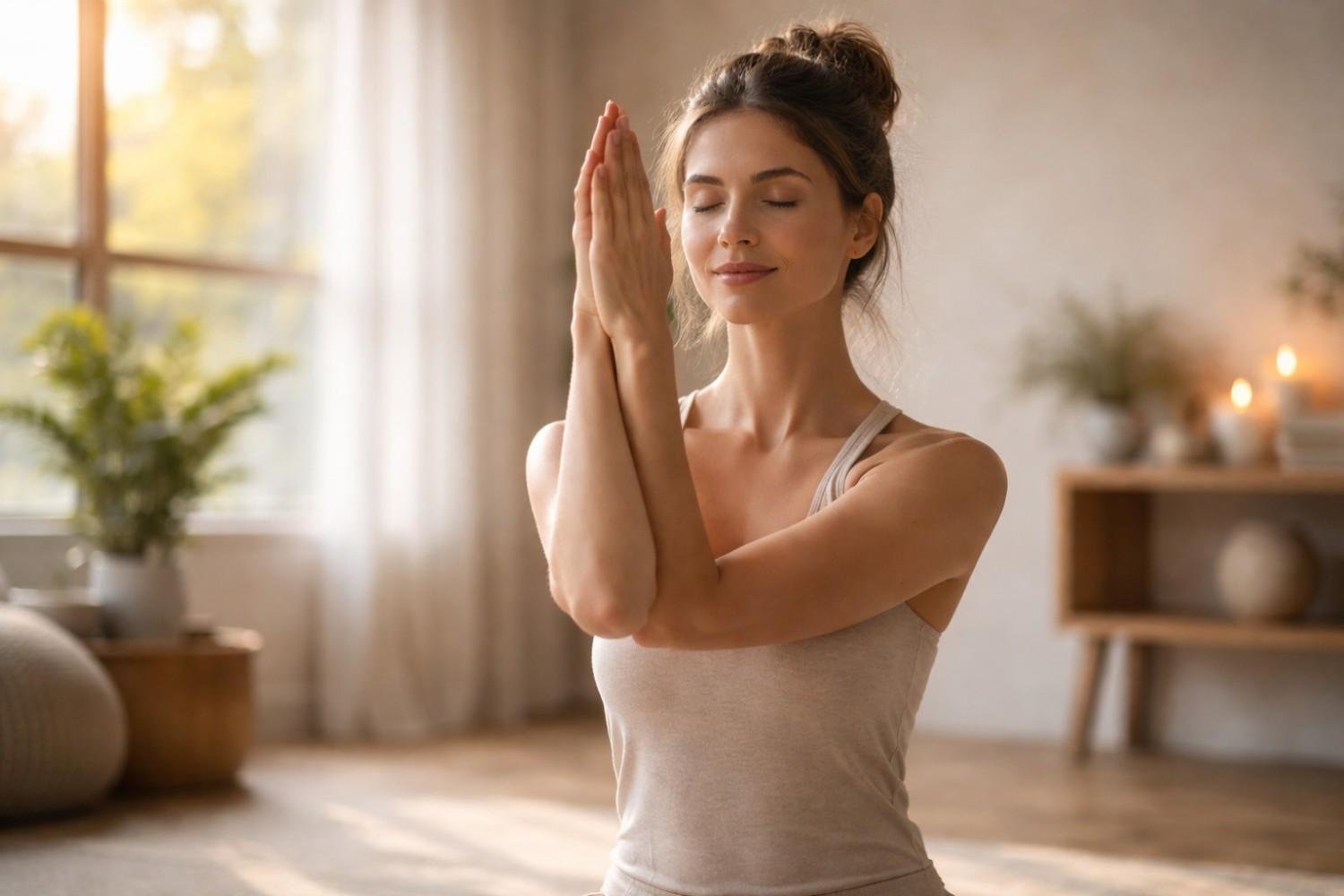
Ready to give it a try? Start seated or standing tall. Extend your arms forward, parallel to the floor. Cross your right arm under your left. Now, bend both elbows, aiming to bring the backs of your hands or palms to touch. If possible, hook your right fingertips into the palm of your left hand (or use a strap).
Lift your elbows to shoulder height while drawing them away from your chest, feeling a tremendous stretch between your shoulder blades. Hold for 5-8 breaths, then unravel and repeat on the other side. This precise alignment is the foundation that makes all the following benefits possible in your yoga exercises.
Beyond the Stretch – Key Physical & Mental Benefits
The magic of Eagle Arms in Yoga goes far beyond a satisfying stretch. Physically, it deloads and opens the shoulder joints, improving mobility for everything from swimming to more advanced yoga poses. It actively works the often-neglected muscles between the shoulder blades, combating poor posture.
Mentally, the required concentration is a powerful anchor, pulling you away from distraction and into a state of present-moment focus. This combination of physical release and mental clarity can be truly transformative, offering a sense of lightness and ease that permeates your entire practice, whether you’re in a class or flowing at home.
Safety First – Essential Tips to Practice Without Strain
The biggest mistake in Eagle Arms? Forcing the bind. Your shoulders will thank you for practicing patience. If your hands don’t touch, simply press the backs of your hands together or hold a strap between your hands.
The key action is lifting the elbows and drawing them away—this is where the magic happens, even without a deep bind. Never jerk or strain. If you feel sharp pain, back off. These mindful modifications ensure you gain the benefits without risk, a principle echoed in responsible yoga studios nationwide, from heated CorePower Yoga classes to gentle community hubs.
Weaving Eagle Arms Into Your Practice
You don’t need a full hour to reap the rewards of this pose. Use it as a warm-up for any upper-body activity, or as a mid-day desk reset to melt away computer hunch. In your flow, it beautifully prepares the shoulders for poses like Cow Face or side planks.
Explore its application beyond yoga—notice how the awareness it builds improves your posture while driving or cooking. By making Eagle Arms in Yoga a regular part of your routine, these intelligent yoga exercises become a tool for lifelong mobility and body awareness.
Conclusion
Approach Eagle Arms in Yoga not as a pose to conquer, but as a conversation with your body. Some days the bind will be deep, other days it will be a gentle press of the arms. Each variation offers its own insight and benefit.
Embrace the process with curiosity and kindness. Consistent, mindful practice will gradually unravel layers of tension, gifting you with open shoulders, a focused mind, and a profound sense of release that you can carry with you, on and off the mat.