
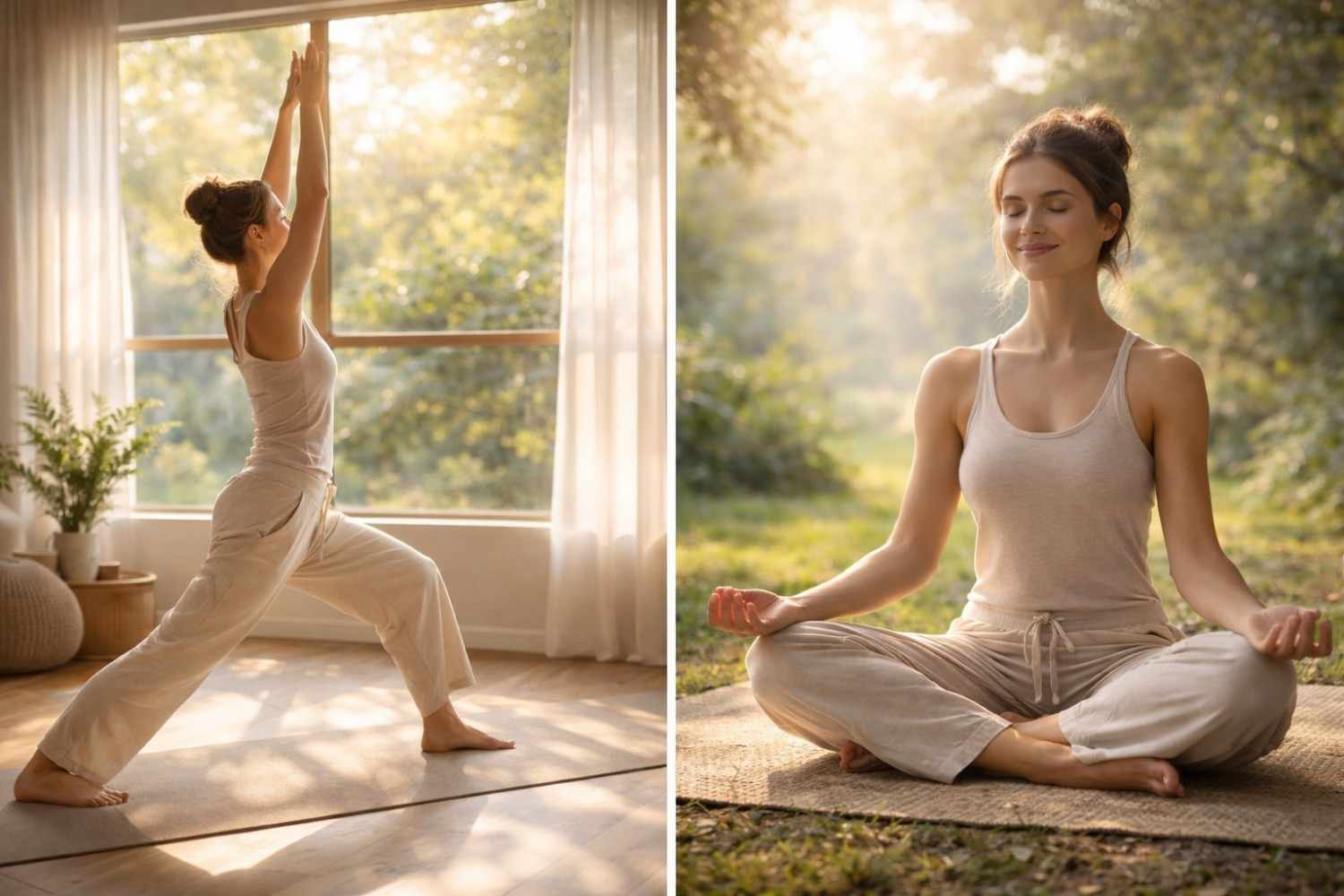
Let’s be honest—life can feel like a constant juggling act. Our minds race while our bodies hold the tension. But what if you could find a sanctuary that addresses both? That’s the profound magic of combining Yoga with Meditation. It’s not just about stretching or sitting quietly; it’s a unified conversation between your physical self and your inner world.
Think of the yoga poses as a way to gently shake off the day’s static, preparing the ground for the deep, quiet seeds of meditation to take root. This guide is your invitation to explore that complete mind-body harmony, where movement flows seamlessly into stillness, creating a profound sense of peace you can carry with you long after you roll up your mat.
II. The Foundational Principles: Why They Work So Well Together
At first glance, the dynamic flow of Yoga with Meditation might seem like two separate practices. But their connection is ancient and intuitive. Yoga prepares the temple—your body. Through deliberate movement and breath, it releases physical tension and quiets the nervous system’s chatter. This creates a body that’s no longer screaming for attention, but is instead comfortable and receptive. Then, meditation enters, tending to the mind’s garden.
It allows you to observe thoughts without getting swept away, cultivating mental clarity. Together, they form a perfect loop: the body’s calm supports a focused mind, and a focused mind guides the body with more awareness. It’s the ultimate partnership for holistic well-being.
III. Creating Your Sacred Space: Setting the Scene for Harmony
You don’t need a fancy studio to begin. Your practice space is anywhere you can claim a few square feet of peace. Start by choosing a quiet corner. Perhaps add a simple plant, a comfortable mat, and maybe a soft blanket. The goal is to create an environment that signals to your brain, “It’s time to unwind.” This dedicated spot becomes your anchor.
When you step onto your mat there daily, you’re telling your mind and body it’s safe to let go. This consistency is key, especially as you later introduce elements like yoga with meditation music. A clutter-free, intentional space isn’t about aesthetics alone; it’s a physical commitment to your own harmony.
IV. Starting Simple: A Beginner’s Blueprint for Unified Practice
Feeling overwhelmed? The secret is to start impossibly small. Commit to just 10 minutes. Begin with three to five simple yoga poses, like Cat-Cow to warm the spine, a gentle Forward Fold, and Child’s Pose. Hold each, breathing deeply into any sensation for a minute. This isn’t a workout; it’s mindful movement.
Then, simply sit comfortably for five minutes of meditation. Focus only on the physical echo of the poses in your body—the warmth in your back, the stretch in your hamstrings. Let your breath be your guide. This simple blueprint links the physical to the mental, making Yoga with Meditation feel accessible, not intimidating. Consistency in these small moments builds the strongest foundation.
V. Enhancing the Experience with Yoga with Meditation Music
Sound can be a powerful gateway to deeper states. Integrating yoga with meditation music isn’t about distraction; it’s about using harmonious vibrations to deepen your focus. During your asana practice, opt for soft, instrumental melodies or nature sounds to guide your flow. As you transition to stillness, shift to even slower tones, drones, or pure sound baths.
This auditory cue helps your nervous system descend further into relaxation. The music acts as an anchor, gently pulling your wandering attention back when thoughts drift. It surrounds and supports your practice of Yoga with Meditation, transforming your space into an immersive sanctuary for the senses.
VI. Power Yoga with Meditation: Balancing Intensity with Inner Calm
Many think a vigorous flow and a quiet mind can’t coexist. Power yoga with meditation beautifully proves otherwise. This practice uses dynamic sequences to build heat and strength, demanding intense presence. Every challenging pose, every held plank, becomes a moving meditation on your edge. The key is the conscious transition.
After such physical exertion, dedicating even 5-10 minutes to seated silence is transformative. It allows the fired-up energy to settle and integrate. You’ll notice how the mental focus you cultivated on the mat sharpens your meditation, and the calm from meditation infuses your power flow with greater control. It’s the perfect balance of cultivating resilience and peace.
VII. The Subtle Art of Somatic Yoga: Listening to Your Body’s Wisdom
Sometimes, the most profound practice is the quietest one. Somatic yoga shifts the focus from how a pose looks to how it feels from within. It involves tiny, mindful movements and deep internal sensing. This approach is a meditation in motion. As you gently explore a movement—like a subtle pelvic tilt or shoulder release—you practice listening.
You ask, “What does my body need today?” This cultivates a profound inner dialogue, making it a perfect bridge within Yoga with Meditation. By honoring your body’s innate wisdom without judgment, you dissolve holding patterns at their source, creating a body that is not just flexible but truly intelligent and receptive.
VIII. Integrating Key Yoga Poses as Anchors for Meditation
Your asana practice can directly fuel your meditation. Certain yoga poses are natural allies for seated stillness. Grounding poses like Mountain (Tadasana) or Warrior II build stability and presence. Hip-openers like Pigeon Pose release deep-seated emotional tension, often clearing mental clutter. Most importantly, supported restorative poses—like Legs-Up-The-Wall—actively calm the nervous system.
Practice holding these postures with complete attention on the breath and sensation. Then, when you move to formal meditation, that quality of embodied awareness comes with you. The pose becomes a physical mantra, a remembered sensation that helps anchor a wandering mind, deepening the unity of your Yoga with Meditation practice.
IX. Building a Sustainable Daily Ritual
The true magic unfolds through regularity, not marathon sessions. Aim to weave Yoga with Meditation into your daily rhythm like brushing your teeth. It could be 15 minutes with your morning coffee or a wind-down routine before bed. The structure isn’t rigid—some days might be 20 minutes of gentle somatic yoga; others, 10 minutes of powerful flow followed by silence.
Listen to what feels nourishing. Use tools like a calming playlist of yoga with meditation music to set the tone. Forgive yourself for missed days. This ritual is a gift, not a chore. Over time, this consistent return to yourself builds an unshakable inner sanctuary that sustains you through daily life.
X. Conclusion: Your Journey to Wholeness Begins Now
The path to mind-body harmony isn’t a destination you reach; it’s a practice you live. Combining Yoga with Meditation is a lifelong conversation you learn to have with yourself—one of kindness, awareness, and deep listening. Whether you’re flowing through powerful sequences or sitting in quiet stillness, you are weaving a tapestry of inner peace.
Remember, every time you step onto your mat, you are choosing wholeness. You have the blueprint, the understanding, and the power within you to begin. So, take a deep breath, start where you are, and trust this beautiful, integrated practice to guide you home to yourself. Your journey starts with a single, conscious breath.