
Introduction
Yoga is often imagined as a practice that requires getting up and down from the floor, balancing on one leg, or moving through complex postures. While traditional yoga can be physically demanding, it is not the only way to experience the benefits of mindful movement. Chair yoga offers an accessible, adaptable approach that brings yoga’s core principles—breath, awareness, and gentle movement—into everyday life.
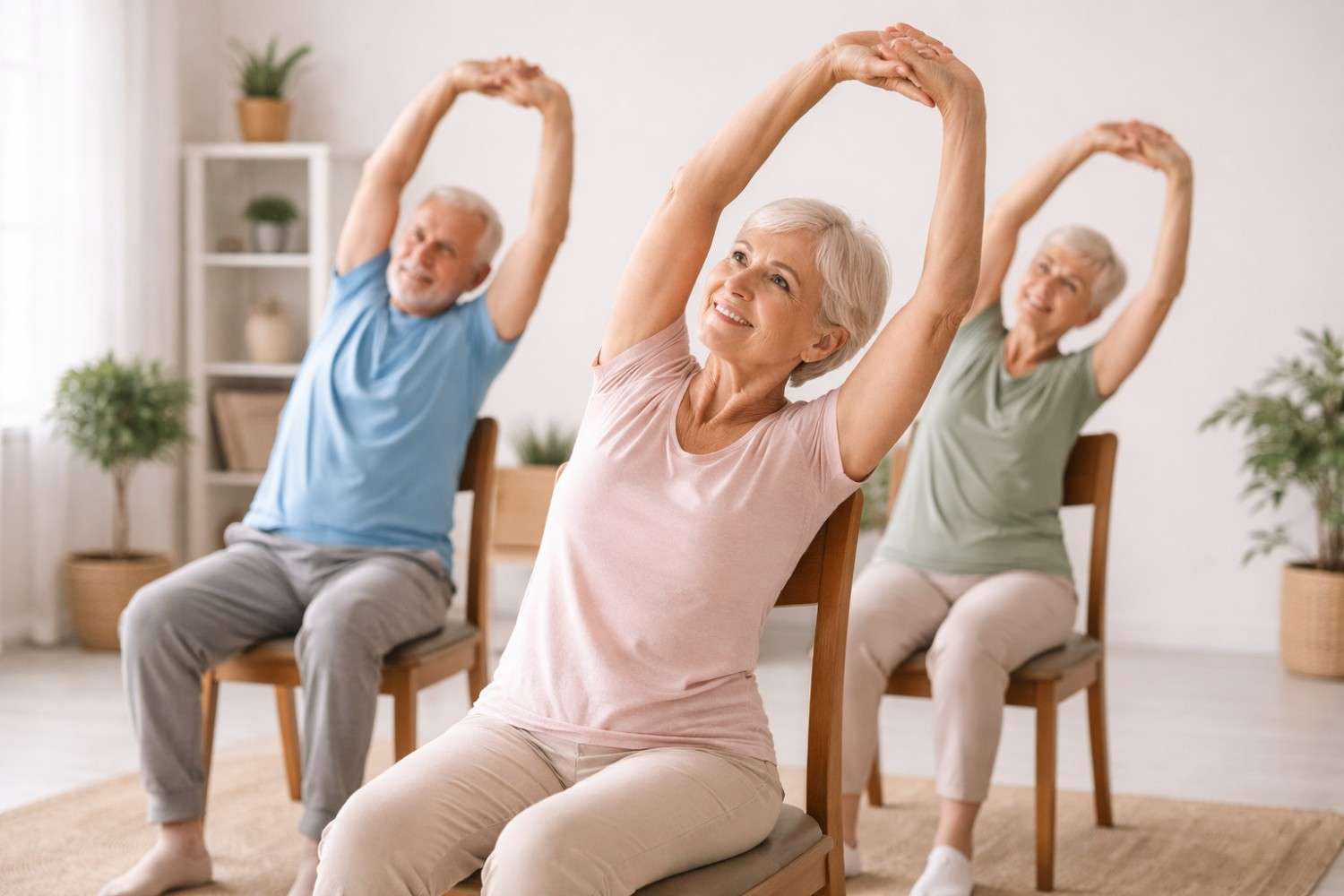
Chair yoga is practiced either seated on a chair or using a chair for support. This makes it especially valuable for individuals with limited mobility, balance concerns, injuries, or those who simply prefer a gentler form of movement. From office workers to older adults, chair yoga provides a safe and effective way to stay active.
In this guide, we’ll explore chair yoga poses, explain key chair yoga benefits, outline effective chair yoga exercises, and discuss why chair yoga for seniors and chair yoga for senior citizens has become such a widely recommended practice.
What Is Chair Yoga?
Chair yoga is a modified form of yoga that adapts traditional poses so they can be performed while seated or with the support of a chair. It is often complemented by simple Breathwork Techniques that help regulate the breath, enhance relaxation, and support nervous system balance during gentle movement.
Unlike floor-based yoga, chair yoga:
- Reduces strain on joints
- Minimizes balance challenges
- Allows movements to be adjusted easily
- Can be practiced almost anywhere
This flexibility makes chair yoga suitable for beginners, people recovering from injury, and especially those looking for low-impact exercise.
Who Can Benefit From Chair Yoga?
Chair yoga is inclusive by design. It can be adapted to suit a wide range of ages, abilities, and fitness levels.
People who often benefit include:
- Older adults and retirees
- Individuals with arthritis or joint pain
- People with balance or mobility limitations
- Office workers seeking gentle movement
- Those recovering from illness or injury
Because of its adaptability, chair yoga for seniors and chair yoga for senior citizens have become particularly popular in community centers, healthcare settings, and wellness programs.
Chair Yoga Benefits for Physical Health
One of the most compelling reasons to practice chair yoga is its wide range of physical benefits.
- Improved Mobility and Flexibility: Gentle stretching helps keep joints moving through their natural range of motion, reducing stiffness and discomfort.
- Increased Strength: Even seated movements engage muscles in the legs, core, and upper body. Over time, chair yoga exercises help build the functional strength needed for daily activities.
- Better Balance and Stability: Using a chair for support allows practitioners to safely work on balance-related movements without fear of falling.
- Reduced Pain and Tension: Slow, controlled movements help release tension in the neck, shoulders, hips, and lower back.
These chair yoga benefits support independence and comfort, especially as the body ages.
Mental and Emotional Chair Yoga Benefits
Chair yoga supports not only the body but also the mind.
Key mental and emotional chair yoga benefits include:
- Reduced stress and anxiety
- Improved mood
- Enhanced concentration
- Greater body awareness
By combining breath awareness with movement, chair yoga encourages relaxation and mindfulness—important for emotional well-being at any age.
Why Chair Yoga Is Ideal for Seniors
Aging bodies often require movement that is safe, supportive, and adaptable. This is where chair yoga for seniors truly shines.
For older adults, chair yoga:
- Reduces fall risk
- Supports joint health
- Encourages gentle strength-building
- Promotes confidence in movement
Because poses can be modified or skipped as needed, chair yoga for senior citizens respects individual limitations while still encouraging active participation.
Common Chair Yoga Poses
Many traditional yoga poses can be adapted into chair yoga poses that are safe and accessible.
Examples include:
- Seated mountain pose
- Seated spinal twist
- Chair cat–cow stretch
- Seated forward fold
- Supported standing poses using a chair
These chair yoga poses focus on alignment, breath, and gentle engagement rather than depth or intensity.
Chair Yoga Exercises for Strength and Mobility
A well-rounded practice includes a mix of stretching, strengthening, and gentle mobility work.
Effective chair yoga exercises may include:
- Seated leg lifts to strengthen hips and thighs
- Arm raises and circles for shoulder mobility
- Gentle twists to support spinal health
- Ankle and foot movements to improve circulation
When practiced consistently, these chair yoga exercises help maintain functional movement and reduce stiffness.
Breathing in Chair Yoga
Breath awareness is central to all forms of yoga, including chair yoga.
In chair yoga, breathing:
- Helps regulate effort
- Encourages relaxation
- Supports nervous system balance
Simple breathing techniques—such as slow nasal breathing or extended exhales—enhance the calming chair yoga benefits and make movements feel more comfortable.
Creating a Chair Yoga Routine
A chair yoga session does not need to be long or complex to be effective. Even 15–30 minutes can provide noticeable benefits.
A basic routine might include:
- Seated breathing and posture awareness
- Gentle neck and shoulder movements
- Spinal stretches and twists
- Lower-body strengthening exercises
- A brief relaxation or mindfulness practice
This structure works well for chair yoga for seniors, beginners, and anyone seeking gentle daily movement.
Chair Yoga for Senior Citizens in Daily Life
One of the strengths of chair yoga for senior citizens is how easily it fits into daily routines.
Chair yoga can be practiced:
- At home
- In community centers
- During breaks at work
- In assisted living or healthcare settings
Because no special equipment is required beyond a stable chair, it is easy to maintain consistency.
Safety Tips for Chair Yoga
While chair yoga is generally safe, it’s important to practice mindfully.
Helpful safety guidelines include:
- Using a sturdy, non-rolling chair
- Sitting with feet flat on the floor
- Moving slowly and avoiding pain
- Resting whenever needed
Listening to the body ensures that chair yoga poses remain supportive rather than stressful.
How Often Should You Practice Chair Yoga?
Consistency matters more than intensity. Practicing chair yoga several times per week helps maintain strength and mobility.
For most people:
- 2–5 sessions per week is ideal
- Sessions can range from 10 to 45 minutes
- Even short daily practices provide benefits
Over time, regular practice enhances both physical comfort and confidence.
Chair Yoga vs Traditional Yoga
Chair yoga is not a lesser version of yoga—it’s simply a different approach.
Compared to traditional yoga:
- Chair yoga emphasizes accessibility
- Movements are more controlled
- Balance challenges are reduced
- Adaptations are encouraged
For many, especially older adults, chair yoga benefits make it a more sustainable long-term practice.
Emotional and Social Benefits of Chair Yoga
Chair yoga classes often foster a sense of connection and community. This is especially valuable for older adults who may experience social isolation.
Group-based chair yoga for seniors:
- Encourages social interaction
- Builds confidence
- Supports emotional well-being
These benefits extend beyond the physical practice itself.
Conclusion
Movement does not need to be intense to be effective. Chair yoga proves that gentle, mindful exercise can support strength, flexibility, balance, and mental clarity at any stage of life.
Through accessible chair yoga poses, thoughtful chair yoga exercises, and the wide-ranging chair yoga benefits, this practice empowers people to stay active safely and confidently. For older adults in particular, chair yoga for seniors and chair yoga for senior citizens offer a practical, empowering way to maintain independence and well-being.
Chair yoga is not about limitations—it’s about possibilities.