
Introduction
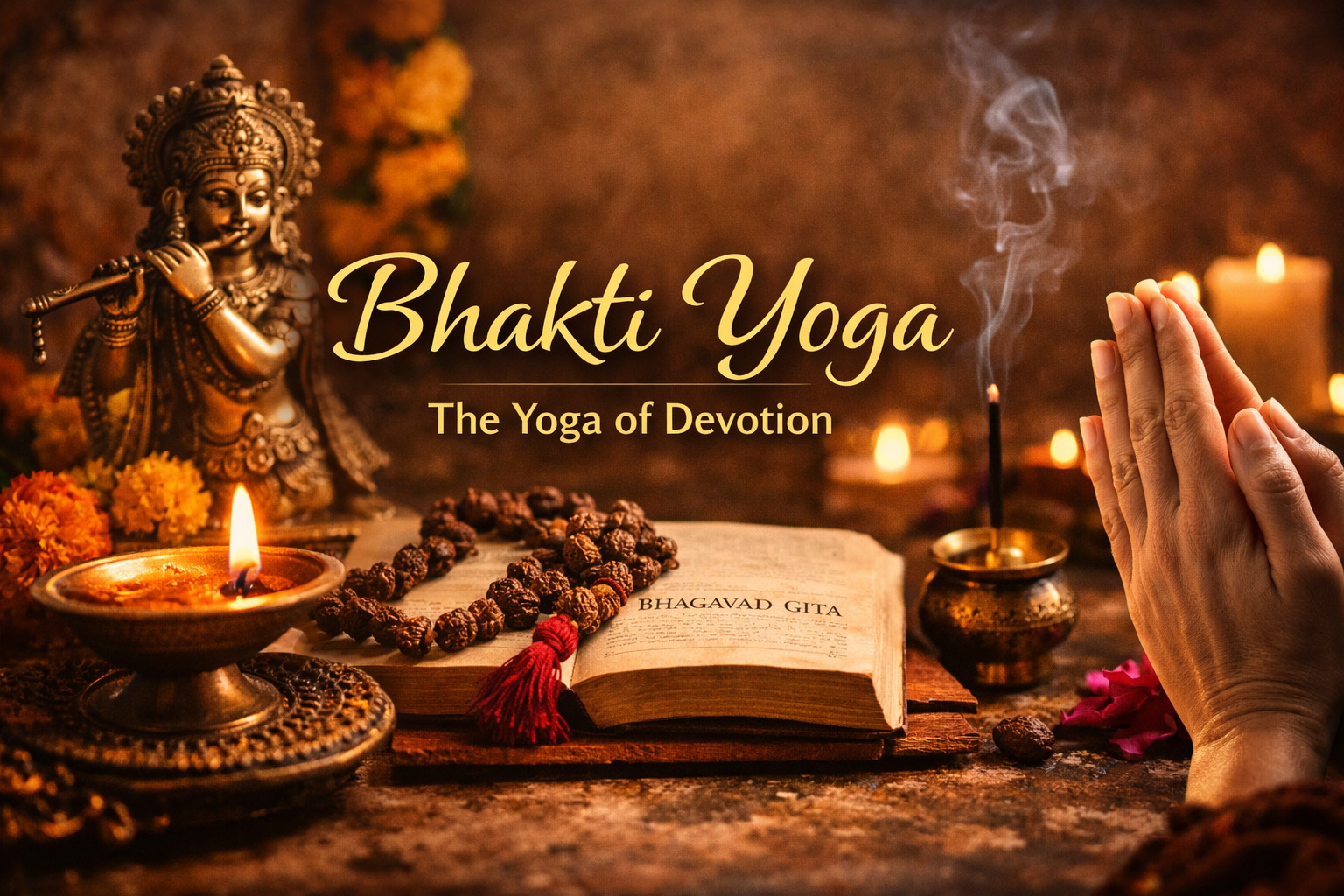
Bhakti Yoga, often called the yoga of devotion, is one of the most heartfelt and emotionally transformative paths in yogic and spiritual tradition. Unlike physical practices that emphasize postures or breath, Bhakti Yoga centres on love, devotion, and a deep, personal connection with the divine.
In Sanskrit, bhakti literally means “devotion” or “love,” and yoga means “union” or “to yoke.” Together, Bhakti Yoga is understood as the path of devotion that leads the practitioner (called a bhakta) toward spiritual union, peace, and inner transformation.
This comprehensive guide explores the history, meaning, fundamental practices, benefits, and contemporary relevance of Bhakti Yoga — grounded in classical texts like the Bhagavad Gita and the teachings of saints, sages, and yogic masters.
What Is Bhakti Yoga?
Bhakti Yoga is a devotional discipline that focuses on cultivating pure love and devotion toward the Divine, regardless of one’s cultural or religious background. Bhakti goes beyond mere religious rituals; it is a way of life that transforms every moment into a sacred opportunity for connection with the Divine.
In Hindu philosophy, Bhakti Yoga is one of the four primary paths to spiritual liberation, alongside Karma Yoga (service), Jnana Yoga (knowledge), and Raja Yoga (meditation). Of these, Bhakti is often considered the easiest and most accessible because it relies on the heart rather than intellectual study or intense discipline.
The Bhagavad Gita — one of the most authoritative Hindu scriptures — highlights Bhakti Yoga as a direct path to realizing the Divine, emphasizing surrender, love, and unwavering devotion.
Historical Roots of Bhakti and the Bhakti Movement
While devotional practices likely existed in ancient Indian spiritual life for millennia, the Bhakti movement as a social and spiritual force emerged more distinctly around the medieval period (from the 6th to 15th centuries CE) across India.
Instead of rigid caste hierarchies and complicated rituals, Bhakti Yoga emphasized personal devotion, love, and equality before the Divine. This opened the door for ordinary people — regardless of gender, caste, or social status — to engage deeply in spiritual life.
Prominent Bhakti saints and poets such as Mirabai, Tulsidas, Surdas, Kabir, and Chaitanya Mahaprabhu composed devotional songs, poetry, and hymns that conveyed the message of love and surrender. Their works amplified Bhakti Yoga’s appeal and helped it spread throughout South Asia.
Core Principles of Bhakti Yoga
At its heart, Bhakti Yoga is anchored in several key spiritual principles that guide its practice:
1. Love and Devotion to the Divine
The foundational essence of Bhakti Yoga is unconditional love for the Divine. This is not mere admiration — it is a passionate, heartfelt longing for union with God or the divine presence within and around us.
2. Surrender and Humility
A central tenet of Bhakti Yoga is surrender (saranagati) — placing one’s ego and desires in the service of the Divine. Such surrender fosters humility and dissolves the sense of separation between self and sacred.
3. Constant Remembrance
Practitioners are encouraged to remember the Divine constantly, whether through chanting, prayer, meditation, or heartfelt contemplation. This continual remembrance cultivates inner peace and transforms ordinary thoughts into acts of devotion.
4. Service and Compassion
True devotion in Bhakti Yoga extends beyond personal practice to selfless service (Seva). Serving others with love and without expectation reinforces the understanding that all souls are sacred expressions of the divine.
5. Emotional Engagement
Unlike paths that emphasize detachment, Bhakti Yoga acknowledges the emotional dimension of spiritual life. Love, longing, joy, and even grief can all be transformed into devotional energy that deepens one’s connection to the Divine.
The Nine Limbs (Navadha Bhakti)
Classical yogic texts and Bhakti traditions describe nine primary devotional practices — each offering a unique way to experience devotion:
- Shravana – Listening to sacred stories and scriptures
- Kirtana – Singing devotional songs or chants
- Smarana – Remembering the Divine in all moments
- Padasevana – Serving at the feet of the Divine
- Archana – Ritual worship and observances
- Vandana – Prostration before sacred forms
- Dasya – Cultivating servant-hearted devotion
- Sakhya – Relationship of friendship with the Divine
- Atmanivedana – Total self-offering and surrender
These practices allow Bhakti Yogis to connect with the Divine in diverse ways — through sound, action, emotion, remembrance, and service.
Bhakti Yoga Practices Explained
Kirtana and Chanting
Singing divine names and songs (often call-and-response) is a universal Bhakti practice. The repetitive sound of mantras — like Hare Krishna, Om shanti mantra — helps calm the mind, open the heart, and deepen spiritual focus.
Prayer and Puja
Prayer and puja (ritual worship) elevate everyday moments. Through ceremonial offerings, visualizations, and sacred ritual, practitioners express devotion and invite divine grace into their lives.
Remembrance (Smarana)
Constantly remembering the Divine throughout daily activities — whether walking, cooking, working, or resting — turns life into a devotional practice. Bhakti Yoga sees every action as an opportunity to recall God’s presence.
Selfless Service (Seva)
Serving others with compassion and without expectation is an expression of devotion. In Bhakti Yoga, the beloved Divine is seen in every person, so service becomes a pathway to love.
Benefits of Practicing Bhakti Yoga
Bhakti Yoga’s transformative power extends beyond spiritual growth; it also nurtures emotional, mental, and interpersonal well-being.
Heart-Centred Emotional Healing
By opening the heart through devotion and compassion, Bhakti Yoga helps dissolve negative emotions such as anger, jealousy, and pride. Over time, practitioners develop forgiveness, gratitude, and emotional resilience.
Mental Calm and Stress Reduction
Chanting, meditation, and devotional song create rhythmic patterns that soothe the nervous system, alleviating stress and anxiety. These practices promote inner peace and clarity of mind.
Spiritual Fulfillment and Connection
The ultimate aim of Bhakti Yoga is union with the Divine — a state of bliss (rasa) in which the heart transcends ego and perceives the sacred in all existence.
Enhanced Compassion and Empathy
Devotion fosters a deeper sense of interconnectedness, not just with the Divine, but with all beings — creating a natural expression of compassion and unity.
Reduction of Ego and Desire
By surrendering personal will and embracing love as the guiding force, Bhakti Yoga helps stabilize the emotional self and minimize attachment to material outcomes.
Integrating Bhakti Yoga into Daily Life
One profound aspect of Bhakti Yoga is that it does not require withdrawal from everyday life. Devotion can be woven into ordinary tasks — transforming them into acts of sacred service.
- Offer daily actions — like preparing meals, helping others, or even working professionally — as offerings to the Divine.
- Create devotional space at home with a quiet altar, chants, or sacred readings.
- Engage in community singing (Kirtan) or devotional gatherings.
- See the Divine in everyday life, from the rising sun to the kindness of strangers.
This approach transforms life into an ongoing spiritual experience rather than a compartmentalized practice.