
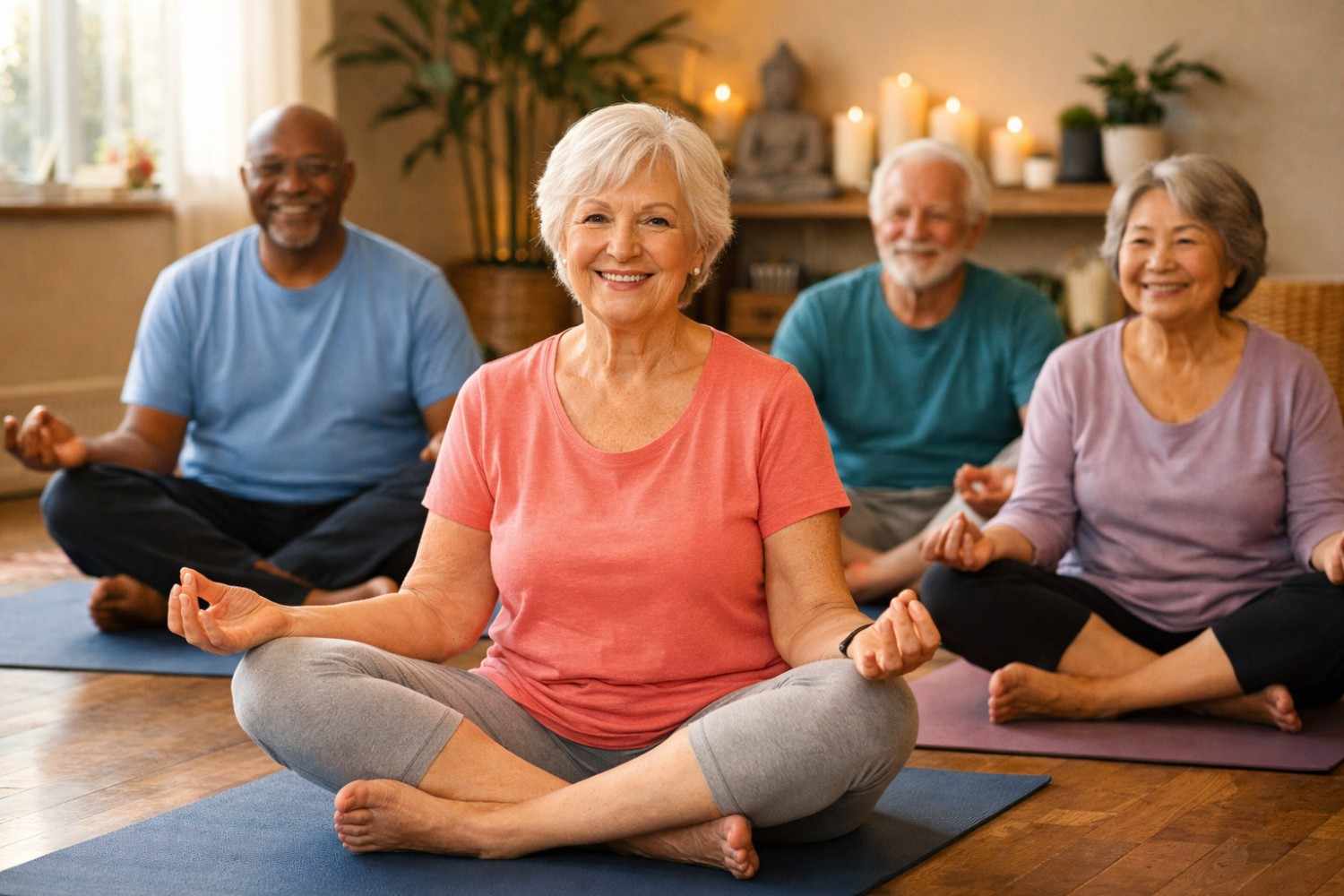
As we age, staying active becomes more important than ever—but it also becomes more challenging. Joint stiffness, reduced mobility, balance concerns, and chronic aches can make traditional exercise feel intimidating or unsafe. This is where yoga offers a powerful yet gentle solution.
Yoga for seniors focuses on slow, mindful movement, breath awareness, and relaxation. It is not about complex poses or intense workouts, but about maintaining strength, flexibility, and independence while nurturing mental and emotional well-being.
Whether practiced seated, standing, or with support, yoga adapts easily to changing physical abilities and can be enjoyed well into later life.
Why Yoga Is Especially Beneficial for Older Adults
Yoga is uniquely suited to seniors because it:
- Is low-impact and gentle on joints
- Improves balance and coordination
- Enhances flexibility and mobility
- Encourages mindfulness and relaxation
- Can be adapted for all fitness levels
Unlike high-impact exercises, yoga emphasizes controlled movement and awareness, reducing the risk of injury while supporting overall health—especially when combined with calming breathing practices such as Sukha Purvaka Pranayama, which promote balance, relaxation, and mindful control of the breath.
Physical Benefits of Yoga for Seniors
1. Improves Flexibility and Mobility
As we age, muscles naturally tighten and joints lose range of motion. Yoga gently stretches muscles and connective tissue, helping seniors move more freely and comfortably.
Regular practice can:
- Reduce stiffness
- Improve joint mobility
- Make daily activities easier
Even simple movements can lead to noticeable improvements over time.
2. Enhances Balance and Stability
Falls are a major concern for seniors, often leading to serious injuries. Yoga strengthens the muscles responsible for balance and coordination while improving body awareness.
Practices that involve:
- Standing poses
- Weight shifting
- Core engagement
help reduce fall risk and build confidence in movement.
3. Builds Strength Without Strain
Yoga uses body weight rather than heavy equipment, making it safe and accessible. Gentle strength-building improves:
- Leg and hip stability
- Core strength
- Posture
- Overall endurance
Stronger muscles help protect joints and improve independence.
4. Supports Joint Health
Yoga promotes circulation and lubrication of joints, which can ease stiffness and discomfort caused by arthritis or inactivity.
Slow, controlled movements are especially beneficial for:
- Knees
- Hips
- Shoulders
- Spine
5. Improves Posture and Alignment
Poor posture is common as we age, often leading to back and neck pain. Yoga strengthens postural muscles and encourages proper alignment, helping seniors stand and sit more comfortably.
Mental and Emotional Benefits of Yoga for Seniors
1. Reduces Stress and Anxiety
Yoga emphasizes deep breathing and mindfulness, which calm the nervous system and reduce stress hormones. This can be especially helpful for seniors dealing with life changes or health concerns.
2. Improves Mental Clarity
Regular yoga practice increases blood flow to the brain and improves concentration, memory, and focus.
Many seniors report feeling more mentally alert and emotionally balanced after consistent practice.
3. Supports Emotional Well-Being
Yoga encourages self-awareness, patience, and acceptance—qualities that promote emotional resilience and a positive outlook on life.
4. Encourages Better Sleep
Gentle movement and breathing exercises help relax the body and mind, leading to improved sleep quality and reduced insomnia.
Yoga for Seniors and Chronic Conditions
Yoga can be especially helpful for seniors managing:
- Arthritis
- Osteoporosis
- High blood pressure
- Back pain
- Joint stiffness
- Stress-related conditions
When practiced under guidance, yoga can complement medical treatment and improve quality of life.
Types of Yoga Suitable for Seniors
- Chair Yoga: Chair yoga allows poses to be performed seated or with chair support. It is ideal for seniors with limited mobility or balance concerns.
- Gentle Yoga: This slow-paced style focuses on stretching, breathing, and relaxation.
- Restorative Yoga: Uses props to support the body in deeply relaxing poses, promoting rest and recovery.
- Hatha Yoga: A slow and steady practice that focuses on basic poses and breathing techniques.
- Yin Yoga (Modified): Targets deep tissues and joints with long-held, gentle stretches.
Key Yoga Poses for Seniors
Some commonly recommended poses include:
- Seated Forward Bend
- Cat-Cow Stretch
- Seated Spinal Twist
- Mountain Pose (with support)
- Leg Raises
- Neck and Shoulder Rolls
- Child’s Pose (with support)
These poses help maintain mobility without placing strain on the body.
Breathing Exercises for Seniors
Breathing is a core part of yoga and offers numerous benefits:
- Deep Belly Breathing
- Calms the nervous system
- Improves oxygen intake
- Reduces anxiety
- Alternate Nostril Breathing (Gentle)
- Enhances focus
- Promotes balance
- Encourages relaxation
Breathing exercises are especially helpful for seniors who may not be able to perform many physical poses.
Safety Tips for Seniors Practicing Yoga
To ensure a safe practice:
- Consult a doctor before starting
- Choose beginner or senior-friendly classes
- Use props for support
- Avoid forcing movements
- Listen to your body
- Practice on a non-slip surface
Safety and comfort should always come first.
How Often Should Seniors Practice Yoga?
For best results:
- 2–3 times per week is ideal
- Sessions can be 15–30 minutes
- Daily gentle stretching is beneficial
Consistency matters more than intensity.
Yoga as a Social and Emotional Outlet
Group yoga classes provide more than physical benefits. They also offer:
- Social interaction
- Emotional support
- Motivation
- A sense of community
This social aspect is especially valuable for seniors, helping reduce feelings of isolation.
Long-Term Benefits of Yoga for Seniors
With regular practice, seniors often experience:
- Increased independence
- Improved confidence
- Reduced risk of falls
- Better posture
- Enhanced quality of life
Yoga supports aging with strength, grace, and mindfulness.
Conclusion
Yoga is one of the most effective and accessible forms of exercise for seniors. It offers a gentle way to stay active, maintain mobility, and support mental well-being without strain or pressure.
By incorporating yoga into daily or weekly routines, seniors can experience improved physical health, emotional balance, and a greater sense of peace and independence.
Yoga is not about how far you stretch—it’s about how well you care for your body and mind at every stage of life.