
Introduction
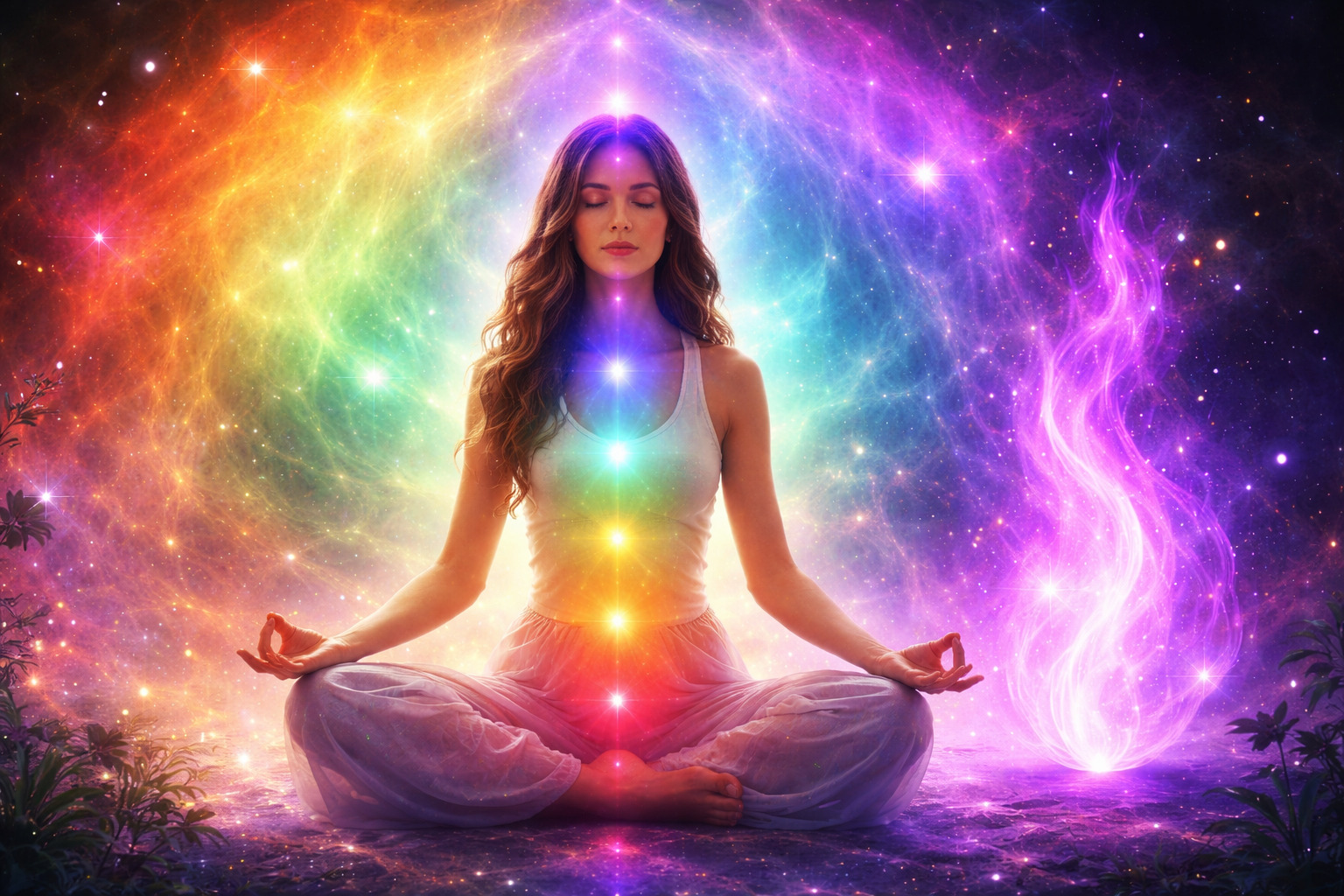
Understanding the aura meaning and its colors connects you with the subtle energy that surrounds every living being. Across spiritual traditions and modern mindfulness practices, the human aura is described as an electromagnetic energy field that reflects physical, emotional, mental, and spiritual states. Many practitioners believe that interpreting aura colors helps reveal personality tendencies, emotional health, and one’s spiritual journey.
In this guide, we’ll explore the meaning of aura, explain what different aura colors represent, delve into how aura relates to chakras and energetic wellness, and introduce the transformative practice of Violet Flame Meditation as a powerful approach to clearing and healing your energy field.
This comprehensive article combines ancient wisdom with contemporary understanding, making it ideal for beginners, yogis, spiritual seekers, and anyone curious about the deeper dimensions of human consciousness.
What Is an Aura? Definition & Meaning
An aura is a subtle, luminous energy field said to surround every living being, including people, animals, and even plants. The concept is rooted in mystical and metaphysical traditions—spanning Hinduism, Buddhism, Kabbalah, and Western esoteric systems—but is also embraced by many modern energy healers, yogis, and intuitive practitioners.
The Aura Defined
- Energy Field: A multi-layered field of electromagnetic energy that surrounds and interpenetrates the physical body
- Expression of Inner State: The aura reflects emotional, psychological, and spiritual conditions
- Dynamic & Responsive: It changes fluidly with mood, thoughts, health, and life experiences
In yoga philosophy and energy medicine, your aura acts as a mirror of your inner world—dynamic, expressive, and deeply informative.
Aura Layers: The Four Major Fields of Energy
Auras are typically described as consisting of multiple layers, each associated with different aspects of the self:
- Physical Layer: Closest to the body—reflects physical health and vitality.
- Emotional Layer: Tied to feelings, mood patterns, and emotional state.
- Mental Layer: Reflects thoughts, belief patterns, and mindset.
- Spiritual Layer: The outermost layer often associated with intuition, higher purpose, and connection to the divine.
Each layer is believed to vibrate at a slightly different frequency and relate to different energy centers known as chakras, which we’ll unpack below.
Aura Colors & Their Meanings: A Complete Guide
The colors of the aura are seen as a dynamic reflection of your emotional, physical, and spiritual well-being. Each hue carries unique meanings—ranging from grounding and stability to spiritual awakening and compassion.
Here’s a helpful overview of common aura colors and their interpretations:
1. Red Aura
- Meaning: Energy, passion, courage, and physical strength
- Associated with: Root Chakra (Muladhara)
- Positive Traits: Courageous, determined, action-oriented
- Challenges: Impulsivity, stress, anger when imbalanced
2. Orange Aura
- Meaning: Creativity, joy, sociability, vitality
- Associated with: Sacral Chakra (Svadhisthana)
- Positive Traits: Adventurous, expressive, emotionally open
- Challenges: Over-indulgence, emotional highs and lows
3. Yellow Aura
- Meaning: Intellect, optimism, clarity, confidence
- Associated with: Solar Plexus Chakra (Manipura)
- Positive Traits: Enthusiastic, analytical, communicative
- Challenges: Overthinking, perfectionism
4. Green Aura
- Meaning: Balance, healing, compassion, growth
- Associated with: Heart Chakra (Anahata)
- Positive Traits: Loving, forgiving, grounded
- Challenges: Emotional vulnerability, giving too much
5. Blue Aura
- Meaning: Calm communication, truth, intuition
- Associated with: Throat Chakra (Vishuddha)
- Positive Traits: Expressive, empathetic, insightful
- Challenges: Shyness, difficulty speaking up
6. Indigo Aura
- Meaning: Inner wisdom, psychic awareness, deep intuition
- Associated with: Third Eye Chakra (Ajna)
- Positive Traits: Insightful, intuitive, spiritual seeker
- Challenges: Escapism, idealism
7. Violet & Purple Aura
- Meaning: Spirituality, higher consciousness, transformation
- Associated with: Crown Chakra (Sahasrara)
- Positive Traits: Enlightened, compassionate, visionary
- Challenges: Detachment, impracticality
8. White Aura
- Meaning: Purity, unity, divine connection
- Symbolizes: Spiritual clarity and alignment
9. Multi-colored Auras
When multiple hues appear simultaneously, they often indicate complex personality layers and energetic versatility.
Can You See or Sense Auras?
Many people report intuitive experiences related to aura perception—some through visual colors, others through subtle sensations or impressions. While scientific validation of aura colors remains limited, many meditation practitioners and energy healers describe ways to cultivate heightened energetic awareness.
Common Methods of Aura Perception:
- Meditation and Quiet Focus: Helps quiet the mind and increase sensitivity
- Peripheral Vision Techniques: Some people see aura colors by gazing softly at the subject’s outline
- Guided Visualization: Used to sense energetic fields rather than literally “see” colors
Regardless of whether one experiences auras visually or intuitively, the concept serves as a powerful framework for understanding emotional and spiritual states.
How Aura Reflects Physical & Emotional Health
Your aura isn’t static—it shifts with your internal world.
- Stress and burnout can lead to murky or dark hues
- Joy and love can brighten your energy field
- Spiritual growth can expand aura size and luminosity
Awareness of energetic shifts can be a supportive tool in emotional regulation, self-reflection, and healing practices.
Violet Flame Meditation: Healing & Purification for Your Aura
One powerful spiritual practice associated with aura cleansing and expansion is Violet Flame Meditation—a technique rooted in mystical traditions, designed to transmute negative energies, dissolve emotional blockages, and elevate consciousness.
What Is Violet Flame Meditation?
Violet Flame Meditation focuses on invoking a cleansing, purifying violet light, imagined as a dynamic flame that dissolves negativity and restores harmony in your energy field.
Historically linked to esoteric teachings, this meditation is now incorporated within yoga, mindfulness, and spiritual healing practices to foster:
- Auric cleansing
- Emotional release
- Spiritual expansion
- Inner peace and clarity
How to Practice Violet Flame Meditation (Step-by-Step)
- Find a quiet space: Sit comfortably with your spine straight.
- Breathe deeply: Slow inhalations and exhalations help settle the mind.
- Visualize violet light: Imagine a purifying violet flame surrounding your body.
- Affirm healing intentions: Use positive affirmations like “I release all that no longer serves me.”
- Focus on the aura: Feel the light expanding through your energy field, releasing tension and negativity.
- End with gratitude: Slowly return awareness to your body and express gratitude for the calm.
Regular practice can help soften emotional patterns, support chakra balance, and reveal clarity in your energetic field.
Connecting Aura Awareness with Everyday Life
Understanding your aura isn’t limited to meditation or mysticism—it has practical applications:
- Emotional self-regulation: Recognize when your energy feels heavy or light
- Improved communication: Align your throat chakra to speak with authenticity
- Holistic wellness: Combine yoga, breathwork, and mindful living to support your energy field
Aura awareness complements many wellness systems, including traditional yoga, reiki, mindfulness, and somatic practices.
Aura Reading & Ethical Guidelines
Some people seek aura readings from trained energy workers who interpret aura colors and patterns. If you choose this path:
- Ensure ethical practitioners who respect privacy
- Recognize that interpretations are symbolic, not deterministic
- Use aura insights to support growth, not define identity
Aura readings can offer helpful perspectives on emotional tendencies, energetic blockages, and spiritual patterns—but they are tools for reflection, not labels.
Conclusion
Understanding the aura meaning and colors offers more than symbolic insight—it provides a reflective framework for self-awareness, emotional balance, and spiritual growth. Whether you interpret the aura as a metaphysical energy field or as a mindful metaphor for your inner state, exploring its layers and color frequencies can deepen your connection to yourself and others.
From grounding red and heart-centered green to intuitive indigo and spiritually expansive violet, each aura color represents a unique dimension of human experience. By learning how aura colors relate to chakras, emotional patterns, and energetic balance, you gain practical tools for self-observation and transformation.
Practices like Violet Flame Meditation further enhance this journey by offering a structured way to cleanse negative energy, elevate consciousness, and restore harmony within your energy field. Through consistent meditation, breathwork, and mindful living, you can cultivate a brighter, more balanced aura—reflecting clarity, compassion, and spiritual alignment.
Ultimately, aura awareness is not about labeling yourself by color—it’s about tuning into your energetic well-being, embracing growth, and consciously nurturing your physical, emotional, and spiritual health.