
Introduction
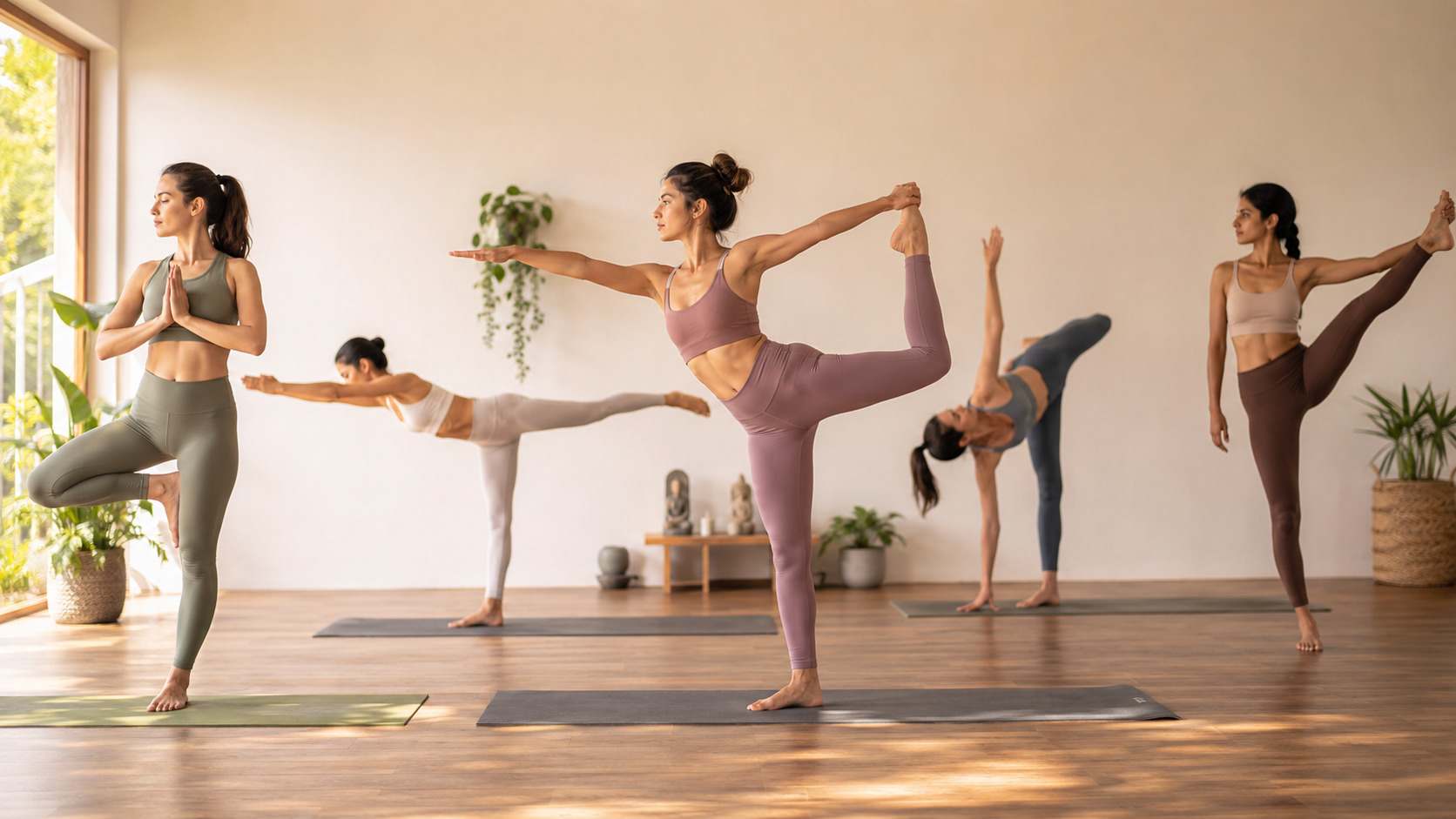
Standing balance poses are among the most challenging and rewarding postures in yoga practice. Whether practicing Tree Pose, Dancer’s Pose, Warrior III, Half Moon Pose, or Extended Hand-to-Toe Pose, these asanas demand concentration, coordination, strength, flexibility, and mental presence. For many practitioners, balancing on one leg quickly becomes more than a physical challenge—it becomes a reflection of focus, patience, emotional steadiness, and inner awareness.
One of the most fascinating aspects of standing balance poses is the relationship between grounding and lifting. Many yoga practitioners instinctively focus on the lifted leg, aiming to extend it higher or create a more dramatic shape. However, the true stability and expansion of these poses originate from the standing leg. The deeper the standing leg roots into the earth, the more freedom and elevation the lifted leg can achieve.
This concept is often referred to as the duality of standing balance poses. It reflects the idea that opposite actions work together simultaneously. One part of the body grounds downward while another rises upward. One side stabilizes while the other expands. This balance between effort and ease creates both physical integrity and energetic harmony.
This guide explores the deeper meaning of standing balance poses, their physical and mental benefits, the importance of grounding, muscular engagement, alignment, breath control, and how the principle of duality transforms yoga practice into a powerful experience of awareness and balance.
Understanding Standing Balance Poses in Yoga
Standing balance poses are yoga postures performed while balancing primarily on one foot. These poses require coordination between the muscles, joints, nervous system, breath, and mind.
Unlike seated or lying poses, standing balances challenge the body’s relationship with gravity directly. The practitioner must continuously make small adjustments to remain stable. Even slight shifts in weight, attention, or breath can influence balance.
Standing yoga poses are often considered uplifting and energizing because they build strength, concentration, and body awareness.
Some of the most common standing balance poses include:
- Tree Pose (Vrksasana)
- Dancer’s Pose (Natarajasana)
- Warrior III (Virabhadrasana III)
- Half Moon Pose (Ardha Chandrasana)
- Eagle Pose (Garudasana)
- Extended Hand-to-Toe Pose (Utthita Hasta Padangusthasana)
These postures may appear physically demanding, but their deeper purpose extends beyond flexibility or strength. They teach practitioners how to remain steady during instability and how to cultivate awareness under challenge.
The Meaning of Duality in Standing Balance Poses
The concept of duality refers to the coexistence of opposite yet complementary forces. In standing balance poses, this principle becomes physically visible.
- One leg presses downward into the floor while the other extends upward or outward. One side stabilizes while the other moves freely. One set of muscles contracts while another lengthens.
- The lifted leg often receives most of the practitioner’s attention because it appears to represent the “advanced” part of the posture.
- However, yoga philosophy and biomechanics suggest otherwise. True balance begins from the standing leg and the connection to the ground.
- The stronger and more stable the standing leg becomes, the more safely and gracefully the lifted leg can expand. This relationship creates a dynamic partnership rather than a struggle between body parts.
This duality reflects a larger yogic principle: stability and freedom must coexist. Without grounding, expansion becomes unstable. Without openness, grounding becomes rigid.
The Importance of the Standing Leg
Many yoga practitioners underestimate the role of the standing leg in balance poses. Yet this leg performs the majority of the work.
The standing leg supports body weight, stabilizes the pelvis, aligns the spine, and constantly adapts to maintain equilibrium. Small muscles in the feet, ankles, calves, and hips work together continuously to prevent collapse or wobbling.
When the standing leg lacks engagement, the body compensates by twisting, gripping, or forcing movement elsewhere. This often leads to instability and discomfort.
Proper grounding through the standing leg involves:
- Pressing evenly through the foot
- Activating the thigh muscles
- Maintaining knee alignment
- Engaging the core
- Stabilizing the hip joint
Yoga teachers often encourage practitioners to “root down” through the standing foot. This grounding creates a stable foundation from which the rest of the posture can grow.
Grounding and the Connection to the Earth
Grounding is one of the central themes in yoga balance practice. In standing poses, grounding refers to the intentional connection between the body and the floor.
The feet play a crucial role in this relationship. Human feet contain numerous bones, muscles, ligaments, and nerve endings that constantly communicate with the nervous system to maintain balance.
When practitioners consciously distribute weight evenly through the foot, they create greater stability. Many yoga instructors teach the concept of the “tripod foot,” where pressure is balanced between:
- The base of the big toe
- The base of the little toe
- The heel
This balanced foundation prevents excessive leaning or collapsing into one side.
Grounding also has psychological significance. Standing firmly creates a sense of security, steadiness, and confidence. Many practitioners notice that when the mind feels scattered or anxious, balance becomes more difficult.
Through grounding, standing poses teach practitioners how to remain centered even when challenged.
The Role of the Lifted Leg
While the standing leg provides stability, the lifted leg represents expansion, freedom, and expression.
- In poses like Dancer’s Pose or Warrior III, the lifted leg creates length and extension. However, forcing the lifted leg too high without proper grounding often compromises alignment and places strain on the lower back or hips.
- The lifted leg should not dominate the posture. Instead, it should respond naturally to the strength and integrity of the standing side.
- This relationship demonstrates an important lesson in yoga: True expansion comes from stability, not force.
When practitioners focus on grounding first, the lifted leg often rises more easily and safely.
Balance as a Conversation Between Opposites
Standing balance poses demonstrate that balance is not static. It is a constant conversation between opposing forces.
Examples include:
- Stability and movement
- Strength and flexibility
- Effort and ease
- Grounding and lifting
- Concentration and relaxation
Yoga philosophy often describes balance as dynamic rather than fixed. The body constantly adjusts through small movements and muscular actions.
Even experienced practitioners wobble occasionally. Balance is not about perfection but responsiveness.
This understanding reduces frustration and encourages mindfulness during practice.
The Physical Benefits of Standing Balance Poses
Standing balance poses offer numerous physical benefits that extend beyond yoga practice.
Improved Leg Strength
Balancing on one leg strengthens:
- Calves
- Quadriceps
- Hamstrings
- Glutes
- Ankles
The standing leg works continuously to support body weight and maintain alignment.
Better Core Stability
- The abdominal and spinal muscles engage strongly during balance poses to stabilize the torso.
- Improved core strength enhances posture and supports spinal health.
Enhanced Coordination
Balance poses train communication between the brain and body.
- This improves coordination and body awareness in daily life.
- Standing balances strengthen the stabilizing muscles around the knees, ankles, and hips, reducing injury risk.
- These poses encourage spinal alignment and awareness of body positioning.
Mental and Emotional Benefits
Balance poses affect not only the body but also the mind.
- Maintaining balance requires concentration. Practitioners often use a drishti, or focal point, to steady attention. This improves mental clarity and mindfulness.
- Standing balances teach patience because progress often occurs gradually. Falling out of poses becomes an opportunity to practice self-compassion rather than frustration.
- Focused breathing and mindful movement calm the nervous system and reduce stress.
- Successfully navigating challenging poses builds confidence and trust in the body.
The Role of Breath in Standing Balances
Breath is essential in maintaining balance.
- Shallow or held breathing creates tension and instability. Slow, steady breathing supports nervous system regulation and muscular coordination.
- Many practitioners notice that balance improves immediately when they focus on smooth breathing patterns.
- Breath also helps practitioners remain calm during moments of wobbling or uncertainty.
Common Mistakes in Standing Balance Poses
- Focusing Only on the Lifted Leg: Many practitioners prioritize height or flexibility over stability. This often compromises alignment and balance.
- Locking the Standing Knee: Hyperextending the standing leg creates joint strain and reduces muscular engagement.
- Holding the Breath: Breath retention increases tension and instability.
- Ignoring Foot Placement: Poor grounding through the foot weakens the entire posture.
- Rushing Progress: Forcing advanced variations before developing foundational strength often leads to imbalance or injury.
Dancer’s Pose and the Principle of Duality
Dancer’s Pose perfectly illustrates the duality of standing balances.
In this posture:
- The standing leg grounds firmly into the floor
- The lifted leg extends backward and upward
- The chest opens forward
- The spine lengthens
The lifted leg depends entirely on the stability of the standing side. When grounding weakens, the posture collapses or strains the lower back. Dancer’s Pose teaches practitioners how opposing actions create harmony.
Tree Pose and Rooted Stability
Tree Pose is often one of the first standing balance poses beginners learn.
Although simple in appearance, it teaches foundational principles:
- Grounding through the standing foot
- Hip stability
- Core engagement
- Focused attention
Tree Pose demonstrates that balance begins with rooting downward before reaching upward.
Warrior III and Dynamic Strength
Warrior III combines balance, strength, and extension.
The body forms a straight line from fingertips to lifted heel while balancing on one leg.
This pose strengthens:
- Legs
- Glutes
- Core
- Back muscles
It also teaches practitioners how to create length without collapsing into the lower back.
Half Moon Pose and Expansion
Half Moon Pose introduces rotation and openness into standing balance practice.
- The standing leg stabilizes while the torso and lifted leg expand outward.
- This pose challenges spatial awareness and coordination while encouraging openness through the chest and hips.
The Psychological Fear of Falling
One hidden challenge in balance poses is fear.
- Fear of falling often creates muscular tension and mental hesitation, making balance more difficult.
- Yoga teaches practitioners to approach imbalance with curiosity instead of judgment.
- Falling out of poses is a natural part of learning and growth.
Many yoga teachers emphasize that wobbling is not failure but evidence of active engagement and adaptation.
Using Props and Modifications
Props make standing balance poses more accessible.
Common supports include:
- Walls
- Chairs
- Yoga blocks
Using support allows practitioners to focus on alignment and muscular engagement without fear of falling. Modifications are not signs of weakness. They help build confidence and proper technique gradually.
Standing Balance Poses Beyond the Yoga Mat
The lessons learned through standing balance poses extend into daily life.
These poses teach:
- Adaptability during uncertainty
- Calmness under pressure
- Patience with progress
- Awareness of inner stability
Yoga practitioners often discover that physical balance mirrors emotional and mental balance.
The ability to remain steady while navigating movement becomes both a physical and philosophical practice.
Conclusion
The duality of standing balance poses reveals one of yoga’s deepest teachings: true balance arises from the harmony of opposing forces. In every standing balance posture, grounding and expansion work together continuously. The standing leg roots into the earth while the lifted leg rises freely. Stability creates freedom, and strength supports openness.
Standing balance poses are not simply about flexibility or impressive shapes. They are practices of awareness, patience, concentration, and connection. They challenge practitioners to trust their foundation, embrace imperfection, and remain present even during moments of instability.
By shifting attention from forcing the lifted leg to strengthening the standing leg, practitioners often experience greater ease, integrity, and confidence in their poses. The body becomes more aligned, the breath steadier, and the mind calmer.
Ultimately, the duality of standing balance poses reflects a universal truth found both on and off the yoga mat: lasting growth is only possible when grounded in stability.