
Introduction
Yoga is more than just physical postures—it is a deeply spiritual practice rooted in ancient wisdom, philosophy, and symbolism. Throughout history, yoga and meditation have used powerful symbols to communicate profound truths about consciousness, the universe, and the human experience. These symbols are not merely decorative elements; they are tools for transformation, awareness, and inner connection.
In today’s modern world, yoga symbols are often seen on clothing, jewelry, tattoos, and home décor. While they add aesthetic value, their true power lies in their deeper meanings. Understanding these symbols can help you enhance your meditation, deepen your yoga practice, and connect with higher consciousness.
What Are Yoga Symbols?
Yoga symbols are visual representations of spiritual concepts, philosophical teachings, and universal truths. They were developed by ancient Indian sages and mystics as a way to express ideas that go beyond words.
A symbol acts as a bridge between the visible and invisible. It allows practitioners to connect with deeper states of awareness by focusing the mind on a specific concept or energy. In yoga, symbols are used to:
- Represent states of consciousness
- Convey spiritual teachings
- Guide meditation and mindfulness
- Inspire inner growth and self-realization
These symbols often carry multiple layers of meaning, which can only be fully understood through contemplation and personal experience. Over time, as your practice deepens, your understanding of these symbols also evolves.
Why Yoga Symbols Are Important in Practice
Yoga symbols play a crucial role in enhancing both physical and spiritual aspects of your practice.
Deepening Awareness
By focusing on a symbol during meditation or yoga, you train your mind to become more present and aware. This helps reduce distractions and strengthens concentration.
Connecting with Spiritual Energy
Many symbols are believed to carry vibrational energy. Meditating on them can help align your mind, body, and spirit, creating a sense of harmony and balance.
Supporting Intentions
Symbols act as reminders of your intentions. Whether you are seeking peace, clarity, or strength, a symbol can anchor your focus and guide your journey.
Enhancing Mindfulness
Incorporating symbols into your daily life—through décor, jewelry, or visuals—keeps you connected to your practice even outside the yoga mat.
How to Use Yoga Symbols in Daily Life and Practice
Yoga symbols can be integrated into your lifestyle in simple yet powerful ways. Their effectiveness lies in consistent exposure and mindful engagement.
In Your Meditation Practice
Place a symbol in front of you while meditating. Gently focus your gaze on it (a practice known as Trataka) to calm the mind and deepen concentration. Over time, the symbol becomes a gateway to deeper awareness.
In Your Yoga Space
Decorating your practice area with meaningful symbols can elevate the energy of the space. It creates a sacred environment that encourages focus, peace, and discipline.
Through Wearable Symbols
Wearing yoga symbols as jewelry or clothing allows you to carry their meaning with you throughout the day. This acts as a constant reminder of your spiritual intentions.
As Personal Affirmations
Assign a specific intention to a symbol. For example, use the Om symbol for unity or the heart chakra for compassion. Each time you see it, reconnect with that intention.
In Home Décor
Symbols placed in your living environment can influence your mood and mindset. They subtly reinforce mindfulness and spiritual awareness in everyday life.
Common Symbols in Yoga and Their Meanings
Yoga symbols are universal and often appear across different cultures and spiritual traditions. Their meanings are layered and open to interpretation, making them powerful tools for personal growth.
The Om (Aum) Symbol: The Sound of the Universe
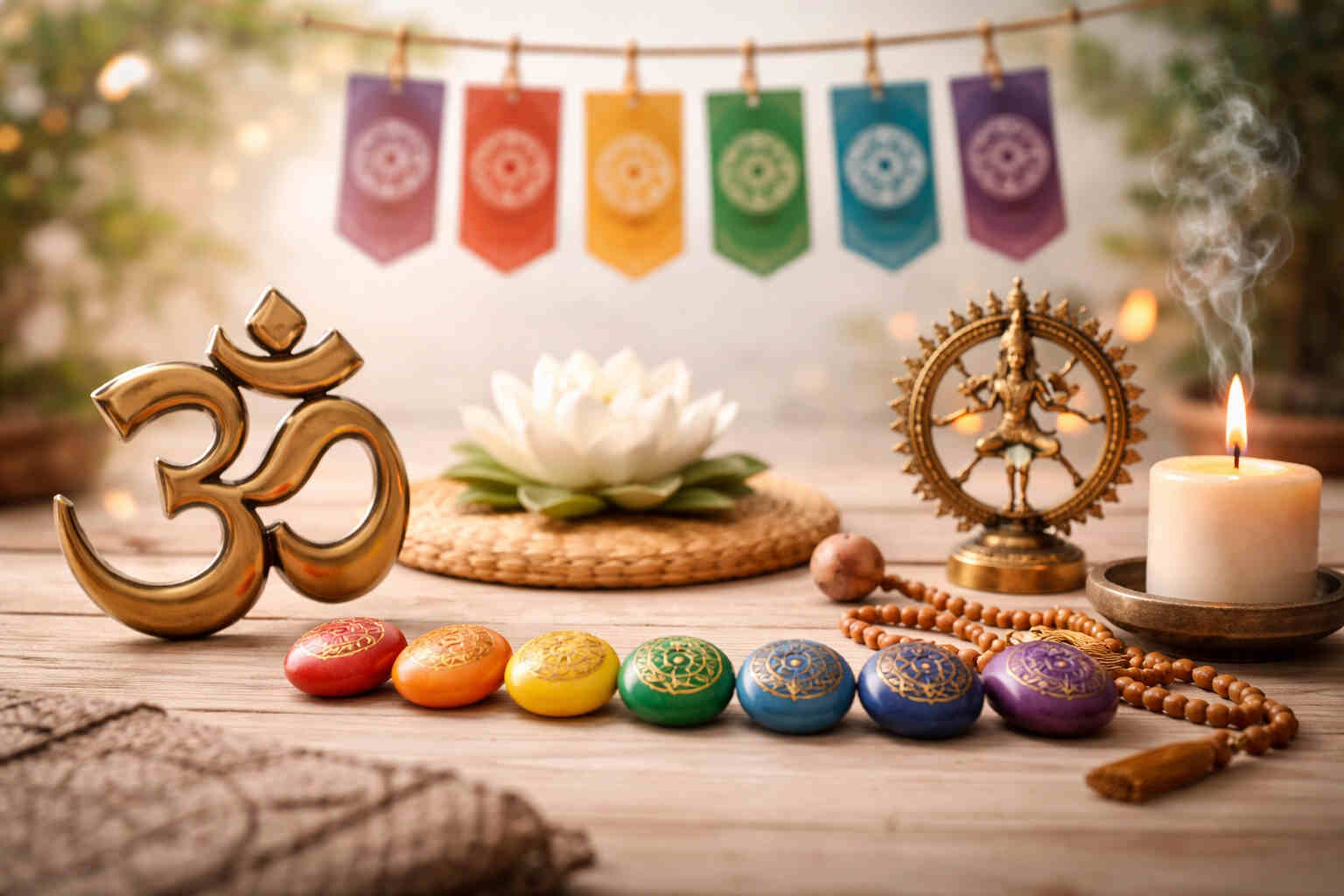
The Om symbol is the most recognized and sacred symbol in yoga. It represents the primordial sound of the universe, believed to be the vibration from which all existence emerged.
Chanting Om is a common practice at the beginning and end of yoga sessions. The sound creates vibrations that calm the nervous system and bring the mind into a meditative state.
Deeper Meaning of Om
The symbol and sound of Om consist of three syllables: A-U-M, each representing a different aspect of existence:
- A (Aahh): The waking state of consciousness, where we experience the physical world through our senses.
- U (Oohh): The dreaming state, representing the inner world of thoughts and subconscious experiences.
- M (Mmm): The deep sleep state, symbolizing stillness and the absence of ego.
Beyond these three states lies the fourth state (Turiya), represented by the dot in the symbol. This is the state of pure consciousness, where one experiences unity with the universe.
Spiritual Significance
Meditating on the Om symbol helps:
- Calm the mind
- Enhance focus
- Connect with universal energy
- Align mind, body, and spirit
The 7 Chakra Symbols: Energy Centers of the Body
Chakras are energy centers located along the spine, each associated with specific physical, emotional, and spiritual aspects of life. The seven main chakras are often depicted through intricate symbols containing lotus petals, geometric shapes, and colors.
Balancing these chakras is essential for achieving overall well-being and spiritual harmony.
1. Root Chakra (Muladhara)
- Color: Red
- Location: Base of the spine
- Meaning: Stability, grounding, and survival
This chakra connects you to the earth and provides a sense of security. When balanced, it creates a strong foundation for growth.
2. Sacral Chakra (Svadhishthana)
- Color: Orange
- Location: Lower abdomen
- Meaning: Creativity, pleasure, and emotions
It governs your ability to experience joy, express creativity, and form emotional connections.
3. Solar Plexus Chakra (Manipura)
- Color: Yellow
- Location: Upper abdomen
- Meaning: Confidence, power, and self-esteem
This chakra influences your personal strength and the energy you project into the world.
4. Heart Chakra (Anahata)
- Color: Green
- Location: Center of the chest
- Meaning: Love, compassion, and empathy
It bridges the physical and spiritual realms, allowing you to give and receive love freely.
5. Throat Chakra (Vishuddha)
- Color: Blue
- Location: Throat
- Meaning: Communication and self-expression
A balanced throat chakra enables clear and honest communication.
6. Third Eye Chakra (Ajna)
- Color: Indigo
- Location: Between the eyebrows
- Meaning: Intuition and insight
This chakra is associated with wisdom, perception, and spiritual awareness.
7. Crown Chakra (Sahasrara)
- Color: Violet or White
- Location: Top of the head
- Meaning: Spiritual connection and enlightenment
It represents your connection to the universe and higher consciousness.
How to Work with Chakra Symbols
Meditating on chakra symbols can help balance your energy system. Visualize each symbol while focusing on its corresponding area in the body. This practice enhances awareness and promotes emotional and physical healing.
You can also use chakra symbols in:
- Yoga sequences focused on energy alignment
- Affirmations related to each chakra
- Healing practices like Reiki or meditation
The Deeper Power of Yoga Symbolism
Yoga symbols are not meant to be understood instantly. Their true meaning unfolds gradually through consistent practice and reflection. Each symbol serves as a doorway to:
- Self-awareness
- Inner peace
- Spiritual awakening
By engaging with these symbols regularly, you begin to experience their transformative power on a deeper level.
Conclusion
Yoga symbols are far more than visual elements—they are gateways to understanding the deeper layers of consciousness, spirituality, and self-awareness. Rooted in ancient traditions, symbols like Om and the seven chakras continue to guide modern practitioners toward balance, clarity, and inner peace.
By incorporating these symbols into your daily life—whether through meditation, yoga practice, or mindful décor—you create a powerful connection between your external environment and internal state. Over time, this connection helps cultivate focus, emotional stability, and spiritual growth, transforming your practice into a more meaningful and enriching experience.
Understanding the meaning behind yoga symbols also allows you to move beyond surface-level practice and explore the true essence of yoga—the union of mind, body, and spirit. Each symbol serves as a reminder of your intentions, a tool for mindfulness, and a step toward deeper self-realization.