
Introduction
Meditation is often described as a practice of turning inward, yet many practitioners underestimate the role that vision plays in shaping mental activity. Our eyes constantly scan, interpret, and react to the environment, even when we are attempting to sit still and focus. This constant visual engagement can subtly pull attention outward, making it harder to settle the mind.
Blindfold meditation offers a unique approach by temporarily removing all visual input. By covering the eyes, practitioners reduce sensory stimulation and create an environment that naturally supports inward awareness. While this practice may sound simple, it can lead to profound shifts in focus, perception, and mindfulness.
This guide explores the purpose, benefits, and techniques of blindfold meditation, including how Blindhold Meditation can support deeper concentration, heightened sensory awareness, and a more immersive meditative experience.
Understanding the Role of Vision in Meditation
Vision is the most dominant sense for most people. Even when meditating with eyes closed, light, movement, and subtle visual impressions may still influence the mind. The brain remains partially engaged in processing visual information, which can compete with internal awareness.
Blindfold meditation goes a step further by fully blocking light and visual cues. This creates a clearer boundary between external stimulation and internal observation. For many practitioners, this allows attention to settle more quickly and remain stable for longer periods.
What Is Blindfold Meditation?
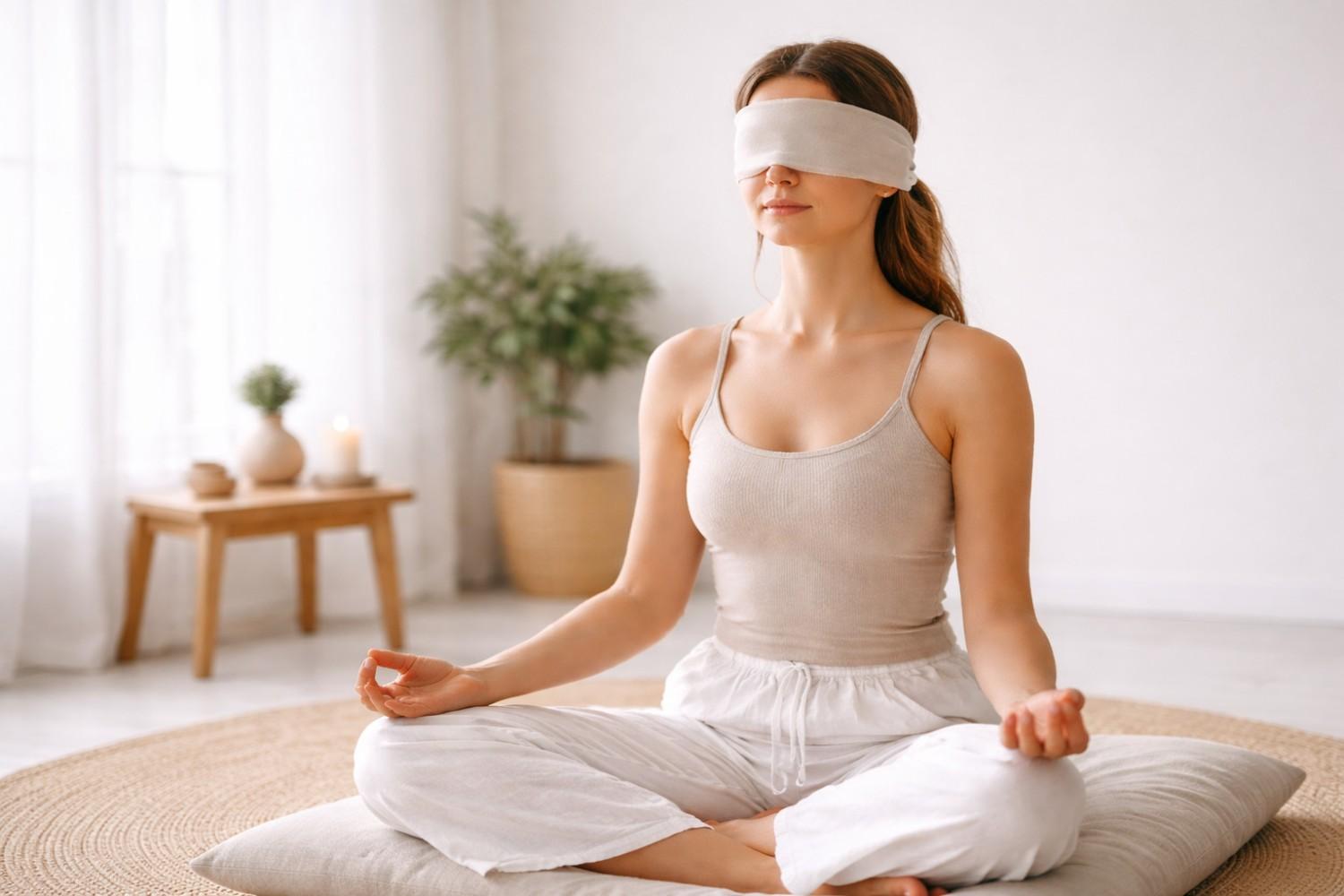
Blindfold meditation is a mindfulness or concentration practice performed while wearing a blindfold or eye covering that completely blocks light. Unlike closing the eyes, a blindfold ensures that no visual information reaches the brain.
This practice is used across different meditation styles, including:
- Mindfulness meditation
- Breath-focused meditation
- Body awareness practices
- Sensory observation techniques
In recent years, Blindhold Meditation has gained interest among practitioners seeking deeper focus and reduced distraction.
Why Removing Visual Input Matters
When visual input is removed, the brain reallocates attention to other sensory and internal processes. This shift often heightens awareness of breath, bodily sensations, sounds, and subtle mental patterns.
A similar focus on internal awareness is encouraged in chair yoga, where gentle, supported movements help deepen body–mind connection without visual or physical strain.
By reducing one of the brain’s most demanding sensory channels, blindfold meditation creates conditions that support:
- Improved concentration
- Reduced mental chatter
- Enhanced sensory clarity
- Deeper present-moment awareness
This is one of the key reasons why Blindhold Meditation can feel more immersive than traditional seated meditation.
Benefits of Blindfold Meditation
Blindfold meditation offers both immediate and long-term benefits when practiced mindfully and consistently.
1. Enhanced Focus and Attention
Without visual distractions, attention becomes easier to sustain. Many practitioners notice that their minds settle faster and wander less.
2. Increased Sensory Awareness
Blocking vision heightens awareness of sound, touch, breath, and internal sensations. This expanded perception supports deeper mindfulness.
3. Reduced External Distraction
Blindfold meditation minimizes environmental triggers, making it easier to remain present even in unfamiliar or noisy spaces.
4. Deeper Internal Observation
Practices like Blindhold Meditation encourage noticing subtle emotional and mental patterns that may be overlooked in visually engaging environments.
5. Stronger Mind-Body Connection
With fewer external cues, practitioners often feel more connected to bodily sensations, posture, and breath rhythms.
Blindfold Meditation vs Eyes Closed Meditation
Although eyes-closed meditation is widely practiced, blindfold meditation creates a distinctly different experience.
Eyes closed meditation:
- Reduces visual input but does not eliminate light
- May still allow visual imagery or light perception
- Can lead to distraction or drowsiness for some
Blindfold meditation:
- Fully blocks visual stimulation
- Encourages deeper sensory withdrawal
- Creates a stronger sense of containment and focus
This is why Blindhold Meditation is often described as more immersive and grounding.
How Blindfold Meditation Affects the Nervous System
The nervous system responds quickly to changes in sensory input. By reducing visual stimulation, blindfold meditation helps activate the parasympathetic nervous system—the system responsible for rest, calm, and recovery.
This shift may result in:
- Slower heart rate
- Reduced stress response
- Increased relaxation
- Improved emotional regulation
Over time, consistent practice can help the nervous system become more resilient and balanced.
How to Practice Blindfold Meditation Safely
Blindfold meditation should always be practiced in a safe, comfortable environment.
Step-by-Step Guidance
- Choose a quiet, familiar space
- Sit or lie down comfortably
- Use a soft blindfold that blocks all light
- Begin with a few deep breaths
- Focus on breath, body sensations, or sound
- Gently return attention when the mind wanders
For beginners, short sessions of 5–10 minutes are ideal when exploring Blindhold Meditation.
Common Experiences During Blindfold Meditation
Practitioners may notice a range of sensations and experiences, especially during early sessions.
Common experiences include:
- Heightened awareness of sound
- Vivid bodily sensations
- Increased mental imagery
- Temporary discomfort or restlessness
These responses are normal and usually settle with practice. The key is to observe without judgment.
Challenges and How to Work With Them
Blindfold meditation may feel intense for some individuals, especially those sensitive to sensory deprivation.
Possible challenges:
- Anxiety or discomfort
- Restlessness
- Fear of losing orientation
To ease these challenges:
- Practice for shorter durations
- Keep posture grounded
- Focus on breath as an anchor
Over time, Blindhold Meditation often becomes more comfortable and deeply rewarding.
Blindfold Meditation for Advanced Practitioners
Experienced meditators often use blindfold meditation to deepen insight and refine awareness. Removing visual input helps reveal subtle mental habits and emotional patterns.
Advanced practitioners may use blindfold meditation for:
- Extended mindfulness sessions
- Sensory awareness exploration
- Emotional processing
- Deep concentration practices
This makes Blindhold Meditation a valuable tool for long-term meditative growth.
Integrating Blindfold Meditation Into Daily Practice
Blindfold meditation does not need to replace other meditation styles. It can be used occasionally to deepen awareness or break habitual patterns.
You may choose to:
- Practice blindfold meditation once or twice a week
- Use it during short mindfulness breaks
- Combine it with body scan or breath practices
Flexibility allows you to experience the benefits without overstimulation.
Blindfold Meditation and Mindfulness in Daily Life
One of the most powerful outcomes of blindfold meditation is increased sensitivity to internal states. This heightened awareness often carries into daily life.
Practitioners may notice:
- Improved focus
- Greater emotional awareness
- Reduced reactivity
- Stronger present-moment attention
These effects are often reported by those who regularly practice Blindhold Meditation.
Who Should Avoid Blindfold Meditation?
While generally safe, blindfold meditation may not be suitable for everyone.
Those who should proceed with caution include individuals with:
- Severe anxiety disorders
- Trauma-related sensitivity to sensory deprivation
- Claustrophobia
If discomfort arises, it’s best to stop and consult a qualified meditation teacher or healthcare professional.
Conclusion
Blindfold meditation offers a powerful way to reduce distraction and deepen awareness by temporarily removing visual input. While it may feel unfamiliar at first, many practitioners find it enhances focus, sensory clarity, and emotional insight.
Practiced mindfully, Blindhold Meditation can become a valuable addition to your meditation toolkit—supporting deeper presence, calm, and self-awareness. As with any meditation practice, patience, curiosity, and consistency are key.